Calcium Supplements Can Cause Heart Attacks


By    |   Posted on May 29, 2012


570x299 Calcium Supplements Can Cause Heart AttacksCalcium supplements are thought to be good for the bones, but a new study warns they might be bad for the heart.

report released Friday in the journal Heart found an alarming result: taking a calcium supplement to prevent bone loss puts people at a significantly greater risk for heart attacks. The 24,000 participants in the study, all between the ages of 35 and 64 and taking calcium supplements regularly, were found to be a whopping 86 percent more likely to have a heart attack than those who did not take supplements.

According to the study, “Calcium supplements have been widely embraced by doctors and the public on the grounds that they are a natural and therefore safe way of preventing osteoporatic fractures. We should return to seeing calcium as an important component of a balanced diet.”

Dr. Matt Lederman, featured in Forks Over Knives, advises, “There are often unintended consequences when taking nutrients in isolation. The research to date shows that the amount of calcium found in a whole-food plant-based diet is adequate – and that more isn’t necessarily better.”

The authors of the study noted that excessive calcium, a common side effect of taking calcium supplements, is where the harm may begin.

Says Lederman, “For good bone health, the most important factors are eating a healthy plant-based diet, getting an adequate amount of sunshine, and doing strength-oriented exercise.”

What to and what not to eat!

Eat This Food:

Eat Whole Plant Based food such as vegetables, fruit and grains. Some examples: potato dishes, sweet potato, carrots, turnip, cabbage, parsnip, beets,  corn, green and yellow beans, onion, lettuce, spinach,kale, daikon, tomato, garlic, apples, pears, oranges, bananas, berries of all type , black beans, chickpeas, kidney beans, pinto beans, oats, navy beans, barley, quinoa, couscous, chia and flax seed, whole wheat pastas, whole wheat bread, pancakes, waffles, porridge and more.

Once you realize how restrictive eating a meat and dairy centric diet is compared to the extensive dishes that can be made from whole foods, you will never look back. Dairy is just liquid meat. The problem is getting away from a salt, fat and sugar, meat and dairy based diet. Considering that the former will promote poor health and chronic disease, it should be easy. However it is not that simple, your tastes will have to change and that takes time.

Try it for 90 days, you will become healthier and happier. You will feel and look great. You will also lose weight.

Do Not Eat This Food:

Meats, poultry, fish, eggs (both whites and yolks), and all dairy products (regular and non-fat), including milk, yogurt, cheese, ice cream, cream, sour cream, and butter.

Also avoid margarine, salad dressings, cooking oils and foods, such as potato chips, french fries, onion rings and donuts.

Avoid orange juice and all concentrated juices, they are little better than sugar water.

Avoid all foods that are GM, (genetically modified) as the effects could be very detrimental to your health.

Avoid all trans fats, check the label. Trans fats are fats that are normally liquid at room temperature but become solid by combining them with hydrogen. (hydrogenated)

Avoid energy bars which contain excessive amounts of sugar and chemicals.

Avoid soft drinks and sodas which again have excessive amounts of sugar and artificial sweeteners (aspertain etc). One can of soda has 220 calories of sugar alone which is 8 tsp per soda.

Avoid canned soup as it is usually loaded with MSG and sodium, which is very unhealthy. Check the label; the sodium should be = to or less than the calories per serving. Some soups have 10 times the sodium level.

Avoid all refined and processed food as the nutrition has been removed, and salt, fat and sugar have been added. Even worse the sugar is usually fructose sugar. White bread, cookies, crackers and cakes are examples of processed food.

Supplements are not food. Do not eat them as they are expensive and may do more harm than good. The only supplement that you might need if you are 100% vegan is B12.

MEAL SUGGESTIONS

BREAKFAST—Often breakfast can be similar to the one you are accustomed to with a few simple modifications.

Hot cereals: oatmeal, cream of wheat, creamy rice cereal, porridge with fruit and soy or almond milk. Almond beverage is a good milk substitute.

High-fiber cold cereals: wheat or oat bran cereals with non-fat soy or rice milk and berries, peaches, or bananas

Melons, such as cantaloupe and honeydew, or any other fruit

Whole grain toast topped with cinnamon or jam (no butter or margarine)

Bagels (no cream cheese) topped with apple butter or hummus

Oven-roasted “home fries” plain or smothered with roasted mushrooms, peppers, and onions

LUNCH—whether you dine in or out at lunchtime, there are lots of healthy and delicious options to choose from. Here are some ideas to get you started.

Salads

Garden salad with lemon juice, fat-free dressing, or soy or teriyaki sauce

Legume-based salads: three-bean, chickpea, lentil, or black bean and corn salads

Grain-based salads: noodle, couscous, bulgur, or rice salads

Soups

Vegetable-based soups: potato-leek, carrot-ginger, mixed vegetable, or mushroom-barley and quinoa.

Legume-based soups: black bean, vegetarian chili, spinach lentil, minestrone, or split pea with quinoa.

Instant or prepared soups (as long as they are low-fat and free of animal products) are good.

Sandwiches/Wraps

CLT: cucumber, lettuce, and tomato sandwich with Dijon mustard or hummus

Hummus sandwich tucked into whole wheat pita with grated carrots, sprouts, and cucumbers

Sandwich made with fat-free meat alternatives such as barbeque seitan or veggie pepperoni slices with your favorite sandwich veggies

Black bean dip, peppers, tomatoes, and lettuce wrapped in a whole-wheat tortilla

Italian eggplant sub: baked eggplant slices, pizza sauce, and mushrooms on a multi-grain sub roll

Black bean and sweet potato burrito with corn and tomatoes

DINNER—Emphasize vegetables and grains in all your meals. The evening meal is a good place to try new items. You might start with a bean, rice or other grain, or potato dish and add a couple of vegetables.

Starches:

Grains: Use generous amounts of grains.

pasta

brown rice

boxed rice dishes (e.g., pilaf, curried rice, etc.)

couscous

Potatoes: Enjoy them baked or mashed and topped with steamed vegetables, salsa, ketchup, Dijon mustard, black pepper, or black beans.

Breads: Whole-grain is preferred. Avoid sweet breads that contain oil, eggs, or milk.

Vegetables:

Try any vegetables you like.

Greens (broccoli, spinach, kale, Swiss chard) topped with lemon

Carrots

Corn (note: corn is technically a grain, but works as a vegetable)

Legumes:

Pinto beans, vegetarian refried beans, baked beans, black beans, garbanzos, kidney beans

Main Dishes:

Pasta marinara: Choose commercial brands that are free of cheese and are low in fat.

Beans and rice: Try black beans with salsa, vegetarian baked beans, or fat-free refried beans.

Soft tacos: Prepare this dish with whole-wheat flour tortilla, beans, lettuce, tomato, and salsa.

Chili: Vegetarian boxed versions are fine.

Veggie lasagna: Made with low-fat tofu to replace the ricotta, layered with grilled veggies.

Rice pilaf, Spanish rice, or packaged rice dinners: Try packaged rice dishes and omit butter.

Steamed rice and stir-fried vegetables: This meal can be seasoned with soy sauce. Be sure to use a non-stick pan.

Fat-free vegetarian burgers: Make your own lentil burgers or try soy-based commercial brands.

Fajitas: Lightly sauté sliced bell peppers, onions, and eggplant in a non-stick pan, with fajita seasonings.

Desserts:

Fresh fruit

Fat-free chocolate or fruit sorbet

Popsicles

Baked apples

SNACKS

Bagels (plain or flavored; no cheese, butter, or margarine)

Fruit, carrots, or celery sticks

Vegetarian soup cups (split pea, lentil, etc.)

Toast with jam (no butter or margarine)

Baked tortilla chips with salsa or bean dip

GENERAL TIPS

TRYING NEW FOODS AND NEW TASTES:

Explore new recipes, new books, new products.

Fat-free meat substitutes can ease the transition.

Be strict with yourself. This is easier than teasing yourself with small amounts of the foods you are trying to leave behind.

Focus on the short term. Three weeks is a short time.

Frozen vegetables are fine.

Canned beans and vegetables are okay for convenience.

Use a non-stick pan.

“Sauté” vegetables in water or vegetable broth.

Steam vegetables.

When you can’t avoid oil, use a cooking spray instead of poured oils.

Use non-fat, non-dairy coffee creamers.

Read package labels to check grams of fat per serving. It is best to choose products that have less than 2 grams of fat per serving.

80% OF THE TIME BE GOOD, 20% OF THE TIME BE MODERATE, 5% BE BAD.

INCLUDE SOME FISH AS LONG AS IT WAS CAUGHT WILD. DO NOT EAT FARMED SALMON. FARMED MUSSELS ARE GREAT. IF YOU CAN ONLY DO ONE THING THAT ONE THING SHOULD BE THE AVOIDANCE OF ALL DAIRY PRODUCTS.

Atkins “Nightmare” Diet

When Dr. Atkins Diet Revolution was first published, the President of the American College of Nutrition said, “Of all the bizarre diets that have been proposed in the last 50 years, this is the most dangerous to the public if followed for any length of time.”[1]

When the chief health officer for the State of Maryland,[2] was asked “What’s wrong with the Atkins Diet?” He replied “What’s wrong with… taking an overdose of sleeping pills? You are placing your body in jeopardy.” He continued “Although you can lose weight on these nutritionally unsound diets, you do so at the risk of your health and even your life.”[3]

The Chair of Harvard’s nutrition department went on record before a 1973 U.S. Senate Select Committee investigating fad diets: “The Atkins Diet is nonsense… Any book that recommends unlimited amounts of meat, butter, and eggs, as this one does, in my opinion is dangerous. The author who makes the suggestion is guilty of malpractice.”[4]

The Chair of the American Medical Association’s Council on Food and Nutrition testified before the Senate Subcommittee as to why the AMA felt they had to formally publish an official condemnation of the Atkins Diet: “A careful scientific appraisal was carried out by several council and staff members, aided by outside consultants. It became apparent that the [Atkins] diet as recommended poses a serious threat to health.”[5]

The warnings from medical authorities continue to this day. “People need to wake up to the reality,” former U.S. Surgeon General C. Everett Koop writes, that the Atkins Diet is “unhealthy and can be dangerous.”[6]

The world’s largest organization of food and nutrition professionals,[7] calls the Atkins Diet “a nightmare of a diet.”[8] The official spokesperson of the American Dietetic Association elaborated: “The Atkins Diet and its ilk–any eating regimen that encourages gorging on bacon, cream and butter while shunning apples, all in the name of weight loss–are a dietitian’s nightmare.”[9] The ADA has been warning Americans about the potential hazards of the Atkins Diet for almost 30 years now.[10] Atkins dismissed such criticism as “dietician talk”.[11] “My English sheepdog,” Atkins once said, “will figure out nutrition before the dieticians do.”[12]

The problem for Atkins (and his sheepdog), though, is that the National Academy of Sciences, the most prestigious scientific body in the United States, agrees with the AMA and the ADA in opposing the Atkins Diet.[13] So does the American Cancer Society;[14] and the American Heart Association;[15] and the Cleveland Clinic;[16] and Johns Hopkins;[17] and the American Kidney Fund;[18] and the American College of Sports Medicine;[19] and the National Institutes of Health.[20]

In fact there does not seem to be a single major governmental or nonprofit medical, nutrition, or science-based organization in the world that supports the Atkins Diet.[21] As a 2004 medical journal review concluded, the Atkins Diet “runs counter to all the current evidence-based dietary recommendations.”[22]

A 2003 review of Atkins “theories” in the Journal of the American College of Nutrition concluded: “When properly evaluated, the theories and arguments of popular low carbohydrate diet books… rely on poorly controlled, non-peer-reviewed studies, anecdotes and non-science rhetoric. This review illustrates the complexity of nutrition misinformation perpetrated by some popular press diet books. A closer look at the science behind the claims made for [these books] reveals nothing more than a modern twist on an antique food fad.”[23]

Dr. Greger:

Some Sea Lice With That Farmed Salmon?

Sea lice devour a a farmed salmon in New Brunswick, Canada. 7Barrym0re/Wikimedia Commons

I’ve written a lot about “superbugs”from factory-farmed meat, as well as“superweeds” and “superinsencts”from genetically modified crops. Turns out, industrial agriculture is wreaking similar havoc in the sea. What do I mean? Consider the salmon, that noble family of fish, which has evolved over the millennia alongside an ignoble parasite: the sea louse.

Often less than a centimeter long, the sea louse operates like the land louse that bedevil humans: by attaching itself to the skin of the host and then chomping down and sipping its blood. Happily, wild salmon and sea lice populations achieved a rough balance over their time on the planet—wild salmon developed resistance to the point that sea lice can do their thing without causing significant harm.

That was the state of things, anyway, until the emergence of industrial-scale salmon farming in Norway in the 1970s. In industrial salmon production, the fish are stuffed together by the hundreds of thousands in pens open to the coastal sea. These conditions provide a veritable banquet for sea lice—rather than having to scour the sea for their hosts, the parasites find their targets wriggling around en masse in one place. Left to their own devices, the industry discovered, the age-old parasite-host balance is upset, and farm salmon populations succumb to sea lice.

Undaunted, producers resorted to a prized tool of land-based industrial agriculture: pesticides. The idea is simple: If farmed salmon can’t fight off sea lice with their own defenses, dump toxic chemicals into the feed (or directly into the pens) to do the job for them.

The practice worked well enough as the farmed salmon industry exploded in size and—still dominated by a few large Norwegian firms—set up shop in Chile, the United States’ Pacific Northwest, and Canada. The explosion in production turned salmon from a luxury food to an everyday staple. Today,90 percent of salmon consumed in the US comes from vast farm operations.

Lepeophtheirus salmonis (sea louse): Watershed_Watch/FlickrLepeophtheirus salmonis (sea louse)Watershed_Watch/FlickrBut—surprise!—sea lice are constantly adapting to the poisons used to control them, forcing the industry to ramp up pesticide doses and search for novel poisons. In Canada, source of 40 percent of the farmed salmon consumed in the United States, the sea lice appear to be winning.

The Toronto-based Globe and Mail used Canada’s version of the Freedom of Information Act to uncover government documents revealing alarm over the fact a pesticide called Slice—the only one Canada has registered for use in salmon pens—is losing effectiveness in the nation’s teeming factory salmon farms.* Reported the Globe and Mail:

“Over the last two years, [New Brunswick] salmon farmers have noted growing levels of sea lice tolerance to the in-feed lice control drug Slice,” Claire Dansereau, deputy minister in Fisheries and Oceans, wrote in a memorandum for the minister in September, 2010. “It appears Slice is no longer effective unless applied in triple doses. Farmers have been seeking access to other treatment products including hydrogen peroxide, Salmosan, AlphaMax and Calicide.” [Emphasis mine.]

Triple doses. What do such massive amounts of pesticides mean for farmed salmon eaters? No one really knows. Taras Grescoe, author of the excellent book Bottomfeeder, put it like this in a 2008 New York Times op-ed:

To rid salmon of the lice, fish farmers spike their feed with a strong pesticide called emamectin benzoate [the chemical name for Slice], which when administered to rats and dogs causes tremors, spinal deterioration and muscle atrophy. The United States Food and Drug Administration, already hard-pressed to inspect imported Asian seafood for antibiotic and fungicide residues, does not test imported salmon for emamectin benzoate. In other words, the farmed salmon in nearly every American supermarket may contain this pesticide, which on land is used to rid diseased trees of pine beetles. It is not a substance I want in my body.

While sea lice and their pesticides duke it out in Canada’s salmon cages, one sure loser is emerging from the battle: wild salmon, which once flourished along the area’s coasts and streams. The rough balance between wild salmon and their parasites evaporates in areas of intensive salmon farming, where sea lice populations boom.

A 2007 Science study gauged the effects of salmon farming on wild populations. The conclusion is devastating:

We show that recurrent louse infestations of wild juvenile pink salmon (Oncorhynchus gorbuscha), all associated with salmon farms, have depressed wild pink salmon populations and placed them on a trajectory toward rapid local extinction. The louse-induced mortality of pink salmon is commonly over 80% and exceeds previous fishing mortality. If outbreaks continue, then local extinction is certain, and a 99% collapse in pink salmon population abundance is expected in four salmon generations. These results suggest that salmon farms can cause parasite outbreaks that erode the capacity of a coastal ecosystem to support wild salmon populations.

Collapsing wild salmon stocks, of course, are treated as an “externality” by the salmon industry: a cost of production borne by society as a whole, not by producers. And if those megafarmers get their way, the Globe and Mailreports, Canada’s salmon farms will soon be using a lice-targeting pesticide called AlphaMax that Environment Canada, the country’s version of the EPA,has identified as a threat to wild lobster stocks. Farmed salmon may be cheap at the grocery store, but its true costs are proving high, indeed.

*Correction: This story originally reported that the lice problem had gotten out of control in salmon farms on Canada’s west coast. Actually, the problems are on the east coast. The text has been corrected. I regret the error.

T. Colin Campbell, Ph.D.

T. Colin Campbell, Ph.D.

Professor Emeritus of Nutritional Biochemistry, Cornell

For more than two decades, many commentators have discussed and cussed so-called low-fat diets and gotten away with talking nonsense. It is time to look at some facts.

Virtually all of these discussions are based on recommendations of reports of the National Academy of Sciences during the 1980s when the initial suggestion was made to reduce total dietary fat to 30 percent (from the average of 35-37 percent of calories) — I know because I co-authored the first of these reports on diet and cancer in 1982. Then, during the next decade or so, this 30 percent benchmark became the definition of a low fat diet. A myth was born because this diet did not lead to obesity, as claimed.

During the next 10 years when this low fat myth was growing, average percent dietary fat barely changed — maybe decreasing a couple percentage points to about 33 percent, at best. In reality, the amount of fat consumed INCREASED because total calorie consumption also increased. Furthermore, during this same period of low fat mythology (1980s-1990s), obesity incidence increased.

Now, enter Robert Atkins and other writers who argued that obesity was increasing because of our switch to low fat diets. By going low fat — so the mythical story went — we were consuming more carbohydrate, an energy source from plant-based foods. This was a serious misrepresentation of the facts.

By falsely blaming low fat, ‘high carb’ diets for the obesity crisis, these writers were then free to promote the opposite: high fat, low ‘carb’, high cholesterol and high protein diets rich in animal-based foods, a so-called low ‘carb’ diet. During the initial discussions of this ‘low carb’ diet, no distinction was made between the refined carbohydrates (sugar and white flour as commonly present in processed foods) and the natural carbohydrates almost exclusively present in plant-based foods.

Later, some attention was given to refined carbohydrates (sugar, white flour) as a contributor to obesity, but by then the damage due to this obfuscation had been done. ‘Carbs’ were out, protein and fat were in. By initially demonizing ‘carbs’ and so-called ‘low fat’ diets and emphasizing increased protein and fat consumption, the intended path was clear: consume a diet rich in animal-based foods instead of a diet rich in plant-based foods.

Obesity continues to climb but not because of a switch to a plant-foods rich diet naturally low in fat and high in carbohydrate (TOTAL carbohydrate, that is). Rather, obesity increases as physical activity decreases and as sugary, fatty, salty processed food consumption increases.

More serious, however, is the effect that this mythology has had on suppressing information on the extraordinary health value of diets that are truly low in fat (10-12 percent). I am referring to a whole foods, plant-based diet that avoids added fat and processed and animal-based foods. This diet contains about 10-12 percent fat, sometimes pejoratively referred to as “extremely low fat”. Call it what you will, but this diet (also low in total protein, about 8-10 percent) produces, by comparison, “extremely low” incidences of sickness and disease. In fact, it now has been shown not just to prevent these illnesses but to treat them. Importantly, this dietary lifestyle cannot be dismissed by the mythological argument that so-called low fat diets have been proven to be questionable.

Professional medical researchers and practitioners also repeat this same mantra as if it is real. It has been shown for example in the very large Nurses’ Health Study at Harvard over an observation period of at least 14 years that reducing dietary fat from about 50 percent to about 25 percent of total calories has no association with breast cancer rates. Based on this and related studies, the sole manipulation of fat within this range does little or nothing when the diet still contains such high proportions of animal based and processed foods. Total protein remains very high throughout this range and worse, the proportion of protein from animal-based sources, already high when fat is high, if anything, increases even more when fat is independently decreased.

It is time that we seriously consider the health benefits of a whole food, plant based diet, which is naturally low in total fat, animal-based protein, and refined carbohydrates but rich in antioxidants and complex carbohydrates. The health benefits that are now being reported for this dietary lifestyle are unmatched in scope and magnitude of effect. It is time to discard the gibberish about low fat diets being responsible for the obesity epidemic. This demonizing of low fat diets does not apply to whole food plant-based diets, even lower in fat, because this dietary lifestyle really works. Just try it, but stay with it long enough to allow your body to overcome your taste preferences for fat that arise from its addictive nature.

The Beef With Atkins


David Katz, M.D.

Director, Yale Prevention Research Center

A Harvard study just published in the Annals of Internal Medicine — showing higher mortality in men and women who consumed a meaty, Atkins-like diet– has likely come to your attention, given its high media profile. Predictably, the Atkins camp was quick to weigh in and tell us why the study is flawed, and just as predictably, prominent Atkins’ diet detractors, such as my friend Dean Ornish (right here on Huffington Post), were quick to highlight the study’s importance.

When the smoke from the Hibachi clears, what does the study actually mean?

As hastily noted by its detractors, the study is observational, and thus designed to show association — not prove cause and effect. Men and women — over 120,000 of them — who, over time, ate more of their calories from animal sources and fewer of them from plants were more likely to get sick and die prematurely.

How might this be something other than cause and effect? Naturally, the study controls for alternative, likely explanations for the health outcomes observed, such as smoking (if people who eat more meat also smoke, the smoking could be the true health hazard, but that’s not the answer here). Perhaps people with a genetic predisposition to get sick and die are compelled by that same gene complex to eat more meat? If you like that one, you either own stock in Atkins Nutritionals, or should be in the bridge buying business.

It is true that an observational study does not prove cause and effect. But when, in over 100,000 people, A seems to cause B, and there is a plausible mechanism, and other likely explanations have been considered and eliminated — the most logical conclusion is that A likely does cause B, until or unless a better explanation is found. The fact that a plausible thing might not be true is a long way from proving it isn’t true!

The Atkins folks are quick to note that studies show an Atkins’ diet can improve some metabolic markers. But which do you care about — dying prematurely with a high HDL, or living long and prospering despite a lower one? Ultimately, it’s health outcomes that matter and no study has ever shown that eating an Atkins’ diet is associated with any kind of improved health outcome over the long term. It is plausible that an apparent improvement in metabolic markers can actually be associated with worse health. More than plausible: cancer often reduces body fat and lowers cholesterol.

Do I think eating a high-meat, low-plant diet increases risk of death and disease? Hell ya!

The other principal complaint of the Atkins’ camp is that this isn’t the Atkins’ diet. Perhaps not, but … soy what? The Atkins’ Diet has become a moving target, as the once powerful empire — then a victim of bankruptcy — endeavors to have its side of beef and eat it, too. The new Atkins’ Diet emphasizes more plant sources of protein, such as soy, but still wants to benefit from the ‘Atkins’ brand cache. That cache did not come from soy! It came from the image of a butter-slathered pork chop on the cover of the New York Times magazine, and similar invitations to carnivorous debauchery!

Yes, it’s true you can in fact eat a relatively high-protein, plant-based diet- my friend Dr. David Jenkins called it “eco-Atkins”– and probably derive good health from doing so. But calling this “eco-Atkins” is a bit like calling a soybean an “eco-cow,” potentially confusing to herbivores and carnivores alike.

Here are the take-away messages as I see them:

The appeal of the Atkins’ Diet was never eating soy beans; it was eating bacon, burgers and such. That was, and remains, a bad idea. Bad for the animals that are raised inhumanely to be turned into food; bad for the planet that is mightily abused in the mass production of feed animals; and bad for your health. Yes, our Stone Age ancestors ate meat, but they did not get it at McDonald’s! They ate lean, wild animals that have very little in common with pastrami. If you are inclined to eat meat you secure with a bow and arrow, I withhold my objections.

Yes, it’s true you can eat a low carbohydrate diet by eating a lot of high-protein plant foods. But, frankly, once you’ve switched to a lot of plant foods it no longer matters much if your diet is high in protein or not,although direct comparison does seem to favor more carbohydrate provided the sources are right.

Butter-slathered pork chops and walnuts are both high in fat, but they are very different foods with very different implications for your health. Everything from lentils to lollipops is high in carbohydrates, but not created equal. In the end, eating wholesome food and mostly plants, is what a staggering volume of evidence suggests will help you live long, and well.

Eating wholesome foods direct from nature is far better advice than cutting carbs or cutting fat ever was. Once you’re there — and let’s acknowledge that getting there from here is far from easy for most of us! — you are already in the dietary promised land and can stop looking around for directions from anyone with something to sell. And no, Atkins does not own this real estate.
Dr. David L. Katz
http://www.davidkatzmd.com
http://www.turnthetidefoundation.org

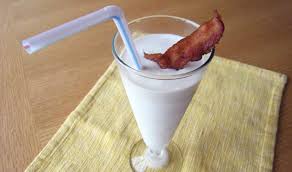
Which Has More Saturated Fat: Milk or Bacon?

MilkBacon

 
A glass of whole or even 2% milk has more saturated fat than 5 slices of bacon. Here’s the skinny:
    • One 0.5-ounce (14-gram) slice of bacon = about 0.02 ounces (0.57 grams) of saturated fat.
    • One 8-ounce (226-gram) glass of whole milk = about 0.18 ounces (5 grams) of saturated fat.
  • One 8-ounce (226-gram) glass of 2% milk = about 0.10 ounces (2.9 grams) of saturated fat.

More moo versus oink fat facts:

    • Soy milk has almost no saturated fat.
    • 1% skim milk still has about 0.06 ounces (1.6 grams) of saturated fat per 8-ounce (226-gram) glass.
    • Another possible health concern related to bacon: it’s cured with a preservative called sodium nitrite, which has been linked to a variety of health issues and disease, including cancer.
  • Bacon popularity has spread beyond the breakfast plate into such odd products as bacon vodka, bacon candles and bacon chocolate.

Good question Finlay

Why is the school nurse promoting dairy as a necessary and good food choice for the children?

Good question Finlay.

The very simple answer is that your mind has been captured by your parents’ acceptance of milk as a great food. Your Dad assumed it was a good product because his mom and I made it available to him.

Why do we accept milk, or any other product, as being good for us? Because, we trust our Mom and Dad to make the right choices for us.

Unfortunately, the Dairy industry has been brain washing school children for years. Even when your Bumpa went to school, we had a nurse come around and tell us how good milk was 67 years ago.

So, you can see we have been listening to the dairy industry for too long without questioning them.

It is hard to believe that we have all been deceived by this one group. The problem gets worse if you consider the nurse truly believes that she is telling you the truth. She and her parents were misled as well.

So we now have a belief system that says milk is good for you no matter what.

So, again, your mind has just accepted that milk is good for you without question. This is not because you are complacent, or not thoughtful. It is because you are trusting of your parents’ choices and of what the nurse is telling you.

The dairy industry wants us to be complacent, docile and subservient and not to question them or their products.

I know that you will make an informed decision on this topic as you make yourself aware of the real facts. The facts are as follows:

Dairy products will make you fat, they will clog your arteries with plaque, promote heart disease, obesity, and, worst of all, cancer. The protein in milk is a known carcinogen, that is, it promotes the growth of cancer once cancer is initiated. Most sinful of all, milk contributes to diabetes in infants and reduces the lives of many children to a life-long disease dependent on insulin medications to stay alive. The dairy industry has been warned and prohibited from promoting cows’ milk for consumption by children under 2 years old.

So, you see Finlay, there are other opinions but generally dissenting views are not published or supported by the establishment. By the way, acne and facial pock marks can be attributed to milk consumption by teenagers. Look good, avoid dairy.

That is why it is up to you to do one very important thing.

“THINK”

Salmon Confidential

Salmon Confidential—How a Canadian Government Cover-Up Threatens Your Health, and the Entire Ecosystem

April 13, 2013 | 297,731 views | + Add to Favorites
The Video   

By Dr. Mercola

Many environmental experts have warned about the unsustainability of fish farms for a decade now, and we have documented those objections in many previous articles. Unfortunately nothing has yet been done to improve the system.

As usual, government agencies and environmental organizations around the world turned a blind eye to what was predicted to become an absolute disaster, and now the ramifications can be seen across the globe, including in British Columbia, Canada.

Salmon Confidential is a fascinating documentary that draws back the curtain to reveal how the Canadian government is covering up the cause behind British Columbia’s rapidly dwindling wild salmon population. A summary of the film reads:1

“When biologist Alexandra Morton discovers BC’s wild salmon are testing positive for dangerous European salmon viruses associated with salmon farming worldwide, a chain of events is set off by government to suppress the findings.

Tracking viruses, Morton moves from courtrooms, into British Columbia’s most remote rivers, Vancouver grocery stores and sushi restaurants.

The film documents Morton’s journey as she attempts to overcome government and industry roadblocks thrown in her path and works to bring critical information to the public in time to save BC’s wild salmon.”

If you think watching a documentary about wild fish sounds boring, this film may well change your mind. It provides sobering insight into the inner workings of government agencies, and includes rare footage of the bureaucrats tasked with food and environmental safety.

It reveals how the very agency tasked with protecting wild salmon is actuallyworking to protect the commercial aquaculture industry, to devastating effect.

Once you understand just how important wild salmon are to the entire ecosystem, you realize that what’s going on here goes far beyond just protecting a fish species. Without these salmon, the entire ecosystem will eventually fail, and in case you’ve temporarily forgotten, you are part of this system, whether you’re a Canadian or not…

‘Keystone’ Species Missing in Action by the Millions

As explained in the film, a “keystone” species is a species of animal that is essential to the functioning of the ecosystem. It’s a species that other animals cannot survive without. In British Columbia (BC), pacific salmon are a keystone species. They fill hundreds of streams and rivers, feeding hundreds of species, including humans. Alas, since the early 1990’s, salmon numbers have rapidly dwindled, coinciding with the introduction of aqua farms raising farmed salmon.

Each year, millions of wild salmon go missing, and many are found to have died before spawning. They can be found littering the shores of rivers and streams in BC in large numbers.

Biologist Alex Morton has followed and studied the unusual decline in salmon stocks for nearly 30 years. She noticed that as commercial fish farms moved into the area, they had a detrimental impact on wild fish. The most obvious was a dramatic rise in parasitic sea lice in juvenile salmon, which naturally do not carry the lice. But that was just the beginning.

Fish farms breed pathogens that can spread like wildfire and contaminate any wild fish swimming past. Norway has recognized this problem, and does not permit fish farms to be located in rivers or streams populated by valuable native species. In British Columbia, no such restrictions exist.

On the contrary, not only has the Department of Fisheries and Oceans Canada (DFO) never taken the spread of disease into account when approving salmon farms in sensitive areas such as the Fraser River, the agency is actually covering up the fact that fish farms are the cause of dwindling salmon stocks.

Wild Salmon Declines Traced Back to Salmon Farms

The film discusses the fate of Dr. Kristy Miller, head of molecular genetics at DFO, who, using DNA profiling, discovered that the fish that die before spawning have a number of DNA switched on that healthy fish do not. In a nutshell, the wild salmon are dying from leukemia, retroviruses, brain tumors, and immune system decay…

Salmon leukemia virus raged through fish farms in the area in the early 1990’s when the farms were first introduced. A retrovirus, salmon leukemia virus attacks the salmon’s immune system, so it dies of something else, much like the process of AIDS. At the time, it was discovered that virtually all the BC Chinook salmon farms were infected. They also discovered that the virus killed 100 percent of the wild sockeye salmon exposed to it. Yet nothing was done…

Instead, as soon as Dr. Miller traced the problem to fish farms, she became ostracized, and effectively put under gag order. When her findings were published in the distinguished journal Science in 2011, the DFO did not allow her to speak to the press, despite the fact that her findings were hailed as some of the most significant salmon research of the decade.

Two years earlier, in 2009, the Fraser River experienced the worst salmon run in recorded history. Some 10 million fish went missing, leaving traditional people living along the river without catch. In response to the public outcry, the Canadian government created the Commission of Inquiry Into the Decline of Salmon in the Fraser River, also known as the Cohen Commission. The inquiry cost $26 million dollars and spanned across 150 days of hearings. Theories presented for the mysterious disappearance of the salmon included overfishing, sharks, water temperature, pollution, even predatory giant squid!

It wasn’t until the very end that attention was finally turned to the most logical source: salmon farms.

Dr. Ian Fleming testified about Norway’s discovery that fish farms are a source of pathogenic disease that can decimate native fish, and therefore does not permit salmon farms in certain areas frequented by wild salmon. British Columbia, in contrast, has approved at least 10 farms in one of the narrowest channels that wild sockeye salmon migrate through, and disease risk was not considered when approving any of them.

Lethal Salmon Virus Found in Every Region with Installed Salmon Farms

Dr. Rick Rutledge, professor and fisheries statistician at Simon Fraser University worried about river inlet sockeye, which were also dwindling in numbers just like Fraser River sockeye. He discovered that the river inlet sockeye were infected with Infectious Salmon Anemia Virus (ISA), also known as salmon influenza. This highly lethal and much-feared virus has proliferated in every region across the globe where Atlantic salmon farms have been installed.

First detected in Norway in 1984, infection spread to other countries via egg imports. In Chile, ISA wiped out 70 percent of the country’s salmon industry, at a cost of $2 billion. But Chile has no native salmon to decimate. British Columbia does… And contrary to Chile, the wild salmon of BC are absolutely critical to the ecosystem and residents of the area. The locals don’t just make money off these fish; it’s a main staple of their diet.

According to Morton, at least 11 species of fish in the Fraser River have been found to be infected with European-strain ISA, yet the Canadian food inspection agency has aggressively refuted the findings, and even attacked the credibility of two of the most preeminent experts on ISA testing, who testified that positive results were found to the Cohen Commission.

In fact, everyone who has spoken up about these salmon viruses, which can be traced back to salmon farms, has been shut down in some way or another. And by muzzling scientists like Dr. Miller, the Canadian government has effectively put the entire BC ecosystem at grave risk, just to protect commercial fish farming and international trade. In so doing, they’re also allowing potentially contaminated farm-raised salmon to be sold, exported, and consumed.

You May Be Buying Salmon Infected with Dangerous Fish Viruses

Morton tested farmed salmon purchased in various stores and sushi restaurants around British Columbia, and samples tested positive for at least three different salmon viruses, including:

  1. Infectious Salmon Anemia Virus (ISA)
  2. Salmon alphaviruses
  3. Piscine reovirus, which gives salmon a heart attack and prevents them from swimming upriver

The problem with this, aside from the unknown effects on human health from eating salmon with lethal fish viruses, is that viruses are preserved by cold, and fish are always kept frozen for freshness. Then, when you wash the fish, the viruses get flushed down the drain and depending on your sewer system, could be introduced into local watersheds. The environmental impact of this viral contamination is hitherto unknown, but it’s unlikely to be completely harmless.

“This is why it must become public,” Morton says. She insists that consumers, stores and trading partners must become aware of this problem, and be the ones to insist on proper testing and remedial action. It’s not just about protecting certain species of fish, it’s about the health of the ecosystem as a whole; it’s about human health and food safety as well.

How can you tell whether a salmon is wild or farm raised? As explained by Morton, the flesh of wild sockeye salmon is bright red, courtesy of its natural astaxanthin content. It’s also very lean, so the fat marks, those white stripes you see in the meat, are very thin. If the fish is pale pink with wide fat marks, the salmon is farmed.

Farmed Fish Pose a Number of Health Hazards to Your Health

Farm raised fish of all species can spell disaster for your health in a number of ways. It’s important to understand that ALL farm-raised fish – not just salmon — are fed a concoction of vitamins, antibiotics, and depending on the fish, synthetic pigments, to make up for the lack of natural flesh coloration due to the altered diet. Without it, the flesh of caged salmon, for example, would be an unappetizing, pale gray. The fish are also fed pesticides, along with compounds such as toxic copper sulfate, which is frequently used to keep nets free of algae.

Not only do you ingest these drugs and chemicals when you eat the fish, but these toxins also build up in sea-floor sediments. In this way, industrial fish farming raises many of the same environmental concerns about chemicals and pollutants that are associated with feedlot cattle and factory chicken farms. In addition, fish waste and uneaten feed further litter the sea floor beneath these farms, generating bacteria that consume oxygen vital to shellfish and other bottom-dwelling sea creatures.

Studies have also consistently found levels of PCBs, dioxins, toxaphene and dieldrin, as well as mercury, to be higher in farm-raised fish than wild fish. This fact alone would be cause to reconsider consuming farmed fish!

Wild caught fish have already reached such toxic levels, it’s risky to recommend eating them with a clear conscience. For example, according to a US Geological Survey study, mercury contamination was detected in EVERY fish sampled in nearly 300 streams across the United States. More than a quarter of these fish contained mercury at levels exceeding the EPA criterion for the protection of human health. So, when you consider the fact that factory farmed fish typically are even MORE toxic than wild-caught fish and also contain an assortment of antibiotics and pesticides, avoiding them becomes a no-brainer – at least if you’re concerned about your health.

To learn more about the differences between farmed salmon and wild salmon, specifically, please see my interview withRandy Hartnell, founder-president of Vital Choice Wild Seafood and Organics. I’m a huge fan of their wild sockeye salmon, and beside a fish dinner at a restaurant here or there, Vital Choice salmon is about the only type of fish I eat.


Buying Local Increases Food Safety and Food Security

Morton recommends buying local foods and wild fish. I couldn’t agree more. As mentioned in the film, disease in farm animals is one of the biggest sources of epidemics in humans. Therefore, the health of food animals cannot be treated as some sort of idealistic notion relegated to tree-huggers and animal-welfare crusaders.

Fish farms are the aquatic version of a confined animal feeding operation (CAFO), and just like their land-based cattle- and chicken farms, aquatic CAFO’s are a breeding ground for disease and toxic waste, and produce food animals of inferior quality. Due to the dramatically increased disease risk—a natural side effect of crowding—these animals are further contaminated with drugs, and in the case of salmon, synthetic astaxanthin, which is made from petrochemicals that are not approved for human consumption.

Wild salmon are dying from diseases cultivated and spread by salmon farms. Where is the sense in this? And instead of selling wholesome, nutritionally-superior wild salmon, Canada is selling inferior and potentially diseased salmon raised in fish farms. Who benefits, and who loses?

The industry will tell you the world needs inexpensive food, and inevitably, they insist that such foods can only be created using the latest technology and artificial means. The latest example of this craziness is the creation of what amounts to a vegetarian fish diet designed for carnivorous fish.2 Instead of fishmeal, the protein in this feed comes from bacteria, yeast or algae instead. This way, fish farms will not need to use valuable wild fish to feed farmed fish, and this, they claim, will help alleviate world hunger… Never mind the fact that by altering a fish’s diet in such a drastic way, you’re undoubtedly altering its nutritional content as well.

So at what cost should we clamor for cheap foods? At the expense of our environment and, potentially, the very lives of our descendants? We cannot be so blindly arrogant as to think that we can survive as a species if we allow the ecosystem to fall apart.

The ramifications of our large-scale, mass-producing, chemical-dependent food system are incredibly vast, which is why I urge you to become more curious about your food. Where, and how was it raised, grown, or manufactured? These things do matter; for your health, and the health and future of our planet.

Like Morton, I am also very concerned about our vanishing freedoms and increasing “corpotocracy,” where citizens are ruled by multi-national corporations with just one goal in mind: Maximizing Profit. A glaring example of this loss of freedom was Bill 37—the inappropriately named “Animal Health Act” which, had Canada made it into law, would have made it a crime to report farm animal disease to the public. Under this bill, informants would face a $75,000 fine and two years in prison simply for naming the location of a disease outbreak. Fortunately, the Act was dropped, but could potentially be revived sometime in the future…

Daikon, a promising anti-cancer vegetable

RIRDC Project No DAQ-342A, June 2007,  Dr Tim O’Hare Queensland Department of Primary Industries and Fisheries,

Queensland Horticulture Institute, Gatton Research Station


Objectives

Identify daikon and radish varieties with highest anti-cancer activity, following on from DAQ-307A which identified daikon and radish sprouts as having extremely high anti-cancer potential. Provide labelling advice in relation to the strongest possible claims that can be made.


Current Progress (June 2007)

Daikon and radish were analysed at the seed and sprouted-seed stage to identify cultivars high in the anti-cancer glucosinolate, glucoraphenin. Of the cultivars tested, ‘Cherry Belle’ and ‘Black Spanish’ maintained highest levels of glucoraphenin. Levels were highest in seed, and decreased with increasing sprout age. Decline in concentration was largely due to dilution associated with cell expansion, and partly due to other mechanisms. Differences in the latter appear to have impact on anti-cancer potential.


Analysis of mature daikon and radish tissue (roots and shoots) indicated that the principal glucosinolate in roots of all cultivars was glucodehydroerucin, which is estimated to have one tenth the potency of glucoraphenin, the principal glucosinolate found in seeds and young sprouts. By contrast, the principal glucosinolates present in mature shoots were glucoraphanin and glucoraphenin, both potent anti-cancer agents. Shoots were estimated to have approximately 20 times the anti-cancer potential of roots.


A scientific paper was presented at the International Horticultural Congress in Seoul (Korea) in August 2006 entitled: “Glucosinolate Composition and Anti-Cancer Potential of Daikon and Radish sprouts”. A poster presentation was made at the 6th Annual Health and Medical Research Conference of Queensland

(November, 2006).