

|
|||||
|

Why Prevention is Worth a Ton of Cure

More people might be open to changing their diet and lifestyle if they knew how little modern medicine has to offer for combating chronic diseases.
Doctor’s Note
This is the video I mentioned about how we wildly overestimate the efficacy of pills and procedures as well: The Actual Benefit of Diet vs. Drugs.
Here’s a link to the live presentation I mentioned: Uprooting the Leading Causes of Death. That’s about avoiding our deadliest diseases, More Than an Apple a Day addresses some of our most common andFrom Table to Able some of our most disabling.
For more background on how scandalous our handwashing history has been, see my Q&A What about Semmelweis and medicine’s shameful handwashing history? It’s truly an unbelievable story.
If you haven’t yet, you can subscribe to my videos for free by clicking here.
Dean Ornish, MD: A World Changer
|
Normal Numbers Don’t Equal Good Health
January 31, 2015
 A few years ago, I had a conversation with my aunt that went something like this:
Me: “I didn’t know you had high blood pressure.”
Aunt: “I don’t”
Me: “But I see these medications for high blood pressure on your counter.”
Aunt: “Yes, I take them and now I don’t have high blood pressure.”
Aunt: “I don’t”
Me: “But I see these medications for high blood pressure on your counter.”
Aunt: “Yes, I take them and now I don’t have high blood pressure.”
Turns out my aunt didn’t have high cholesterol either even though she was on cholesterol lowering medication. This same aunt suffered a heart attack a year later, almost died, and couldn’t understand where it came from seeing as she considered herself disease free and all of her “numbers” were under control.
Unfortunately, my aunt’s misconception is a very common phenomenon. We are lured by modern medicine and pharmaceutical companies to believe that pills that will get our numbers under control (blood pressure, blood sugar, cholesterol, etc.) will rid us of our diseases. In reality, these medications at best manage our diseases and more commonly give us a false sense of security that not only doesn’t cure us, but often gets us into trouble.
I tend to be a visual person and used this analogy when explaining to my aunt what went wrong for her. Imagine your blood vessels are pipes that should have blood, the consistency of water, flowing through them. Every time you eat fast foods, junk foods, fatty foods and these need to travel through the pipes you get greasy, fatty, thick liquid attempting to flow through. But this fluid cannot move as smoothly or as quickly. So, instead you get sluggish, slow moving blood that sticks to and plugs up the pipes. Medications, like a plumber, can come in and open the pipes but this is only a temporary fix. As long as you continue to eat those foods, you will continue to destroy the pipes no matter what or how much medication you are on.
So, what is the answer here – change the foods that you eat so that you preserve your pipes and the blood that runs through them. How? By choosing the most health promoting foods available to you – fruits, vegetables, whole grains and legumes. Use these as base ingredients for your favorite dishes – mashed potatoes, burgers, pizza, lasagnas, sandwiches, burritos, desserts, and more.
This year, choose healthy, choose vibrant, choose truly disease free!
- Make the commitment to try something new. Resources to help includenutritionstudies.org, forksoverknives.com, pcrm.org, and drmcdougall.com.
- Stress the positive – Focus on all that you will be gaining (more energy, better health, fewer to no medications, and the possibility of disease free living)
- Set realistic goals – What took years to develop may take some time to reverse. Aim for short-term as well as long-term goals. For example if you want to lose 30 pounds in a year, shoot for about 3 pounds in a month which would be about a pound every 10 days.
- Allow for imperfection – Challenges are bound to come up. Use them as opportunities for learning rather than as roadblocks.
- Reward success, both long-term and short-term – Making a change is not easy, so treat your-self to a job well done!
 Dr. Alona Pude is a board-certified practitioner of Acupuncture and Oriental Medicine and Family Medicine Physician specializing in nutrition and lifestyle medicine. Dr. Pulde is lead author of the books, Keep It Simple, Keep It Whole: Your Guide to Optimum Health and The Forks Over Knives Plan – A 4-week Meal by Meal Makeover. She also developed the Lifestyle Change Program used for patients in the film “Forks Over Knives,” as well as in her clinic, Exsalus Health & Wellness Center. Alona joined Whole Foods Market in 2010 to serve as a health and wellness medical expert.
The Actual Benefit of Diet vs. Drugs
The medical profession oversells the benefits of drugs for chronic disease since so few patients would apparently take them if doctors divulged the truth.
Doctor’s Note
Yes, an ounce of prevention is worth a pound of cure, but a pound isn’t that heavy—why change our diet and lifestyle when we can just wait and let modern medicine fix us up? Turns out we overestimate the efficacy of treatment as well, the subject of my next video, Why Prevention is Worth a Ton of Cure.
Sometimes preventive medicine procedures can even be harmful. See Cancer Risk From CT Scan Radiation and Do Dental X-Rays Cause Brain Tumors?
I’ve previously noted how an honest physician-patient interaction might go in Fully Consensual Heart Disease Treatment. What should we be saying? See: What Diet Should Physician’s Recommend?
So why don’t more doctors do it? See Barriers to Heart Disease Prevention.
More on Dr. Esselstyn’s heart disease reversal study in: Evidence-Based Medicine or Evidence-Biased?
Of course then there’s just the brute force method: Kempner Rice Diet: Whipping Us Into Shape.
If you haven’t yet, you can subscribe to my videos for free by clicking here.
The Remarkable Pope Francis—Cuba and Beyond!

My Christmas Prayer for 2014 involves his special leadership.
 Christmas photo that I snapped on December 13, 2014, in Vermont. All that WHITE reminds me of the pope.
In my most recent blogpost a few weeks ago, after hearing of his speech at a U.N. conference about world hunger and the environment, I made an appeal for the pope to get seriously involved in promoting the ONLY pragmatic solution to climate change and sustainability. That appeal was posted on 11-26-14. Pope speaks out regarding FOOD & ENVIRONMENT
Three weeks later, we learn of how Pope Francis helped facilitate the normalization of relations with Cuba—after 53 years. From the NY Times (See link below):
WASHINGTON — The deal that freed an American jailed in Cuba and ended 53 years of diplomatic estrangement between the United States and Cuba was blessed at the highest levels of the Holy See but cut in the shadowy netherworld…
View original post 854 more words
Hard to Swallow: How Meat Advocates Skewer Science

In 1974, a new book titled We Never Went to the Moon: America’s Thirty Billion Dollar Swindle alleged that NASA faked the lunar landing. In 2001, the Fox network broadcasted a documentary on the subject, and a follow-up survey showed that as many as one in five Americans doubted that Neil Armstrong’s boots had ever touched the moon’s surface.
Fast-forward to June 23, 2014. Time magazine’s cover proclaimed in large type “Eat Butter” and featured a big artistic swirl of the stuff. Several other publications—the New York Times, the Wall Street Journal, the New Scientist, and others—ran similar stories. The experts have been wrong all this time, the articles exclaimed. Fat isn’t unhealthy after all. Steak and pork chops won’t hurt you. Go ahead, dig in!
Of course, meat and dairy products are strongly linked to all manner of health problems, from heart disease to cancer, diabetes, obesity, and hypertension. So what is behind the contrarian stories?
Eskimos and Maasai
Some of the articles were based on a new book called The Big Fat Surprise: Why Butter, Meat, and Cheese Belong in a Healthy Diet. Its author, Nina Teicholz, aimed to rehabilitate meat’s image, starting with Eskimo and Inuit populations of the far north. They have almost no heart disease, she held, despite a diet heavy on fish and blubber. Was she right or wrong?
Wrong. A study from the University of Ottawa Heart Institute published in the Canadian Journal of Cardiology showed that cardiovascular disease has been at least as frequent among northern native populations as for others.1 Strokes have been particularly common, and life expectancy overall was found to be about a decade shorter. Heart disease seemed rare among northern native populations mainly because reporting of medical problems has been spotty.
Teicholz then invoked the Maasai, an African population who are supposedly free of heart disease, despite a diet of meat, milk, and blood. Right or wrong?
Wrong. Researcher George V. Mann wrote in 1978, “We have collected hearts and aortae from 50 authenticated Maasai men who died of trauma and we found extensive atherosclerosis.”2
Okay, so the Maasai’s arteries are clogged with atherosclerotic plaques. But they don’t have heart attacks, Teicholz maintained; so meat and milk must be safe. Right or wrong?
Wrong. Plaques that form in arteries can rupture, sparking the formation of a clot that blocks blood flow like a cork in an artery, causing a heart attack. Teicholz’s notion was that the Maasai have plaques, but the plaques somehow never rupture, like time bombs that never explode. This is highly unlikely. A better explanation for the lack of reported heart attacks among the Maasai comes from their tragically short life expectancy. If life is cut short in one’s 40s by an accident or an infection, plaques have not had enough time to produce a heart attack. Moreover, in a rural population with limited medical care and poor medical records, heart attacks may not be recognized or reported.
Ancel Keys and the Seven Countries Study
Teicholz and other fat-backers zeroed in especially on Ancel Keys, the University of Minnesota researcher who identified the dangers of fatty foods in the 1950s. Looking at six countries with reliable dietary and medical records, Keys found a clear association between fat intake and heart disease deaths.3
But as Teicholz tells it, the rug was pulled out from under Ancel Keys by University of California at Berkeley statistician Jacob Yerushalmy.4 If Keys had zeroed in on more countries than just six, Yerushalmy held, the relationship between saturated fat and heart disease would have been weakened. In Teicholz’s words, it “nearly disappeared.” Right or wrong?
Wrong. Including additional countries, as Yerushalmy suggested, did muddy the correlation between fat and heart disease deaths, because many of these countries had poor data on diet or medical care at that time. Even so, the correlation between fat and heart deaths remained high, and the correlation between animal protein and heart deaths was even higher.
Meta-analysis
What really grabbed the headlines, however, was a meta-analysis published in early 2014 by the Annals of Internal Medicine.5 The meta-analysis combined 72 smaller studies, finding no overall effect of saturated fat on heart risks. According to the fat lobby, that proved that “bad” fat isn’t bad for your heart after all. Right or wrong?
Wrong. The Annals meta-analysis combined data from many studies. Some were designed to accurately show the dangerous effects of saturated fat. The designs of other studies did not make the hazards of saturated fat readily apparent. The net result was that the two types of studies canceled each other out, showing no risks. For example, take these two studies the Annals meta-analysis included:
The Oxford Vegetarian Study6 included 11,000 people whose diets ranged from vegan to ovolactovegetarian to nonvegetarian, with saturated fat intake ranging from a low of 6 percent of calories to more than 13 percent of calories. The study found that the fattiest diets tripled the risk of dying of heart disease, compared with diets that had very little saturated fat.
But in a Swedish study, no groups were on lower-fat diets. All of the study groups averaged more than 13 percent of their calories from saturated fat.Not surprisingly, the study could not identify any effect of avoiding saturated fat, because no groups in the study had a low fat intake.
Is Meat Safe or Not?
 Of course, no one orders saturated fat at a restaurant or puts it on a shopping list. This fat is hidden in meat, dairy products, and other foods. And here, the evidence is crystal clear. Meat-eaters are heavier than people who avoid meat. They have higher blood pressure, higher risk of diabetes, cancer, heart disease, and many other problems. And in carefully controlled studies, when people take meat out of their diets, they lose weight, and cholesterol, diabetes, and heart disease all improve. So while researchers debate the statistics on saturated fat, it pays to remember that getting away from meat is a healthy choice.
So how could the media have been duped? As John McDougall, M.D., said, people are always looking for good news about bad habits.
1. Fodor GJ, Helis E, Yazdekhasti N, Vohnout B. “Fishing” for the origins of the “Eskimos and heart disease” story: facts or wishful thinking? Can J Cardiol. 2014;30:864-868.
2. Mann GV. The Masai, milk, and the yogurt factor: an alternative explanation. Atherosclerosis. 1978;29:265.
3. Keys A. Atherosclerosis: a problem in newer public health. J Mt Sinai Hosp NY. 1953;20:118-139.
4. Yerushalmy J, Hilleboe HE. Fat in the diet and mortality from heart disease: a methodologic note. NY State J Med. 1957;57:2343-2354.
5. Chowdhury R, Warnakula S, Kunutsor S, et al. Association of dietary, circulating, and supplement fatty acids with coronary risk: a systematic review and meta-analysis. Ann Intern Med. 2014;160:398-406.
6. Appleby PN, Thorogood M, Mann JI, Key TJA. The Oxford Vegetarian Study: an overview. Am J Clin Nutr. 1999;70:525S-531S.
7. Wallstrom P, Sonestedt E, Hlebowicz J, et al. Dietary fiber and saturated fat intake associations with cardiovascular disease differ by sex in the Malmo Diet and Cancer Cohort: a prospective study. PLoS One. 2012;7:e31637.
CAPTIONS:
Maasai woman
Ancel Keys
The Dairy and Meat Industry again and again.

RON KRAUSS
Tofu. It was just a mixed diet all together. In that setting, with carbohydrate intake kept moderately low, saturated fat did not raise Apo-B. It didn’t raise the number of LDL particles. It didn’t increase inflammatory markers either. It didn’t raise any of the really meaningful basis of heart disease risk.
So that was an interesting study which showed that eating more saturated fat does not increase heart disease risk. But then, there’s that newer study you’ve done that involves saturated fat and red meat. And it’s a fascinating study because of some clues it gives about how health may be affected by both saturated fat and red meat. Right now there’s a great deal of concern that eating red meat may be dangerous for people’s health. But the question is why. In your recent study, you hint at a reason why.
RON KRAUSS
We published a paper this past fall in the Journal of Nutrition, in which we reported the results of the study that we carried out as a followup to the one we just discussed. Now, in the interest of full disclosure, I have to say that the first study was funded the National Dairy Council, and we used dairy fat and dairy products liberally in that study, since they’re high in saturated fats. The second, more recent study was funded by the National Cattleman’s Beef Association because they felt, and frankly we felt at the time, based on the evidence we had, that feeding a high saturated fat and low carbohydrate intake would have the same benefit on a high beef diet as as on a mixed protein diet, and bottom line is that when we did the study, we found out that was not the case.
So using what you learned from your 2006 study of a mixed-protein diet and high saturated fats, in this new study, you kept carbohydrates somewhat low, and fats somewhat higher, just as you did in 2006. Really, the main difference was that this time, you didn’t feed a variety of protein sources. Your test subjects just ate lots and lots of beef. And this time, you found that “healthy” blood work depended not only on what kind of protein people ate, but what kind of fat the people WITH the protein. So if you get out your Sherlock Holmes hat and pipe, what were the clues and what did they mean?
Dandelion Greens Are Everywhere
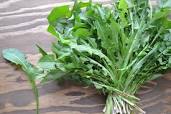
Nutritonal Highlights: Dandelion greens are a nutritional powerhouse. The plant has been used since antiquity as a diuretic, a liver tonic, to treat skin conditions and a whole host of other health problems.
They are packed with vitamins and minerals. One cup of cooked dandelion greens has more calcium than a cup of cottage cheese but only 34 calories. It provides 12% of the fiber, 19% of the iron and 28% of the Vitamin C that (averaging for adults and children) the USDA suggests that we get in our diets each day. Dandelion provides more vitamin A than an equal amount of kale, collard greens or summer squash, giving you 85% of the daily recommended intake.
The one cup serving also contains 2.1 grams of protein, many minerals including potassium, magnesium and phosphorous as well as vitamin E, thiamin, riboflavin, B-6 and folate.”
What is Vital Wheat Gluten?
Posted by: Lindsay S. Nixon | 42 Comments
Category: FAQ
There seems to be some confusion about vital wheat gluten. Both my Dad and my sister Courtney were confused about it this week.
Gluten is the protein found in wheat. Its what gives bread its shape and pizza dough its elasticity.
Vital wheat gluten is just the protein in a powdered form. It is made by washing wheat flour dough with water until all the starches dissolve, leaving just the gluten behind.
Although vital wheat gluten looks like a flour, it’s not a “flour” like whole-wheat is a flour, rather it’s powdered gluten.

Vital wheat gluten is the main ingredient in seitan (SAY-tan). To make seitan, you generally mix the powdered gluten (vital wheat gluten) with spices and then add water to make a dough.
When the gluten dough is steamed, baked, boiled, or otherwise cooked, it becomes chewy with a very meat-like texture, and is referred to as seitan.
Although seitan is made from vital wheat gluten, they are not one and the same. For example, if a recipe calls for vital wheat gluten, you cannot use seitan. Similarly, if a recipe calls for seitan, you cannot use vital wheat gluten in its place, but you can use the flour to make seitan for the recipe.
The best analogy I have is vital wheat gluten and seitan are like cornmeal and corn. You can’t use cornmeal instead of corn in a recipe, and you can’t use corn instead of cornmeal in a recipe, but you could mill the corn to make cornmeal to use in the recipe. Get it?
Vital wheat gluten also works as a binding agent, such as helping hold things like mushroom burgers together.
You can find vital wheat gluten in the baking section of health food stores or online. There are two main brands in the United States: Bobs Red Mill and Arrowhead Mills.

If you are celiac, or have a wheat or gluten sensitivity/allergy, you cannot use vital wheat gluten. However, there is a GF substitute for vital wheat gluten and it can also make GF seitan.
You can find OrgraN gluten substitute on Amazon or at health food stores with a generous GF section.
One last note: vital wheat gluten is not the same as “gluten flour.” Gluten flour has more gluten in comparison to regular whole-wheat flour, but it does not contain enough gluten to make seitan. If you try to make seitan using gluten flour, you’ll get a mushy dumpling, not chewy, meaty seitan.
 The Way To Eat