Western Diets Bring Alzheimer’s to Developing Countries

September 18, 2013 

KFC in China. Increased animal fat consumption in developing countries is associated with more Alzheimer’s disease, according to a new study published in the Journal of Alzheimer’s Disease.Increased animal fat consumption in developing countries is associated with more Alzheimer’s disease, according to a new study published in the Journal ofAlzheimer’s Disease. Researchers analyzed dietary data from populations 65 years and older in Japan and in eight developing countries including India, China, and Brazil. As animal fat and calorie consumption increased, so did obesity rates and prevalence of Alzheimer’s disease. According to the author, mechanisms for dementia risk include increased obesity and increased intake of saturated fat, cholesterol, and iron.

Grant WB. Trends in diet and Alzheimer’s disease during the nutrition transition in Japan and developing countries. J Alzheimers Dis. Published ahead of print September 13, 2013.

The Top Ten Vegetables

Videos > Health and Fitness > Health > Top 10 Vegetables
10
VIDEO

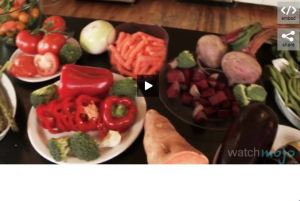
Top 10 Vegetables
in: LISTS NUTRITION TOP 10 hosted by Rebecca Brayton
Top 10 Vegetables You are what you eat, and if you eat these vegetables you are healthy! They say an apple a day keeps the doctor away, but that’s not the only food that can keep you in tip-top shape: veggies also play a hugely important role in overall nutrition. From sweet potatoes, asparagus, eggplant, and beets, to bell peppers, dark green veggies, tomatoes and carrots; there are tons of veggies that have the nutrients you need to lead a healthy lifestyle. In this video, WatchMojo.com counts down our picks for the top 10 vegetables, based on their health attributes, price, flavor and convenience. (This video is provided for educational and entertainment purposes only. Always seek the advice of your health care provider.)
TRIVIA
Which of the following is part of the allium food family?
Carrots
Broccoli
Garlic
Tomatoes
Which of the following is a cruciferous vegetable?
Broccoli
Asparagus
Alfalfa sprouts
Eggplant
Smokers and diabetics can benefit from eating sweet potatoes because their vitamin A protects against emphysema, while their low glycemic index rating keeps insulin levels normal.
TRUE
FALSE
Green bell peppers have more health benefits than red bell peppers.
TRUE
FALSE

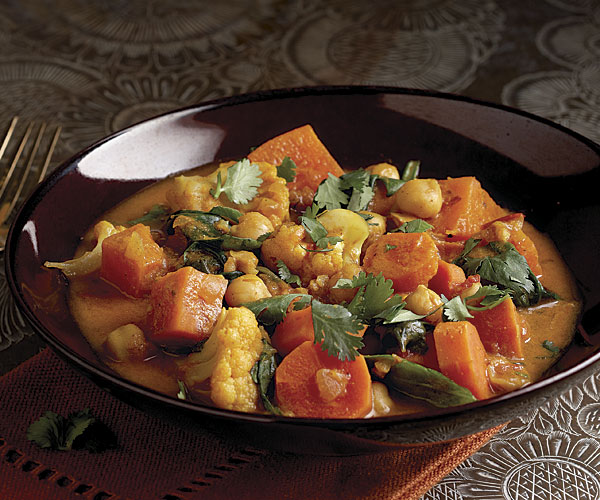
South Indian-Style Vegetable Curry

South Indian-Style Vegetable Curry
051107033-01-indian-vegetable-curry-recipe_xlg

by Ellie Krieger
from Fine Cooking
Issue 107

This easy one-pot meatless main gets its complex flavor from a combination of spices including coriander, cumin, turmeric, cayenne, and cinnamon. The spices marry in a rich, flavorful sauce that has a comforting, belly-warming appeal.

Read Ellie Krieger’s blog post to learn more about the healing power of spices and how this recipe came together.

more about:

garlic coriander seeds ginger onions canola oil cumin seeds turmeric cayenne tomato paste vegetable stock coconut milk cinnamon sea salt black peppercorns cauliflower sweet potatoes tomatoes carrots chickpeas spinach limes cilantro
2 Tbs. canola oil
1 large yellow onion, finely diced
4 medium cloves garlic, minced
One 2-inch piece fresh ginger, peeled and finely grated (1 Tbs.)
1 Tbs. ground coriander
1-1/2 tsp. ground cumin
3/4 tsp. ground turmeric
1/2 tsp. cayenne
1 Tbs. tomato paste
2 cups lower-salt chicken broth or vegetable broth
1 cup light coconut milk
One 3-inch cinnamon stick
Fine sea salt and freshly ground black pepper
1 small cauliflower, broken into 1-1/2-inch florets (about 4 cups)
1 lb. sweet potatoes, peeled and cut into 1-inch cubes (about 3 cups)
2 medium tomatoes, cored, seeded, and coarsely chopped (about 1-1/2 cups)
2 large carrots, peeled and cut into 1/2-inch-thick rounds (about 1 cup)
One 15-1/2-oz. can chickpeas, drained and rinsed
4 oz. baby spinach (about 4 lightly packed cups)
2 Tbs. fresh lime juice
1 tsp. finely grated lime zest
2 Tbs. chopped fresh cilantro
In a 5- to 6-quart Dutch oven or other heavy-duty pot, heat the oil over medium-high heat. Add the onion and cook, stirring occasionally, until beginning to brown, 3 to 4 minutes. Reduce the heat to medium (or medium low if necessary) and cook until the onion is richly browned, 5 to 7 minutes more. Add the garlic and ginger; cook, stirring, for 1 minute to blend the flavors. Add the coriander, cumin, turmeric, and cayenne; stir for 30 seconds to toast the spices. Add the tomato paste and stir until well blended with the aromatics, about 1 minute.

Add the broth, coconut milk, cinnamon stick, 1 tsp. salt, and 1/4 tsp. pepper and bring to a boil. Reduce the heat to medium low or low and simmer for 10 minutes.

Add the cauliflower, sweet potatoes, tomatoes, and carrots. Raise the heat to medium high and return to a boil. Reduce the heat to medium low, cover, and simmer until the vegetables are tender, 20 to 25 minutes. Discard the cinnamon stick.

Stir in the chickpeas, spinach, lime juice, and zest; cook until the spinach has wilted, about 3 minutes more. Season to taste with salt. Serve garnished with the cilantro.

Serving Suggestions
This curry only needs a basic brown rice or white basmati rice to be a complete meal.

nutrition information (per serving):
Calories (kcal): 300; Fat (g): 10; Fat Calories (kcal): 90; Saturated Fat (g): 2; Protein (g): 12; Monounsaturated Fat (g): 3.5; Carbohydrates (g): 45; Polyunsaturated Fat (g): 2.5; Sodium (mg): 680; Cholesterol (mg): 0; Fiber (g): 12;

PHOTO: SCOTT PHILLIPS

Heart Disease Starts in Childhood

Heart Disease Starts in Childhood
By age 10, nearly all kids have fatty streaks in their arteries This is the first sign of atherosclerosis, the leading cause of death in the United States. So the question for most of us is not whether we should eat healthy to prevent heart disease, but whether we want to reverse the heart disease we may already have.

The Power Plate

Power-Plate-RGB

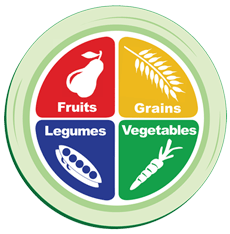
These four food groups provide the good nutrition you need. There is no need for animal-derived products in the diet, and you’re better off without them. Be sure to include a reliable source of vitamin B12, such as any common multiple vitamin or fortified foods.

Diabetes Treatments Do More Harm Than Good

John McDougall, MD


Dr John McDougall

Undeniable Evidence: Diabetes Treatments Do More Harm Than Good

Glucose Control and Vascular Complications in Veterans with Type 2 Diabetes by William Duckworth in the December 17, 2008 issue of the New England Journal of Medicine found, “Intensive glucose control in patients with poorly controlled type 2 diabetes had no significant effect on the rates of major cardiovascular events, death, or microvascular complications.”1This study, called the Veterans Affairs Diabetes Trial (VADT) was of 1791 military veterans (mean age 60.4 years) who had a suboptimal response to therapy for type-2 diabetes. They were assigned to receive either intensive- or standard-glucose control and studied for 5.6 years.  The intensive-therapy reduced the Hemoglobin A1c levels to 6.9%; compared to 8.4% in the standard-therapy group.  The patients were also put on aspirin and a statin. 

A weight gain of 18 pounds occurred with the intensive-treatment compared to 9 pounds with standard-therapy. There were 95 deaths from any cause in the standard-therapy group and 102 in the intensive-therapy group. In the intensive-therapy group, the number of sudden deaths was nearly three times the number as those in the standard-therapy group (11 vs. 4). More patients in the intensive-therapy group had at least one serious adverse event, predominantly hypoglycemia, than in the standard-therapy group.

These pharmaceutical companies—Sanofi-Aventis, GlaxoSmithKline, Novo Nordisk, Roche, Kos Pharmaceuticals, and Amylin—provided medications and financial support for the study.

Comment: This is the third industry-funded study published this year showing aggressive treatment hurts patients. On June 12, 2008 the ACCORD* trial and ADVANCE** trials were also published in the New England Journal of Medicine.2,3Together, the effect of these three well-designed randomized studies should be enough to halt aggressive prescribing of diabetic pills and insulin to type-2 diabetics.Will this overwhelming evidence change how doctors practice? Probably not. Drug companies have millions of advertising dollars dedicated to emphasizing any slight benefits their drug treatments may show and minimizing the harms. In this manner they convince doctors to prescribe and patients to buy useless and harmful products.  Most doctors are too afraid of lawsuits to stand up for the patients and against the drug companies. To change current practice, doctors need to fear being sued for too aggressively treating patients.  Even more, they need to fear being sued for failing to prescribe the correct treatment for type-2 diabetics—a change in diet.   None of these three studies published in one of the world’s most prestigious medical journals taught dietary and lifestyle modification to their patients.

Currently, Food and Drug Administration (FDA) approval for a diabetic medication requires evidence that the drug will lower blood sugar—not that it improves the patient’s life.  The title of my February 2008 newsletter describes the results of such narrowly focused therapy: “Intensive Therapy Means Dying Sooner with Better Looking Numbers.”  The FDA is as of December 2008 recommending that all new drugs developed for the treatment of type-2 diabetes show that they do not increase the risk of cardiovascular events.  However, this is not a requirement, just a recommendation or suggestion to the pharmaceutical companies.4

Eating the rich western diet causes type-2 diabetes.  My February 2004 newsletterprovides details on the cause and how a change in diet will cure essentially all type-2 diabetics—at the same time causing them to lose weight, reverse heart disease, and dramatically improve their overall health.

*ACCORD = Action to Control Cardiovascular Risk in Diabetes

**ADVANCE = Action in Diabetes and Vascular Disease: Preterax and Diamicron Modified Release Controlled Evaluation

1) Duckworth W, Abraira C, Moritz T, Reda D, Emanuele N, Reaven PD, Zieve FJ, Marks J, Davis SN, Hayward R, Warren SR, Goldman S, McCarren M, Vitek ME, Henderson WG, Huang GD; the VADT Investigators. Glucose Control and Vascular Complications in Veterans with Type 2 Diabetes. N Engl J Med. 2008 Dec 17. [Epub ahead of print]

2) Action to Control Cardiovascular Risk in Diabetes Study Group, Gerstein HC, Miller ME, Byington RP, Goff DC Jr, Bigger JT, Buse JB, Cushman WC, Genuth S, Ismail-Beigi F, Grimm RH Jr, Probstfield JL, Simons-Morton DG, Friedewald WT. Effects of intensive glucose lowering in type 2 diabetes. N Engl J Med. 2008 Jun 12;358(24):2545-59.

3) ADVANCE Collaborative Group, Patel A, MacMahon S, Chalmers J, Neal B, Billot L, Woodward M, Marre M, Cooper M, Glasziou P, Grobbee D, Hamet P, Harrap S, Heller S, Liu L, Mancia G, Mogensen CE, Pan C, Poulter N, Rodgers A, Williams B, Bompoint S, de Galan BE, Joshi R, Travert F. Intensive blood glucose control and vascular outcomes in patients with type 2 diabetes. N Engl J Med. 2008 Jun 12;358(24):2560-72.

Health Gains from Whole Grains

For millennia, the grains humans ate came straight from the stalk. That means they got a carbohydrate package rich in fiber, healthy fats, vitamins, minerals, plant enzymes, hormones, and hundreds of other phytochemicals.


Even after we learned how to grind grain, we still got all of the goodness that grains pack in their three layers. Whole grains have a tough, fibrous outer layer called bran that protects the inside of the kernel. The interior contains mostly the starchy endosperm. Its job is to provide stored energy for the germ, the seed’s reproductive kernel, which nestles inside the endosperm. The germ is rich in vitamins, minerals, and unsaturated oils.

The invention of industrialized roller mills in the late 19th century changed what we got from grains. Milling strips away the bran and germ, making the grain easier to chew, easier to digest, and easier to keep without refrigeration (the healthy oils in the germ can turn rancid, giving the grain an off taste). Processing also pulverizes the endosperm, turning it from a small, solid nugget into millions of minuscule particles.

Refining wheat creates fluffy flour that makes light, airy breads and pastries. But there’s a nutritional price to be paid for refined grains. The process strips away more than half of wheat’s B vitamins, 90 percent of the vitamin E, and virtually all of the fiber. It also makes the starch easily accessible to the body’s starch-digesting enzymes.

A growing body of research shows that returning to whole grains and other less-processed sources of carbohydrates and cutting back on refined grains improves health in myriad ways.

Preventing Diabetes


Keeping weight in check, being active, and eating a healthy diet can prevent most cases of type 2 diabetes.


There’s good news and bad news about type 2 diabetes, which used to be called adult onset diabetes. The bad news? It’s striking people at younger and younger ages, and rates are skyrocketing globally as the population grows heavier and gets less physical activity. The good news? It’s highly preventable.

Keeping weight in check and being physically active can help prevent most cases of the disease. Choosing a diet rich in whole grains and healthy fats adds even more protection—skip the refined grains and sugary soda. Limiting red meat—steak, hamburger, pork chops, and the like—and avoiding processed meat—bacon, hot dogs, and deli meats—can also help lower diabetes risk. Go for healthier protein sources instead, such as nuts, beans, poultry, and fish.

Here are five quick tips to help prevent diabetes:

1. Put exercise first—and put television last. Regular exercise by itself can cut diabetes risk. That it also helps keep weight in check adds even more benefit. Choose things you enjoy and do them every day. Too much television-watching ups diabetes risk—an increase of 20 percent for every 2 hours you watch. So trade some of your sit-time for fit-time.

2. Try to keep weight in check. Being a healthy weight is the best thing you can do to lower your risk of diabetes. Need to lose weight? Getting active and eating a healthy diet, with smaller portions, s-l-o-w-l-y are your best bets.

3. Choose healthy fats and proteins, and skip the red and processed meat. Sure, they’ve got long names, but a diet rich in mono and polyunsaturated fats can help lower your risk of diabetes and heart disease. Canola oil and olive oil are great choices, as are the fats in avocados, nuts, and seeds. For protein, replace the steaks, chops, hot dogs, and bacon with nuts, beans, poultry, or fish.

4. Focus on plant foods. A diet high in whole grains can help lower the risk of diabetes and keep appetite in check. Choose a good variety of whole grain foods prepared in interesting ways, such as Mollie Katzen’s recipe for couscous-quinoa tabouli.

5. Cut back on refined carbs and sugary drinks. White bread, white rice, white pasta and potatoes cause fast and furious increases in blood sugar, as do sugary soft drinks, fruit punch, and fruit juice. Over time, eating lots of these refined carbohydrates and sugar may increase your risk of type 2 diabetes.  To lower your risk—switch to whole grains and skip the sugar, especially the sugary drinks. Drink water, coffee or tea instead.

Pale Blue Dot- Carl Sagan

Pale Blue Dot Close

images

 The photos above  of the pale blue dot…….”a mote of dust suspended in a sunbeam” as Dr Sagan put it. His comments below are worthy reading for all earthlings.


“We succeeded in taking that picture [from deep space], and, if you look at it, you see a dot. That’s here. That’s home. That’s us. On it, everyone you ever heard of, every human being who ever lived, lived out their lives. The aggregate of all our joys and sufferings, thousands of confident religions, ideologies and economic doctrines, every hunter and forager, every hero and coward, every creator and destroyer of civilizations, every king and peasant, every young couple in love, every hopeful child, every mother and father, every inventor and explorer, every teacher of morals, every corrupt politician, every superstar, every supreme leader, every saint and sinner in the history of our species, lived there on a mote of dust, suspended in a sunbeam.

The earth is a very small stage in a vast cosmic arena. Think of the rivers of blood spilled by all those generals and emperors so that in glory and in triumph they could become the momentary masters of a fraction of a dot. Think of the endless cruelties visited by the inhabitants of one corner of the dot on scarcely distinguishable inhabitants of some other corner of the dot. How frequent their misunderstandings, how eager they are to kill one another, how fervent their hatreds. Our posturings, our imagined self-importance, the delusion that we have some privileged position in the universe, are challenged by this point of pale light. Our planet is a lonely speck in the great enveloping cosmic dark. In our obscurity — in all this vastness — there is no hint that help will come from elsewhere to save us from ourselves. It is up to us. It’s been said that astronomy is a humbling, and I might add, a character-building experience. To my mind, there is perhaps no better demonstration of the folly of human conceits than this distant image of our tiny world. To me, it underscores our responsibility to deal more kindly and compassionately with one another and to preserve and cherish that pale blue dot, the only home we’ve ever known.”

Carl Sagan

SO

It is such a miracle that we are here. The symphony of the Universe and life on earth  is our gift to enjoy and cherish. Honor your body by treating it with respect, nourish your mind and body with good thoughts and good food. That is your responsibility.