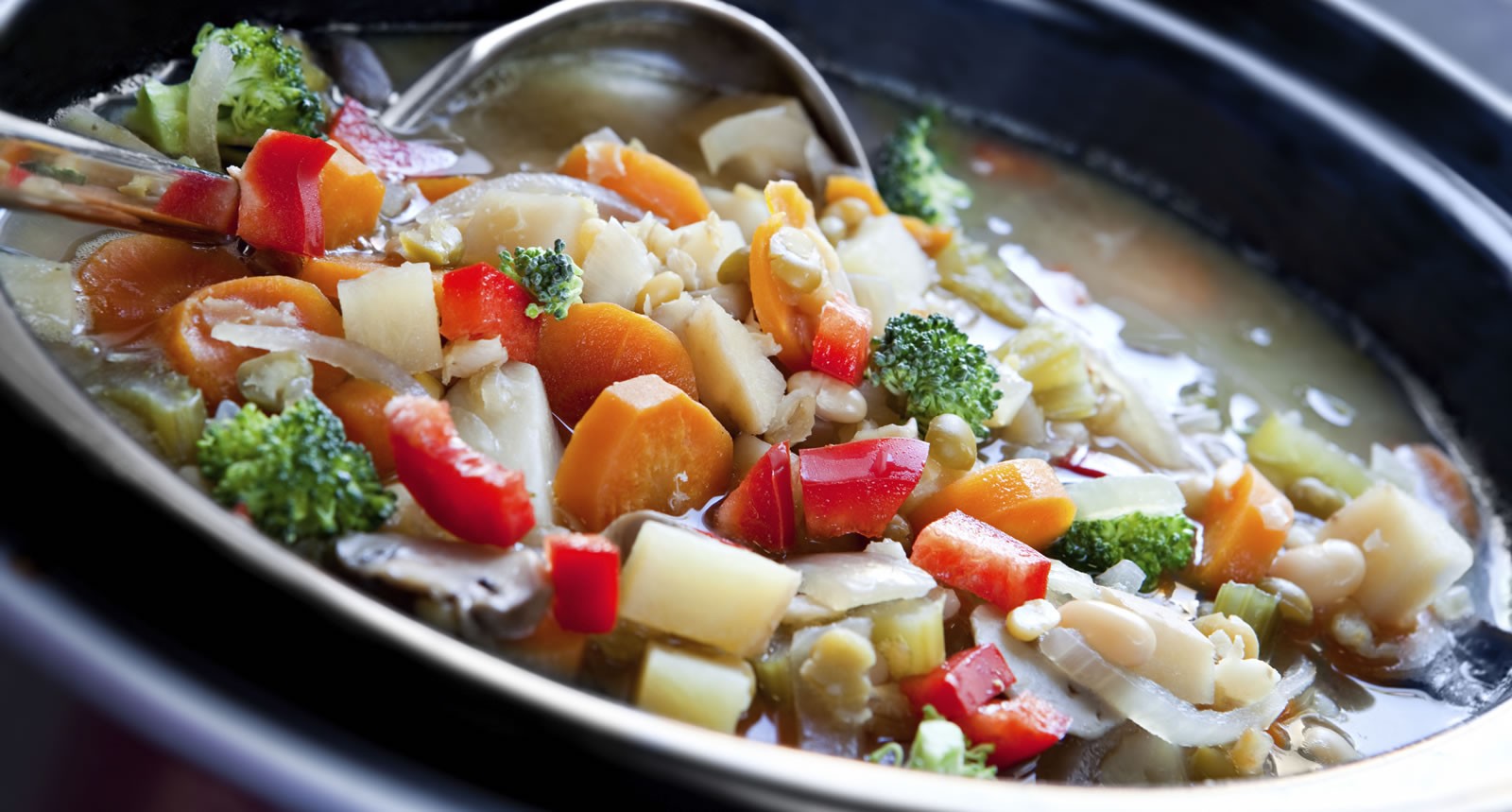
Basic Nutrition

Dr John McDougall

Nutrients are substances which are essential for the maintenance, repair, growth, and reproduction of all our body tissues. Our foods contain the following basic nutrients: carbohydrates, fats, proteins, and water.

Carbohydrates, our body’s most efficient source of energy and an essential component in the production of many structural and functional materials, are produced by plants in the process of photosynthesis. They are made of compounds of carbon, hydrogen, and oxygen called sugars or saccharides. Molecules of these simple sugars attach together to make long branching chains that are called complex carbohydrates. These large carbohydrate molecules are also commonly referred to as starch.

Once you eat them, digestion by intestinal enzymes disassembles these chains back into the simple sugars, which then pass easily through the intestinal wall into the bloodstream, where they journey to the body’s tissues. Metabolic processes change these simple sugars into energy, which provides fuel for the body’s activity.

Dietary fibers are even longer chains of complex carbohydrates. Unlike starch molecules, these fibers resist digestion because of their chemical configurations. Therefore, most fibers eventually end up in the colon and form the bulk of your stool. Most people think that fibers are only the husks of grains and the long stringy components in fruits and vegetables, but actually, dietary fibers are present in all plant tissues. For example, after a potato is peeled, the white matter we eat has plenty of relatively indigestible fibers in it.

Fats too are complex molecules made up of carbon, oxygen, and hydrogen. Although they are not as easily digested as sugars are, fats are sources of energy and they provide important structural materials for building different components of the human body. Fats are divided into two categories: saturated fats (solid at room temperature), found mostly in animal tissues, and unsaturated fats (liquid), found mostly in plant tissues. Most fats can be synthesized by our own bodies from carbohydrates as they are needed. The fats that we can synthesize are said to be nonessential because they are not necessary ingredients in our diet. The only fats we cannot synthesize for ourselves are a few unsaturated fats. They must be provided to us, ready-made, in our foods and therefore are called essential fats.

Proteins provide the raw materials for a large part of the functional and structural components of our bodies. Only as a last resort are they used as a source of energy. The building blocks that make up all proteins are called amino acids. Various combinations of the same twenty two- amino acids, put together as are the letters of the alphabet that can form a whole dictionary of words with different meanings, make all of the proteins in nature. Proteins are found in all foods derived from animals and plants, unless they have been removed or altered by refining processes. Only eight of the twenty-two amino acids are essential to us, because they cannot be made in human metabolism. These eight essential amino acids must be present in sufficient quantities in our food for us to enjoy good health.

Water makes up a large part of our foods. Although it yields no energy, for many reasons water is an essential element for life. It is not just a passive solvent in which salts, compounds and gasses interact; water participates actively in forming building blocks of cells and is the environment in which cells live. Approximately 60 percent of body weight is water.

Because the four nutrients discussed above – carbohydrates, fats, proteins, and water make up the largest portion of any foodstuff by weight, they are often referred to as macronutrients. Our foods also contain two micronutrients–vitamins and minerals–which make up only a tiny percentage of our food by weight.

Vitamins are organic compounds that are synthesized for the most part only by plants and bacteria. Humans and most large animals can synthesize vitamin D (with the help of sunlight), and some animal species can make vitamin C (ascorbic acid). Thus, our supply of vitamins must come from plant foods and our own bowel bacteria. Vita means life, and, as the name indicates, vitamins are essential for our existence. Without adequate amounts, disease can develop.

Minerals are also micronutrients, but they come from inorganic matter, primarily the earth. Their presence in adequate amounts in our foods is also essential for our good health. They participate in thousands of metabolic reactions that must take place throughout the body. For instance, iron in the enzyme hemoglobin transports oxygen in our red blood cells. Some minerals are important elements in our structural material. Calcium, for example, is a large part of bones and teeth.

Our foods also contain various non-nutrients, substances that are not necessary for life or good health. Many of these substances, such as cholesterol, pesticides, herbicides, and additives, present real threats to our health. Even though these non-nutrients make up a small amount by weight of our foods, their health significance can be great, causing problems such as heart disease, cancer and allergies.

Carbohydrates are made by plants and stored in their leaves, stems, roots, and fruits. Plant foods contain both simple and complex carbohydrates in various amounts. Fruits are often more than 90 percent carbohydrate, but most of their carbohydrates are the sweet-tasting simple forms of carbohydrate, such as glucose and fructose. Green and yellow vegetables store most of their calories as complex carbohydrates, but since they contain very few total calories the amount of complex carbohydrate they provide in the diet is small. Whole grains (rice, corn) and the whole grain flours (wheat, rye) and whole grain pastas (wheat, soba) made from them, tubers (potatoes, yams), legumes (beans, peas), and winter squashes (acorn, hubbard) contain large quantities of complex carbohydrates and thus are known as starches. Rice, corn, and other grains, and potatoes typically store about 80 percent of their calories in the form of complex carbohydrates. Beans, peas, and lentils are approximately 70 percent complex carbohydrates.

Starches contain sufficient calories to easily meet the energy requirements of the active person, and they are abundant in proteins (with all their essential amino acids), essential fats, fibers, and minerals required to meet our daily dietary needs, Many starches, such as the maligned potato, have a full complement of vitamins as well. (Grains and legumes need the help of fruits or green and yellow vegetables in order to provide adequate vitamin A and C.)

You have probably heard that marathon runners and other endurance athletes “load up” on carbohydrates before an event, devouring large meals of spaghetti, rice, and potatoes in order to store energy-providing carbohydrates for the long race. Carbohydrate-loading several times a day will give you too the energy to race through your busy life.

The only food from animals in which a carbohydrate is found in significant amounts is milk, which contains a simple sugar called lactose. However, lactose cannot be digested by most adults,* and consequently, when they drink milk, they suffer assorted evidences of indigestion, such as diarrhea, stomach cramps, and hurtful amounts of gas. In the sense of total amount of carbohydrates in their diet, Americans eat far too few calories from this source–only about 40% of their diet is carbohydrate. To make things worse the kinds of carbohydrates eaten are mostly “empty calories” in the form of white sugar, corn syrup, and fructose. A healthy diet, like the McDougall diet, is more 80% carbohydrate from nutritious foods–starches, vegetables and fruits.

Percent of calories found as carbohydrates in various foods

Almonds 13 Beans (kidney) 72 Beef 0
Bread (whole wheat) 75 Brussels Sprouts 74 Cabbage 85
Carrots 92 Cheddar Cheese 2 Chicken 0
Corn 94 Eggs 2 Grapefruit 93
Lobster 1 Milk (whole) 30 Oatmeal 71
Oranges 88 Peanuts 16 Peanut Butter 15
Pork 0 Potatoes 90 Rice (brown) 89
Spaghetti (whole wheat) 81 Sugar* 100 Sweet Potatoes 92
Tofu 23 Tomatoes 85 Turkey 0

*When we hear or read the word sugar most of us think of granular white table sugar. Unlike the simple sugars found in ripe fruit, this kind of sugar should be eaten only in limited quantities. After the refining process, it contains no fibers, proteins, essential fats, vitamins, or minerals. It is purely concentrated sugar. Nothing could better deserve the descriptive term “empty calories,” because calories is all it provides. Although refined sugar can provide energy, too much refined sugar in the diet can lead to tooth decay, contribute to obesity, and raise triglycerides. A nutritional imbalance, weakening the body’s defense and repair system making us susceptible to disease processes from infection to cancer, may result when “empty calories” make up a substantial part of the diet.

Fibers are made only by plants and FOUND ONLY IN VEGETABLE FOODS. There is no fiber in beef, pork, chicken, lobster, cheese, egg, or other animal-derived foods.

Grams of fiber present in portions of food that yield 100 calories

Beans (kidney) 1.5 Bread (whole wheat) 0.7 Brussels Sprouts 4.4
Cabbage 4.3 Carrots 2.3 Cauliflower 3.7
Corn 0.7 Green Beans 4.0 Grapefruit 0.8
Kale 3.4 Oatmeal 0.3 Oranges 0.9
Peas 2.4 Peanuts (with skin) 0.8 Peanuts (without skin) 0.3
Potatoes 0.6 Radishes 4.1 Rice (brown) 0.2
Scallions 2.0 Soybeans 1.4 Spaghetti (whole wheat) 0.6
Sweet Potatoes 0.6 Tomatoes 2.3 Tofu 0.1
Yams 0.9

Anti-Aging

Dr. McDougall's Health and Medical Center

Life is short and as a result most of us want to make the most of our 90 plus years. Look around the world. Who are the people who look the youngest and are most agile, trim and functional? It’s people who live on starch-based diets. When these same people move to the West, and switch to burgers and pizza, they age faster. The rich Western diet places serious burdens on our bodies. Rapid aging is one consequence of all this avoidable wear and tear. Dietary excesses, especially in the form of animal protein (and isolated soy protein), cause the production of growth hormones (like IGF-1). As an adult you do not want to grow (age) any faster than is necessary. Plants are abundant in antioxidants which slow aging. All of the components of a starch-based diet with fruits and vegetables keep your skin, eyes, ears, heart, and bones in top condition throughout life. Don’t forget: moderate exercise and clean habits (like not smoking) also support a youthful body. Follow this advice and you will soon be hearing well-deserved compliments from friends and family.


From Meds to Marathons

Rob Dube 570 From Meds to Marathons: How Eating Whole Plants Reversed My Asthma and Eczema


Imagine an active eight-year-old boy playing baseball, basketball, and tennis …  going nonstop. Now, imagine that same boy hindered with difficulty breathing ― something most of us take for granted.


That was me, diagnosed with asthma and immediately put on all types of medication. The meds made me feel jittery and not “right.” I tried my best to not let the asthma or drugs slow me down, but it was difficult. In college, I was placed on “better” medications and given a “rescue” inhaler, which I used consistently. In addition, a severe case of eczema developed on many parts of my body. Many trips to the doctor and expensive lotions didn’t help.

Still active, I took up running but could go for only a few miles at a time. Inspired by a coworker, I decided to train for a marathon and in 2008 completed it with a time of 3:51:17. I got the “running bug” and began to train more seriously.

In addition, I started studying nutrition and paying close attention to what was working best for my performance and recovery. After reading an article about eliminating red meat from my diet, I tried it, and gradually moved to a vegetarian diet. In 2011, I saw a trailer for the Forks Over Knives documentary and knew I had to see it. One day, in the middle of the workday, I checked the movie listings and saw that it was playing in my area. At that moment I felt compelled to see the movie and dropped everything that afternoon to do so.

After seeing Forks Over Knives, I decided to try the plant-based diet approach. Within a short period of time, I noticed my asthma and eczema symptoms were not as prevalent as they had been. Working with my allergist and nutritionist, I reduced the medication and eventually stopped taking medications altogether. For 33 years I had taken medication every day ― this was a life transforming event for me!

And, while this was all going on, I continued to train and run marathons. After moving to a plant-based diet, I noticed my performance and recovery times improved significantly, and I was able to reach one of my goals: qualifying for the Boston Marathon. To date, I’ve run 14 marathons and qualified for four Boston Marathons, running in two of them (including 2013, where I finished ahead of the bombing).

The NBC affiliate in Detroit has a health segment and featured my story earlier this year. I’ve never been more active or felt better. Each day I’m amazed that I no longer take medication and that my eczema is completely gone!

My Patient Didn’t Just Control His Diabetes, He Cured It! James Loomis, Jr., M.D


James 570x299 My Patient Didnt Just Control His Diabetes, He Cured It!James Loomis, Jr., M.D


Some of you may have read my previous blog post about how I came to embrace a whole-food, plant-based diet and the effects it had on my personal health and my approach to the prevention and treatment of chronic disease in my practice. As I have incorporated plant-based eating as the cornerstone of my therapeutic arsenal, many of my patients have experienced the same near-miraculous results. Take for example “Bob.”


Bob was a longstanding patient of mine who was overweight. In February of this year, he presented with blurry vision, increased thirst, and frequent urination, all classic signs of diabetes. His initial bloodwork showed a fasting blood sugar (FBS) of 442 and a hemoglobin A1c (a measure of the average blood sugar over the last 3 months) of 9.8%.

American Diabetes Association
Reference Ranges for fasting blood sugar (FBS) and hemoglobin A1c1
FBS: Normal = < 100; pre-diabetes = 100 to 125; diabetes = >125.
A1c: Normal = < 5.7%; pre-diabetes = 5.7 to 6.4%; diabetes = > 6.4%.
The ADA defines control of diabetes as an A1c < 7%.

Bob and I had a long discussion about the fundamental importance of a whole-food, plant-based diet and exercise in the reversal of diabetes.  I then had him watch Forks Over Knives and read Neal Barnard’s book Reversing Diabetes.

When Bob returned just three months later, I was frankly shocked at his results! His weight had dropped from 275 to 205 pounds, his FBS had plummeted from 440 to 80, and most astounding, his A1c went from 9.9 to 5.3!

To put the significance of that change into perspective, standard lifestyle changes (restricting calories but still including animal foods2) has been shown to reduce A1c by only one to two percentage points. Metformin (a standard medication used as initial therapy) can reduce A1c by another one to two percentage points. And adding other medications can gain another drop of 0.5 to 3.5 percentage points (insulin providing the greatest reduction, at 1.5 to 3.5 percentage points3). Bob had attained better blood sugar results with a plant-based diet and exercise than he would have with a combination of two or three medications (including insulin!) And he not only “controlled” his diabetes ― he had outright cured it! To top it all off, he had significantly reduced his blood pressure and cholesterol readings, as well.

I think this is a perfect example of why the standard of care for treatment of diabetes and most other chronic diseases is fundamentally flawed. By taking a reductionist approach, we expose patients to the cost and side effects of drugs and oftentimes leave them with residual risk. We pat ourselves on the back when a patient’s diabetes is “controlled” (i.e., their A1c  reads < 7%), even though they are on two or three medications, they still have diabetes, and they are still at risk for the complications of diabetes, such as heart disease, stroke, and nerve damage.

This treatment approach is what I was taught in med school and what my patients learn from the media, particularly TV ads.  But the most powerful medication we have available to us to prevent, treat, and sometimes reverse many chronic diseases is NOT the medication from your doctor; it is the food you put in your mouth.

1 “Diagnosis and Classification of Diabetes Mellitus.” Diabetes Care (American Diabetes Association). 33 Suppl 1 (Supplement_1): S62–9. January 2010.

2 http://www.diabetes.org/food-and-fitness/food/planning-meals/diabetes-meal-plans-and-a-healthy-diet.html

3 Nathan DM, Buse JB, Davidson MB, et al. Medical Management of Hyperglycemia in Type 2 Diabetes: A Consensus Algorithm for the Initiation and Adjustment of Therapy: A consensus statement of the American Diabetes Association and the European Association for the Study of Diabetes. Diabetes Care 2009; 32:193-203.

18

James Loomis, M.D.

James Loomis, M.D.

Kichadi East Indian comfort food

Kichadi_570x299

By Cathy Fisher | Posted on August 14, 2013
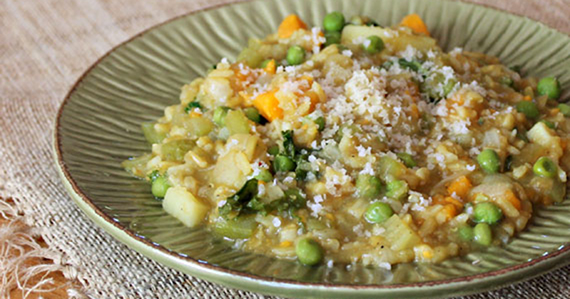
KichadiKichadi is an East Indian comfort food that features rice and lentils (or split peas), and a variety of spices and vegetables. The combination of herbs and spices will fill your kitchen with a wonderful fragrance, and reward your tongue with spiciness that isn’t overly hot. This hearty dish is not short on ingredients, so please see the chef’s notes below for time-saving variations.

Kichadi
Serves 6

Ingredients:

• 3½ cups water
• ¾ cup dry brown basmati rice
• ¾ cup dry red lentils (see notes)
• 1 teaspoon ground cumin
• 1 teaspoon ground coriander
• ½ teaspoon red pepper flakes
• ½ teaspoon turmeric powder
• ¼ teaspoon ground cardamom seed
• 1/8 teaspoon ground clove
• 1 medium yellow onion, chopped (10 ounces, 2 cups)
• ½ tablespoon minced garlic (2 large cloves)
• 1 teaspoon freshly minced ginger
• 3 cups water
• 1 medium Yukon gold potato, diced into small cubes (8 ounces, about 1-¼ cups)
• 1 medium yam, diced into small cubes (8 ounces, about 1-½ cups)
• 2 large ribs celery, diced (about 1 cup)
• 1-¼ cup green peas (thaw first if frozen)
• 4 cups roughly chopped curly kale (about 3 large leaves)
• 2 tablespoons walnuts to grate on top (optional)

Instructions:

1. In a large soup pot, stir together the water, rice, lentils, and spices (cumin, coriander, red pepper flakes, turmeric, cardamom, clove). Bring to a boil. Reduce heat to low, cover, and cook for 45 minutes. While the rice and lentils are cooking, chop and prepare the remaining ingredients.

2. About 15 minutes before the rice and lentils are done cooking, place a large skillet or saucepan on high heat with 2 tablespoons of water. Once the water starts sizzling, add the chopped onion and sauté for 3 minutes (adding water as needed to prevent sticking). Add the garlic and ginger, and sauté for another 2 minutes, taking care not to burn the garlic, adding water as needed.

3. Add to the onions, garlic and ginger: 3 cups water, potato, yams, and celery, and return to a boil. Reduce heat to medium-low and cook covered for 7 minutes. Stir in the peas and kale and cook an additional 3 minutes (still covered). (The potatoes should now be tender.)

4. Add the onion-potato mixture to the pot of rice and lentils and stir well. Serve immediately as is or with a dusting of grated walnuts on top.

Chef’s Notes:

Red lentils in their dry form come in a range of colors, from gold to orange to rosy red. They can be found in most healthy groceries as well as Middle Eastern markets labeled as masoor (red lentils).

If you don’t want to bother with the individual dried herbs and spices (cumin, coriander, red pepper flakes, turmeric, cardamom, clove), you may replace them with 2 to 3 teaspoons of your favorite curry powder.

If you’re not in the chopping mood, you can also make a meal of just the lentils, rice, and herbs and spices after cooking them together in step 1.

To add a little more heat, add a half to one teaspoon more red pepper flakes.

Foods To Avoid


FOODS TO AVOID:

Meats, poultry, fish, eggs (both whites and yolks), and all dairy products (regular and non-fat), including milk, yogurt, cheese, ice cream, cream, sour cream, and butter.

Added oils, such as margarine, salad dressings, mayonnaise, and cooking oils.

Fried foods, such as potato chips, French fries, onion rings, tempura, and donuts.Avoid sodas, juices that are mostly sugar( apple juice 90% sugar) and all refined sugar.

IF YOU CAN ELIMINATE ONLY 1 FOOD TYPE, ELIMINATE DAIRY PRODUCTS ENTIRELY. DAIRY PRODUCTS PROMOTE CHRONIC DISEASE, CANCER, HEART DISEASE, DIABETES AND OTHER AUTO-IMMUNE DISEASES. IF YOU CAN ELIMINATE 1 MORE FOOD TYPE, ELIMINATE  MEAT; BEEF, PORK, LAMB, TURKEY AND CHICKEN. MEAT PRODUCTS PROMOTE CHRONIC DISEASES, CANCER, HEART DISEASE, DIABETES AND OTHER AUTO-IMMUNE DISEASES. FOODS TO INCLUDE:

EAT PLANT BASED FOOD THAT HAS NOT BEEN REFINED OR PROCESSED. VEGETABLES, FRUIT, WHOLE GRAINS, LEGUMES, BEANS, BROWN RICE, WHOLE GRAIN PASTA, OATMEAL, QUINOA, DRINK ALMOND BEVERAGE (SILK) AND WATER

MEAL SUGGESTIONS BREAKFAST—Often breakfast can be similar to the one you are accustomed to with a few simple modifications.

Hot cereals: oatmeal, cream of wheat, creamy rice cereal,  or Irish oatmeal with cinnamon, raisins and/or applesauce (no milk)

High-fiber cold cereals: wheat or oat bran cereals with non-fat soy or rice milk and berries, peaches, or bananas

Melons, such as cantaloupe and honeydew, or any other fruit

Whole grain toast topped with cinnamon or jam (no butter or margarine)

Bagels (no cream cheese) topped with apple butter or hummus

Oven-roasted “home fries” plain or smothered with roasted mushrooms, peppers, and onions

LUNCH—Whether you dine in or out at lunchtime, there are lots of healthy and delicious options to choose from. Here are some ideas to get you started.

Salads

Garden salad with lemon juice, fat-free dressing, or soy or teriyaki sauce

Legume-based salads: three-bean, chickpea, lentil, or black bean and corn salads

Grain-based salads: noodle, couscous, bulgur, or rice salads

Soups

Vegetable-based soups: potato-leek, carrot-ginger, mixed vegetable, or mushroom-barley.

Legume-based soups: black bean, vegetarian chili, spinach lentil, minestrone, or split pea.

Instant or prepared soups (as long as they are low-fat and free of animal products).

Sandwiches/Wraps

CLT: cucumber, lettuce, and tomato sandwich with Dijon mustard

Hummus sandwich tucked into whole wheat pita with grated carrots, sprouts, and cucumbers

Sandwich made with fat-free meat alternatives such as barbeque seitan or veggie pepperoni slices with your favorite sandwich veggies

Black bean dip, peppers, tomatoes, and lettuce wrapped in a whole-wheat tortilla

Italian eggplant sub: baked eggplant slices, pizza sauce, and mushrooms on a multi-grain sub roll

Black bean and sweet potato burrito with corn and tomatoes

DINNER—Emphasize vegetables and grains in all your meals. The evening meal is a good place to try new items. You might start with a bean, rice or other grain, or potato dish and add a couple of vegetables.

Starches:

Grains: Use generous amounts of grains.

pasta

brown rice

boxed rice dishes (e.g., pilaf, curried rice, etc.)

couscous

Potatoes: Enjoy them baked or mashed and topped with steamed vegetables, salsa, ketchup, Dijon mustard, black pepper, or black beans.

Breads: Whole-grain is preferred. Avoid sweet breads that contain oil, eggs, or milk.

Vegetables:

Try any vegetables you like.

Greens (broccoli, spinach, kale, Swiss chard) topped with lemon

Carrots

Corn (note: corn is technically a grain, but works as a vegetable)

Legumes:

Pinto beans, vegetarian refried beans, baked beans, black beans, garbanzos, kidney beans

Main Dishes:

Pasta marinara: Choose commercial brands that are free of cheese and are low in fat.

Beans and rice: Try black beans with salsa, vegetarian baked beans, or fat-free refried beans.

Soft tacos: Prepare this dish with whole-wheat flour tortilla, beans, lettuce, tomato, and salsa.

Chili: Vegetarian boxed versions are fine.

Veggie lasagna: Made with low-fat tofu to replace the ricotta, layered with grilled veggies.

Rice pilaf, Spanish rice, or packaged rice dinners: Try packaged rice dishes and omit butter.

Steamed rice and stir-fried vegetables: This meal can be seasoned with soy sauce. Be sure to use a non-stick pan.

Fat-free vegetarian burgers: Make your own lentil burgers or try soy-based commercial brands.

Fajitas: Lightly sauté sliced bell peppers, onions, and eggplant in a non-stick pan, with fajita seasonings.

Desserts:

Fresh fruit

Fat-free chocolate or fruit sorbet

Popsicles

Baked apples

SNACKS

Bagels (plain or flavored; no cheese, butter, or margarine)

Fruit, carrots, or celery sticks

Vegetarian soup cups (split pea, lentil, etc.)

Toast with jam (no butter or margarine)

Baked tortilla chips with salsa or bean dip

GENERAL TIPS

TRYING NEW FOODS AND NEW TASTES:

Explore new recipes, new books, new products.

Fat-free meat substitutes can ease the transition.

Be strict with yourself. This is easier than teasing yourself with small amounts of the foods you are trying to leave behind.

Focus on the short term. Three weeks is a short time.

Frozen vegetables are fine.

Canned beans and vegetables are okay for convenience.

Use a non-stick pan.

“Sauté” vegetables in water or vegetable broth.

Steam vegetables.

When you can’t avoid oil, use a cooking spray instead of poured oils.

Use non-fat, non-dairy coffee creamers.

Read package labels to check grams of fat per serving. It is best to choose products that have less than 2 grams of fat per serving.

Dining Out: Look for ethnic restaurants, especially Japanese, Chinese, Indian, Mexican, and Italian, as they normally have many vegetarian dishes.

Japanese: vegetable sushi

Chinese: lots of rice with smaller amounts of vegetable dish; request oil-free and sauce on the side

Mexican: bean burrito, hold the cheese, sour cream, and guacamole; Spanish rice. Ask the waiter to bring out warm corn tortillas to dip in the salsa and to take away the fried chips.

Italian: pasta e fagioli (soup); pasta marinara. Ask that oil be kept at an absolute minimum.

Thai: vegetarian selections with lots of rice; avoid coconut milk

Indian: rice dishes or breads (beware of curries—very fatty)

Middle Eastern: couscous; baba ganouj and hummus with lots of pita bread

American: vegetable plate; salad bar; baked potato; baked beans; spaghetti; fruit plate. For salads, ask for no dressing, or try lemon or lime juice or soy or teriyaki sauce. Ask that fatty toppings, such as cheese, bacon, eggs, olives, and avocados, be left off.

7 Tips to Boost Brain Health

NEWS RELEASE May 16, 2014

International Researchers Identify Seven Dietary and Lifestyle Guidelines for Alzheimer’s Prevention


WASHINGTON—Seven dietary and lifestyle guidelines to boost brain health and reduce the risk of Alzheimer’s are available as an online advance on May 16, 2014, as a special supplement in Neurobiology of Aging.

“Alzheimer’s disease isn’t a natural part of aging,” notes lead author Neal Barnard, M.D., president of the nonprofit Physicians Committee and an adjunct professor of medicine at the George Washington University School of Medicine. “By staying active and moving plant-based foods to the center of our plates, we have a fair shot at rewriting our genetic code for this heart-wrenching , and costly, disease.”

Alzheimer’s Disease International predicts Alzheimer’s rates will triple worldwide by 2050. The Alzheimer’s Association predicts long-term care costs start at $41,000 per year.

7 guidelines to reduce risk of Alzheimer's disease

The seven guidelines to reduce risk of Alzheimer’s disease are:

  1. Minimize your intake of saturated fats and trans fats. Saturated fat is found primarily in dairy products, meats, and certain oils (coconut and palm oils). Trans fats are found in many snack pastries and fried foods and are listed on labels as “partially hydrogenated oils.”
  2. Eat plant-based foods. Vegetables, legumes (beans, peas, and lentils), fruits, and whole grains should replace meats and dairy products as primary staples of the diet.
  3. Consume 15 milligrams of vitamin E, from foods, each day.Vitamin E should come from foods, rather than supplements. Healthful food sources of vitamin E include seeds, nuts, green leafy vegetables, and whole grains. Note: The RDA for vitamin E is 15 milligrams per day.
  4. Take a B12 supplement. A reliable source of B12, such as fortified foods or a supplement providing at least the recommended daily allowance (2.4 micrograms per day for adults), should be part of your daily diet. Note: Have your blood levels of vitamin B12 checked regularly as many factors, including age, impair absorption.
  5. Avoid vitamins with iron and copper. If using multivitamins, choose those without iron and copper, and consume iron supplements only when directed by your physician.
  6. Choose aluminum-free products. While aluminum’s role in Alzheimer’s disease remains a matter of investigation, those who desire to minimize their exposure can avoid the use of cookware, antacids, baking powder, or other products that contain aluminum.
  7. Exercise for 120 minutes each week. Include aerobic exercise in your routine, equivalent to 40 minutes of brisk walking, three times per week.

Other preventive measures, such as getting a minimum of seven hours of sleep each night and participating in 30 to 40 minutes of mental activity most days of the week, such as completing crossword puzzles, reading the newspaper, or learning a new language, can only help boost brain health.

“We spend trillions of dollars each year on failed drug trials,” notes study author Susan Levin, M.S., R.D., C.S.S.D., Physicians Committee director of nutrition education. “Let’s take a portion of these funds and invest in educational programs to help people learn about foods that are now clinically proven to be more effective in fighting this global epidemic.”

The preliminary guidelines to reduce risk of Alzheimer’s were formed at the International Conference on Nutrition and the Brain in Washington on July 19 and 20, 2013.

The full guidelines are available at Neurobiology of Aging.

Learn how to prevent Alzheimer’s with these seven tips for brain health.

For an advance copy of the Dietary and Lifestyle Guidelines for the Prevention of Alzheimer’s Disease or to interview one of the study authors, please contact Jessica Frost at jfrost@pcrm.org or 202-527-7342.

Healthy Snacks

Healthy Snacks – 7 Quick and Easy Combos

TYPICALLY AMERICAN HIGH-CALORIE-DENSE SNACKS LIKE CHIPS AND CHEESE CAN, IN JUST A FEW BITES, UNDERMINE YOUR HEALTHY EATING PLAN.

In fact, the biggest source of artery-clogging saturated fat in the American diet is cheese. Just one ounce of cheese can have as much saturated fat as a McDonald’s Quarter-Pounder. Here are 7 satisfying, healthy snacks that will help, not hurt, your heart and waistline.

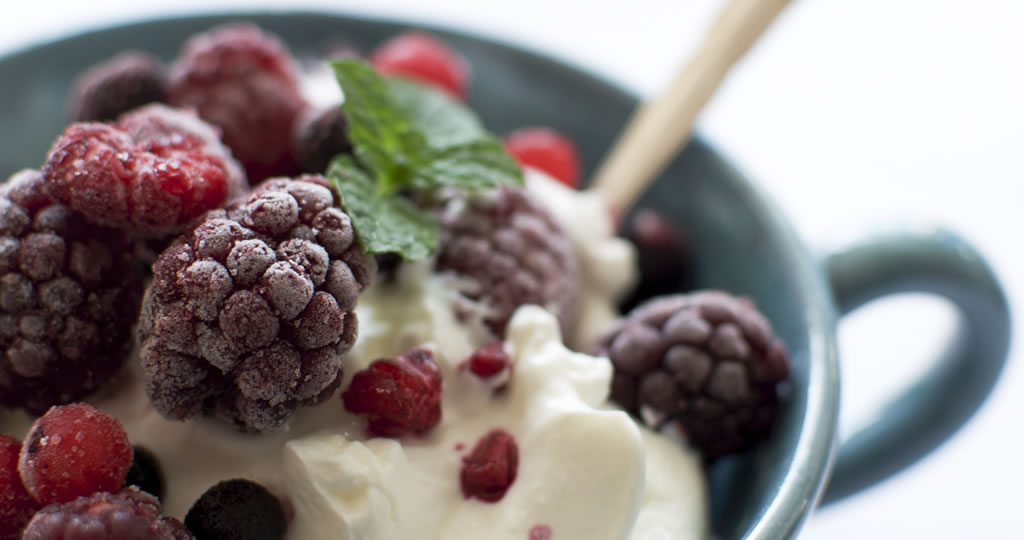
Greek Yogurt and Fruit is refreshing Healthy Snack Combos

Stir fresh or frozen fruit into a cup of nonfat Greek yogurt for a refreshing healthy snack combo.

Snacking is actually good for your health. Several small meals throughout the day is a great way to curb hunger and provide energy and nutrients. Guests at the Pritikin Center enjoy a bountiful selection of snack items twice a day.

Healthy Snacks

So how do you get your snack time fix? Consider these 7 quick and easy combos for healthy snacks.

  1. Baked Potato and Chili

    Just pour vegetarian chili or your favorite soup over your baked potato for a quick, hearty meal or snack.

  2. salsaCorn and Salsa

    Simply microwave frozen no-salt-added corn and mix in fresh salsa. Make it even more fiber-rich and heartier by adding canned low-sodium beans and diced red peppers.

  3. Tuna and Kavli

    Combine canned tuna and fresh pre-washed baby spinach. Spoon over a couple of Kavli® or Wasa® Crispbreads. The only effort involved is opening up a can of tuna.

    Easy to Prepare Healthy Crockpot Recipes

  4. Soup and Veggies

    Thicken and flavor your soup by adding veggies. For example, add to a big bowl of lentil soup a box of microwaved frozen spinach. Easy!

  5. Yogurt and Fruit

    Stir into nonfat plain yogurt fresh sliced bananas and strawberries. Easier yet, open up a can of no-sugar-added fruit like Del Monte® and mix with your yogurt.

  6. Beans and Just About Anything

    Keep a ready supply of no-salt-added canned beans like pinto and cannellini beans. Pour over salads, tortillas, pastas, baked potatoes, rice, soups, you name it.

  7. Pitas and Just About Anything

    Stuff a whole-wheat pita (good low-sodium brands are Garden City® and Toufayan Bakeries® Pitettes – no salt added)) with just about anything already in the fridge or pantry, such as fresh cucumber and other veggies, hummus, fresh turkey breast (oven roasted, deli-style, no salt), salmon (canned, rinsed, unsalted), or fat-free cheese. Use the cheeses sparingly because they tend to be fairly high in sodium.

Uprooting the Leading Causes of Death

Death in America is largely a foodborne illness. Focusing on studies published just over the last year in peer-reviewed scientific medical journals, Dr. Greger offers practical advice on how best to feed ourselves and our families to prevent, treat, and even reverse many of the top 15 killers in the United States.

July 26, 2012 |