Health Canada manipulates the numbers in favor of business at the expense of Canadian’s health

Sweet heavens: Statscan finds average Canadian eats 26 tsp of sugar a day

A new report released Wednesday by Statistics Canada has, for the first time, offered a comprehensive snapshot of how much sugar Canadians consume each day. On average, people across the country down the equivalent of 26 teaspoons of sugar a day, which accounts for about 21 per cent of all calories consumed.

That is an average of 109 lbs each. And Canada does not have a daily value for sugar on food labels. Simple reason the DV % would be of the charts. Instead Health Canada protects the sugar industry instead of the health of Canadians.

By the way the same deception goes on for fat also. Health Canada bases the fat consumption on 65 grams of fat per day or 30% instead of a realistic 20 grams of fat a day for 10% of calories. As a result fatty foods get a free ride on the DV calculation. Canadians being deceived by Health Canada once again.

Canada’s Recommendation for Fat is a whopping 30% of calories from fat daily

Symbol of the Government of Canada

The Percent Daily Value (% DV)
Read on to understand why the %DV is useless.

Here is a good guide:
% Daily Value,
5% is a little, 15% is a lot

The Percent Daily Value (% DV) can help you choose foods that are healthier for you. The % DV is found on the right-hand side of the Nutrition Facts table.

What is the % Daily Value?

The % DV is a guide to help you choose healthier foods. The % DV shows you if a specific amount of food has a little or a lot of a nutrient.

  • 5% DV or less is a little
  • 15% DV or more is a lot

The % DV is not meant to track your total nutrient intake for the day. This is because some of the foods you eat (like vegetables, fruit, and fresh meat) don’t have a Nutrition Facts table.

Healthy Eating and the
Nutrition Facts table

The % DV for the following nutrients must be listed on the Nutrition Facts table:

Protein does not have a % DV since most Canadians get enough of it in their diet.
Poor excuse for not having a number. Fats are recommended at 30%,
carbohydrates at 60% so Protein is 10% of calories. Most Canadians get far             more than that and much more than they need. 

Sugars do not have a % DV because there is no recommended amount of sugar for a healthy population. WHY? Is sugar getting a free ride here? The correct amount of sugar per day is very close to zero sugar. Stats Canada says every Canadian is eating 109 lbs of sugar a year,2 lbs a week and they  have no DV recommendation. We are paying Health Canada to put out this kind of pure crap.

Did you know?

Listing the % DV for the following nutrients is optional:

Cholesterol, folate, magnesium, niacin, phosphorus, potassium, riboflavin, selenium, thiamine, vitamin B12, vitamin B6, vitamin D, vitamin E, zinc, and other vitamins and minerals.

How to use the % DV?

You can use the % DV to:

  • Choose products that are higher in the nutrients you want more of, and lower in the nutrients you want less of.

Here are some nutrients you may want…

Less of

  • fat                                    You set the DV based on a whopping 30% Fat
  • saturated and trans fats       and now you say reduce the fat intake.
  • sodium

More of

  • fibre
  • vitamin A
  • calcium
  • iron
  • Compare two different food products to make healthier food choices for you and your family.

How is the % DV calculated?

The % DV for a nutrient is calculated by dividing the amount of the nutrient contained in the serving size of a food product by its Daily Value and then multiplying that number by 100.

Example: If a food product has 3 mg of iron and the Daily Value for iron is 14 mg, the % DV for iron would be 21%.

(3 mg ÷ 14 mg) × 100 = 21% DV.

Did you know?

The % DV column on the Nutrition Facts table is not meant to add up to 100%. Each nutrient in the Nutrition Facts table has its own Daily Value.

Daily Values

The Daily Values for nutrients are based on the highest recommended intakes. They apply to most people ages 2 and over, but do not include extra nutrient needs for women who are pregnant or breastfeeding.

Canada’s food guide daily value of calories from fat are based on 2000 calories a day of which they recommend that you consume 30% of your calories from fat. Worst still your daily value % are based on this high inflated percentage thus making the DV % low for fatty foods like milk and cheese. I did the math for you see below.

See Daily Values

Nutrient Daily Value (DV)
Fat 65 g x 9= 600 Calories    or    30% of daily calories
Saturated and trans fats 20 g
Cholesterol 300 mg
Sodium 2400 mg
Carbohydrate 300 g x4= 1200 Calories     or    60% of daily calories
Fibre 25 g
Sugars no DV
Protein no DV
Vitamin A 1000 RE
Vitamin C 60 mg
Calcium 1100 mg
Iron 14 mg

Note: RE=retinol equivalents

Fructose and Liver Damage

liverA new study, published last week in theAmerican Journal of Clinical Nutrition, shows that eating dietary fructose causes liver damage in monkeys.

“Is a calorie a calorie? Are they all created equal? Based on this study, we would say not,” said Kylie Kavanagh, D.V.M., assistant professor of pathology-comparative medicine at Wake Forest Baptist and lead author of the study.

The study used monkeys in two groups over a several year period. The study was designed so that the monkeys would NOT gain weight. Both groups were fed the same number of calories, just distributed differently. One group received fructose (sugar), the other a different form of carbohydrate with equal caloric impact.

Both diets had the same amount of fat, carbohydrate and protein, but the sources were different, Kavanagh said. The high-fructose group’s diet was made from flour, butter, pork fat, eggs and fructose (the main ingredient in corn syrup), similar to what many people eat, while the control group’s diet was made from healthy complex carbohydrates and soy protein.

The results?

Not surprisingly, the animals allowed to eat as much as they wanted of the high-fructose diet gained 50 percent more weight than the control group. They developed diabetes at three times the rate of the control group and also developed hepatic steatosis, or non-alcoholic fatty liver disease.

“What surprised us the most was how quickly the liver was affected and how extensive the damage was, especially without weight gain as a factor,” Kavanagh said. “Six weeks in monkeys is roughly equivalent to three months in humans.”

Vegan Diets Associated with Lower Weights

Breaking Medical News
FaceBook_icon_16 Twitter Email

Vegan Diets Associated with Lower Weights
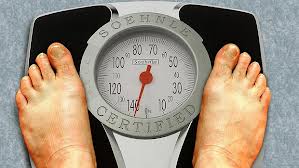
scales

People who follow vegan diets weigh less and consume more protective nutrients such as beta carotene and fiber, according to a study published in next month’s issue of the Journal of the Academy of Nutrition and Dietetics. Researchers collected data from 71,751 participants enrolled in the Adventist Health Study 2 for five years. Participants were categorized into five dietary patterns: vegan, lacto-ovo vegetarian, semi-vegetarian, pesco-vegetarian, and nonvegetarian. Those who followed nonvegetarian diets ate the most saturated fat and the least fiber, compared with the vegan group. The vegan group (defined as consuming animal products less than one time per month), consumed the most beta-carotene, fiber, potassium, and magnesium, compared with all other dietary groups. The vegan group had the lowest average body mass index (a measure of body weight adjusted for height) and the lowest prevalence of obesity, compared with those following all other dietary patterns. Levels of BMI and rates of obesity went up as animal product intake increased.

Rizzo NS, Jaceldo-Siegl K, Sabate J, Fraser GE. Nutrient profiles of vegetarian and nonvegetarian dietary patterns continuing professional education (CPE) information. J Acad Nutr Diet. 2013;113:1610-1619.

Diabetes Drugs

BREAKING MEDICAL NEWS June 11, 2013


More Risks Shown for Diabetes Drugs

June 11, 2013 

Commonly prescribed diabetes medications have been linked to risk of pancreatitis and pancreatic cancer, according to recent publications. The drugs include exenatide (Byetta), liraglutide (Victoza), sitagliptin (Januvia), and possibly other similar medications. Reports from Dr. Peter Butler of UCLA and Drs. Sonal Singh and Jodi Segal of Johns Hopkins University describe these adverse effects in the journals Gastroenterolgy,JAMA Internal Medicine, and Diabetes. These new warnings about adverse effects of oral diabetes medications follow in the wake of the FDA pulling blockbuster medications troglitazone (Rezulin) off the market, restricting use of rosiglitazone (Avandia), and issuing warnings related to bladder cancer to pioglitazone (Actos).

Prevention and treatment of type 2 diabetes with nutritional measures, especially a plant-based diet and avoidance of meat and dairy products, remains a safe and effective approach.

Elashoff M, Matveyenk AV, Gier B, Elashoff R, Butler PC. Pancreatitis, pancreatic, and thyroid cancer with glucagon-like peptide-1-based therapies.Gastroenterology. 2011;141:150-156.

Butler AE, Campbell-Thompson M, Gurlo T, Dawson DW, Atkinson M, Butler PC. Marked expansion of exocrine and endocrine pancreas with incretin therapy in humans with increased exocrine pancreas dysplasia and the potential for glucagon-producing neuroendocrine tumors. Diabetes. Published ahead of print March 22, 2013.

Singh S, Chang HY, Richards TM, Weiner JP, Clark JM, Segal JB. Glucagon like peptide 1-based therapies and risk of hospitalization for acute pancreatitis in type 2 diabetes mellitus: a population-based matched case-control study. JAMA Intern Med. 2013;173:534-539.

Subscribe to PCRM’s Breaking Medical News.

Breaking Medical News is a service of the Physicians Committee for Responsible Medicine, 5100 Wisconsin Ave., Ste. 400, Washington, DC 20016, 202-686-2210. Join PCRM and receive the quarterly magazine,Good Medicine.

Trans Fats – The Good and Bad News

Transfat vs. Coconut and Tropical Oils

Last week, the Food and Drug Administration proposed measures that would pretty much wipe out artificial trans fats from the food supply, and that’s very good news.

Trans fats are so destructive to heart health that the FDA and Institute of Medicine have declared there is no safe consumption. While legislation in 2006 severely cut intake of trans fats in the U.S., they’re still present in many processed foods like microwave popcorn, frozen pizzas, frostings, coffee creamers, and margarines.

The bad news is that many food companies have replaced trans fats with tropical oils like palm oil and coconut oil.

Ironically, in the 1980s and 90s, it was health concerns over tropical oils that spurred food manufacturers to create trans fats.

Tropical oils may be as harmful as trans fats.

“Tropical oils are full of artery-damaging saturated fats. Coconut oil, for example, is 92 percent saturated fat. Like saturated animal fats such as butter and cheese, tropical oils raise LDL bad cholesterol and clog arteries with plaque, increasing the risk of a heart attack,” points out Gayl Canfield, PhD, RD, Director of Nutrition at the Pritikin Longevity Center in Miami, Florida.

Ironically, in the 1980s and 90s, it was health concerns over tropical oils that spurred food manufacturers to create trans fats. Trans fats are formed when chemists treat liquid oils with hydrogen, turning them solid. These human-altered fats are called partially hydrogenated fats, and trans fats make up a good portion of them.

Today, in a head-spinning turnaround from the 80s and 90s, tropical oils are often marketed as a healthy alternative to trans fats. “But nothing could be further from the truth,” asserts Jay Kenney, PhD, RD, Nutrition Research Specialist at the Pritikin Longevity Center.

In fact, he suspects that tropical oils may be even worse for artery health than trans fats.

“That’s because the saturated fat content in tropical oils is much higher than the trans fat content in partially hydrogenated fats, so it is debatable that using tropical oils instead of partially hydrogenated fats actually results in less coronary artery disease.”

Bottom line: “Don’t buy into the hype that tropical oils are a healthy alternative to trans fats,” counsels Dr. Canfield.

“When grocery shopping, always turn the product around and read the Ingredient List. Steer clear of any product that contains partially hydrogenated fats as well as tropical oils like coconut oil, palm kernel oil, or palm oil. Both trans fats and tropical oils are bad news for your heart.”

Cholesterol Education

Cholesterol Education: HDL, LDL, and How to Control It

cholesterol-big

Cholesterol is a substance that is produced in the liver, and it is often affected by a high intake of saturated fats. It is found in every bodily cell and is vital for cell function, but too much can lead to serious implications. When a patient receives a routine checkup, doctors check their bad LDL cholesterol and good HDL cholesterol.

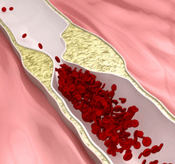
LDL stands for low-density lipoprotein, which is the main carrier particle for cholesterol. High levels of LDL cholesterol are linked to atherosclerosis, heart disease, stroke, and other serious health conditions. Small “bumps” form on the inner walls of the arteries when there is too much cholesterol in the blood, which over time narrows the arteries. Eventually it can obstruct the blood flow, called atherosclerosis, and can lead to a heart attack or stroke. LDL should be below 100mg/dL.

HDL is the good cholesterol and should be in the range of 60 mg/dL. Too little HDL—below 40 mg/dL—is a major factor for coronary heart disease.

In today’s society, it is very common for people to take cholesterol-lowering medications. However, changing your diet may allow you to discontinue taking medications, as many Americans already have. The first step is to eliminate cholesterol from the diet, because the human body produces all the cholesterol it needs. Since cholesterol is only found in animal products, that means following a vegan diet. The second step is to reduce significant sources of saturated fat in the body, which is high in animal products and certain oils. Some processed foods contain trans fats, which also play a part in making one’s body produce more cholesterol.

Another way to lower cholesterol is by increasing daily fiber intake. Soluble fiber slows the absorption of cholesterol and thereby reduces the amount of cholesterol the liver makes. Carrying excess weight can raise blood pressure and cholesterol levels, so it can also be helpful to lose weight when trying to lower LDL levels.

Knowing that there is an easy and reachable solution for such a widespread problem should make it easier to adjust one’s lifestyle when dealing with cholesterol problems. Following a vegan or vegetarian diet will have a noticeable difference on LDL and HDL cholesterol in just a few weeks, and the previous health risks may rapidly diminish.

Fats: The Good the Bad and the Ugly

Health Canada

http://www.hc-sc.gc.ca

Health Canada- states, unsaturated fats (plant-based) are good and saturated (animal-based) are bad.

The good: unsaturated fats

Unsaturated fat is a type of fat found in the foods you eat. Replacing saturated and trans fats with unsaturated fats has been shown to help lower cholesterol levels and reduce the risk of heart disease. Unsaturated fat also provides omega-3 and -6 fatty acids. Choose foods with unsaturated fat as part of a balanced diet using Eating Well with Canada’s Food Guide.

Even though it is a “good fat,” having too much unsaturated fat may lead to having too many calories. This may cause weight gain and increase your risk of developing obesitytype 2 diabetesheart disease and certain types of Next link will take you to another Web site cancer.

There are two main types of unsaturated fats:

  1. monounsaturated fat, which can be found in:
    • avocados
    • nuts and seeds (like cashews, pecans, almonds and peanuts)
    • vegetable oils (like canola, olive, peanut, safflower, sesame and sunflower)
  2. polyunsaturated fat, which can be found in:
    • fatty fish (like herring, mackerel, salmon, trout and smelt)
    • fish oils
    • nuts and seeds (like cashews, pecans, almonds and peanuts)
    • vegetable oils (like canola, corn, flaxseed, soybean and sunflower)

The bad: saturated fats

Saturated fat is a type of fat found in food. It has been shown to raiseLDL or “bad” cholesterol levels. Having high LDL-cholesterol levels increases your risk for heart disease.

Saturated fat is found in many foods:

  • animal foods (like beef, chicken, lamb, pork and veal)
  • coconut, palm and palm kernel oils
  • dairy products (like butter, cheese and whole milk)
  • lard
  • shortening

Choosing lower-fat meat and dairy products can help reduce the amount of saturated fat in your diet.

Use vegetable oil or soft margarines that are low in saturated and trans fats instead of butter, hard margarine, lard and shortening.

The ugly: trans fats

Trans fat is made from a chemical process known as “partial hydrogenation.” This is when liquid oil is made into a solid fat.

Like saturated fat, trans fat has been shown to raise LDL or “bad” cholesterol levels, which increases your risk for heart disease. Unlike saturated fat, trans fat also lowers HDL or “good” cholesterol. A low level of HDL-cholesterol is also a risk factor for heart disease.

Until recently, most of the trans fat found in a typical Canadian diet came from:

  • margarines (especially hard margarines)
  • commercially fried foods
  • bakery products made with shortening, margarine or oils containing partially hydrogenated oils and fats (including cakes, cookies, crackers, croissants, doughnuts, fried and breaded foods, muffins, pastries and other snack foods)

If a product has less than 0.2 grams of trans fat AND less than 0.5 g of saturated fat, the food manufacturer can say that the product is trans-fat-free. Learn more about nutrition claims.

Our food supply is rapidly changing and the trans fat content of many of these products has now been reduced. But it is still important to look at the Nutrition Facts table to make sure the food product you are buying has only a little or no trans fat.

http://www.hc-sc.gc.ca/hl-vs/iyh-vsv/med/fats-gras-eng.php

Cancer Society says “Red meat and processed meat increase your risk of cancer”

Nutrition and fitness

People exercising on matsWe wish we could tell you that preventing cancer was as simple as eating a certain food or doing a certain exercise, but we can’t. This much, though, is clear:
 

  • You have a higher risk of developing cancer if you are overweight. Staying at a healthy body weight reduces your risk of cancer.
  • Eating well – lots of veggies and fruit, lots of fibre, and little fat and sugar – will help you keep a healthy body weight.
  • Regular physical activity helps protect against cancer. It’s also one of the best ways to help you stay at a healthy body weight, which reduces your risk of cancer.
  • Red meat and processed meat increase your risk of cancer.

Food for thought

About one-third of all cancers can be prevented by eating well, being active and maintaining a healthy body weight.


The science is clear: it’s the overall pattern of living that’s important. You can lower your risk if you move more, stay lean and eat plenty of vegetables and fruit, as well as other plant foods such as whole grains and beans.

Read more:http://www.cancer.ca/en/prevention-and-screening/live-well/nutrition-and-fitness/?region=pe

Fatty Diets Linked to Cancer and Early Death


Breaking Medical News
FaceBook_icon_16 Twitter Email

Fatty Diets Linked to Cancer and Early Death

li_fried

Diets high in saturated fats and sugar may increase your risk of death from gastrointestinal cancers, including stomach and esophageal, according to a presentation at the American Institute for Cancer Research Annual Research Conference. Researchers observed 10,525 men and women from the Aerobics Center Longitudinal Study for 16 years and asked them to keep diet records. Participants with diets higher in fat and sugar were four times more likely to develop and 53 percent more likely to die from these cancer, compared with those who consumed plant-based diets.

Tabung FK, Steck SE, Zhang J. Dietary inflammatory index and risk of mortality: findings from the Aerobics Center Longitudinal Study. Poster presented at: American Institute for Cancer Research (AICR) Annual Research Conference; November 7, 2013: Bethesda, MD.