The War On Cancer


This article is part of the Center for Media & Democracy’s spotlight onglobal corporations.

In 1971, many sponsors of the War on Cancer predicted a cure by 1976. Instead, this multibillion dollar research program has proven to be a failure.

Contents

[hide]

Overview

The age adjusted total cancer mortality rate climbed steadily for decades until the early 1990s, when the rate started to fall slowly, due largely to reduced smoking. To encourage continued support for cancer research, now exceeding two billion dollars annually in the U.S. alone; researchers and administrators have misled the public. In 1987, the U.S. General Accounting Office (GAO) found that the statistics from the National Cancer Institute (NCI) “artificially inflate the amount of ‘true’ progress”, concluding that even simple five-year survival statistics were manipulated. The NCI termed five-year survival a “cure” even if the patient died of the cancer after the five-year period. Also, by ignoring well known statistical biases, the NCI falsely suggested advances had been made in certain cancer therapies. [1]

Failure of toxic “therapies”

In 1971 when the U.S. declared war on cancer, scientists still hadn’t identified the immune defense system. Doctors and scientists, along with the American Cancer Society, continue to refer to a non-contagious condition with no incubation period or identifiable foreign invader as a “disease”. Scientists have requested and received billions in grants from the federal government, non-profit organizations, corporate and private donors. However, according to critics, like the New England Journal of Medicine, the “war on cancer” is a failure. According to John C. Bailar III, M.D., Ph.D., Chairman of the Dept. of Epidemiology & Biostatistics at McGill University:

“Despite $30 billion spent on research since 1970, cancer remains undefeated, with a death rate not lower but actually higher than when they started. The effect of new treatments for cancer has been largely disappointing. The failure of chemotherapy to control cancer has become apparent even to the oncology establishment.” [2]

The late Professor of Medical Physics, H.B. Jones, was a leading U.S. cancer statistician. In a 1969 speech to the American Cancer Society, he stated that studies had not proved that chances of survival were improved by early intervention. In fact, according to his studies, untreated persons with cancer lived up to four times longer and with a better quality of life than treated ones. He was not invited back. According to the prestigious British medical journal, The Lancet:

“If one were to believe all the media hype, the triumphalism of the medical profession in published research, and the almost weekly miracle breakthroughs trumpeted by the cancer charities, one might be surprised that women are dying at all from breast cancer.” [3]

Cancer for profit

According to the oncologist, Glen Warner, M.D.:

“We have a multi-billion dollar industry that is killing people, right and left, just for financial gain. Their idea of research is to see whether two doses of this poison is better than three doses of that poison.” [4]

NCI & clinical trials for hydrazine sulfate

According to “The $200 Billion Scam”, published in Penthouse in 1997:

“In the 25 years since the federal government declared War on Cancer, an estimated $200 billion has been spent by U.S. taxpayers and private investors on research that has produced so little bang for the buck that it makes the Pentagon’s $600 toilet seats look like bargains for every American home. The cancer industry has become a huge jobs program for brilliant, even highly motivated, doctors and other scientists, whose efforts are misguided by the economic forces behind the industry. Directly put, it’s in the interests of all the fat cats in government and private enterprise who earn their living and status from what is largely a failed enterprise, to stick with it. That is why a drug like hydrazine sulfate is dumped on by the cancer establishment, instead of given legitimate support and honest evaluation.”

The General Accounting Office (GAO) defied logic, reason, and science to give its blessing to the NCI’s deliberately biased testing of hydrazine sulfate which produced false results to make it appear ineffective. NCI higher administrators who wrote the report also and ignored evidence pointing to rigged clinical trials. [5]

American Cancer Society

The American Cancer Society ACS is largest non-religious charity in the world. As of the fiscal year ending in August of 2007, the ACS had a net revenue 1.17 billion dollars. [6] ACS’s daily expenditures exceed one million dollars with only approximately 16% going into patient cancer programs. The rest is funneled into expensive research and bureaucratic overhead. Meager prevention programs are designed not to offend the industry. The average American diagnosed with cancer spend upwards of $25,000 of their savings on cures to save or lengthen their lives. However, claims of ‘progress’ include many people with benign diseases. Those in remission for longer than 5 years are declared cured, although many of those will die from either cancer or treatment after five years. [7] Corporate donors include processed food industryand pharmaceutical industry giants like PfizerSanofi-AventisAstraZenecaNovartis and Walmart as well as Metropolitan Life Insurance[8]

Memorial Sloan-Kettering Cancer Center

A look at financial relationships between large facilities such as the Memorial Sloan-Kettering Cancer Center (MSKCC) and corporations making billions in profits from chemotherapy drugs, is extremely telling as to its continued use in the face of such failure. Furthermore, expensive laboratories and diagnostic equipment have already been paid for by large corporations.

Craig B. Thompson, MD President and CEO of MSKCC, is also on the Board of Directors for Merck Corporation.[9]

James D. Robinson III Honorary Chairman, is also former Chairman of Bristol-Myers Squibb, the world’s largest producer of chemo drugs. Paul Marks, MD, MSKCC’s former President and CEO, is the former Director of Pfizer. Another board member, Richard Furlaud, recently retired as Bristol Myers’ president. [10]

The late Richard Gelb was Vice-Chairman of the MSKCC board as well as CEO of Bristol-Myers. [11][12]

The National Institutes of Health (NIH) is the primary agency in the U.S. government conducting and funding medical research. MSKCC Director Thomas Kelly, M.D., Ph.D. serves on the both the NIH Advisory Committee and Scientific Management Review Board. [13]

Cancer United

Cancer United is a pharmaceutical industry front group established by the Weber Shandwick public relations firm. It is funded entirely by Roche[14]

Cancer & animal testing

More is spent on cancer than any other medical problem. There are more people living off of cancer than cancer sufferers.Millions of laboratory animals, including rats, mice, monkeys, guinea pigs, cats and dogs have been injected with cancerous material or implanted with malignancies.[15][16] Why hasn’t progress been commensurate with the effort and money invested? One explanation is the unwarranted preoccupation with animal testing. Crucial genetic, molecular, immunologic and cellular differences have disqualify animal models as an effective means to a cure. Mice are most commonly used, although “Mice are actually poor models of the majority of human cancers”; according to the industry’s own laboratory animal publication. According to leading cancer researcher, Robert Weinberg:

“The preclinical (animal) models of human cancer, in large part, stink… Hundreds of millions of dollars are being wasted every year by drug companies using these models.” [17]

A widely discussed 2004 article in Fortune magazine entitled “Why We’re Losing the War on Cancer” [18] laid the blame on animal research. The basic approach in the 1970s was to grow human cancer cells in a lab dish, transplant them into a mouse whose immune system had been tweaked to not reject them and throw experimental drugs at them to see what happened. However, few successes in mice are relevant to people. According to Fran Visco, who founded the National Breast Cancer Coalition four years after being diagnosed with cancer in 1987, “Animals don’t reflect the reality of cancer in humans. We cure cancer in animals all the time, but not in people.”

Newsweek combed through three decades of high-profile successes in mice for clues to why the mice lived and the people died. According to oncologist Paul Bunn, who leads the International Society for the Study of Lung Cancer:

“Animal models have not been very predictive of how well drugs would do in people. We put a human tumor under the mouse’s skin, and that micro-environment doesn’t reflect a person’s—the blood vessels, inflammatory cells or cells of the immune system.”

Human tumors that scientists transplant into mice and then attack with their weapon du jour, almost never metastasize. For decades, scientists ignored metastatic cells (which are responsible for 90% of all cancer deaths) because metastasis didn’t occur in animal models. Throughout the 1980’s and 90’s, researchers focused on increasingly detailed molecular mechanisms, instead of looking into the real problem. [19] See also animal testing.

Cancer & diet

Food Additives & adulteration

Today, over 6,000 synthetic chemicals are officially condoned for use in the processed food industry. These include some that are known carcinogens. Processed foods contain high levels of the debilitating, denatured ingredients such as white sugar, refined starch, pasteurized cow’s milk, land mined salt and hydrogenated vegetable oils. The human immune system correctly recognizes chemical food additives as toxic foreign agents and attempts to rid the body of them; thus causing severe biochemical reactions and stress on the immune system.

After years of daily exposure to inorganic chemicals, the immune system breaks down and burns out, leaving the body vulnerable to microbes, toxins and cancerous cells. The food industry has duped the public and government health agencies into believing that their products are safe for human consumption; even in the face of abundant scientific evidence to the contrary. In fact, such information is in the public domain and openly available to anyone who seeks it.[20] See also processed food industry.

Animal products & health issues

The China Study culminated a 20-year partnership of Cornell University, Oxford University, and the Chinese Academy of Preventive Medicine. The survey of diseases and lifestyle factors in rural China and Taiwan is widely thought to be the most comprehensive study on nutrition and related diseases to date. The project produced over 8,000 statistically significant associations between diet and disease. The findings indicated that the consumers of the most animal-based foods suffered the most chronic diseases while those with the most plant based diets avoided these diseases and were the healthiest. Chronic diseases included heart disease, diabetes and cancer. Also studied were the effects of diet in reducing or reversing the risks of chronic disease. The study also examines the source of nutritional confusion produced by powerful lobbies, government entities and irresponsible scientists. [21] According to Dr. T. Colin Campbell of Cornell, “we’re basically a vegetarian species, should be eating a wide variety of plant foods and minimizing animal foods.” [22][23]

The focus of published reports on dairy consumption are infections, colic, intestinal bleeding, anemia, allergies and more serious issues of diabetes and viral infections of bovine leukemia, an AIDS like virus. Common childrens issues include ear infections, tonsil infections, bed wetting and asthma. Adult issues include heart disease, arthritis, respiratory distress, osteoporosis, leukemia, lymphoma and cancer. Overall health issues include milk contamination by pus cells and chemicals such as pesticides. [24] Most cows’ milk contains toxins such as herbicides, pesticides and dioxins and up to 52 powerful antibiotics; blood, pus, feces, bacteria and viruses. Both organic and non-organic milk contain fat, cholesteral and various allergens as well as 59 active hormones. This includes the powerful Growth Factor One (IGF-1) which has been identified in the rapid growth cancer. [25] It has been positively documented and affirmed that dairy consumption leads to clogged arteries, heart attacks and strokes and exposure to contaminants. [26][27] Research has demonstrated a calcium wash or a loss of calcium and other critical minerals like potassium, magnesium and iron from the blood stream as a direct result of dairy consumption starting at 24 ounces per day. [28] Low animal protein diets create a positive calcium balance, whereas high animal protein diets create a negative balance resulting in bone density loss. While many have turned to low fat dairy products, these products contain higher concentrations of protein. Low fat and particularly non-fat dairy products have actually been shown to increase osteoporosis, kidney problems and some cancers. [29]

See also meat & dairy industry, sections 4 & 5 & section 6 on animal products & health issues.

The prostate cancer predicament

For many men diagnosed with prostate cancer, the treatment may be worse than the disease

To screen or not to screen? For prostate cancer—the second leading cause of cancer deaths in men, after lung cancer—that is the bedeviling question.

The dilemma springs the wide variation in the potential of prostate cancers to spread to the rest of the body. The vast majority of these malignancies, especially those discovered with the extensively used prostate-specific antigen, or PSA, test, are slow-growing tumors that are unlikely to cause a man any harm during his lifetime. Yet in 10 to 15 percent of cases, the cancer is aggressive and advances beyond the prostate, sometimes turning lethal.

Murky diagnoses

The dilemma has become more urgent in recent years as widespread screening with PSA in the U.S. and around the world has led to a sharp increase in the number of detected prostate cancers. Currently, there is no way to accurately determine at the time of diagnosis which cancers are likely to threaten a man’s health and which are not. As a result, almost all men with PSA-detected cancer opt for treatment, which can leave long-lasting physical and emotional scars.

lorelei mucci

“One of the biggest challenges in oncology is to distinguish men who have a potentially lethal form of prostate cancer from those with a more slow-growing disease.”
—Lorelei Mucci, ScD ’03, associate professor of epidemiology

Put simply: with prostate cancer, the cure may be worse than the disease. The dilemma was underscored in May 2012, when the U.S. Preventive Services Task Force (USPSTF) issued a strongly worded final recommendation against PSA-based screening for prostate cancer. According to the task force, “[M]any men are harmed as a result of prostate cancer screening and few, if any, benefit.” In a study of U.S. men who were randomly screened, the screening did not reduce prostate cancer death (though a similar study among European men did find a lower risk of cancer death). In any case, experts agree that prostate cancer has been vastly overdiagnosed as a result of screening.

So what should patients and doctors do? At Harvard School of Public Health, the prostate cancer epidemiology team—which includes more than 25 faculty, postdoctoral fellows, and student researchers—is developing the science to answer that question, identifying both the risk factors behind the deadliest variations of prostate cancer and the lifestyle changes that may lower the risk of aggressive disease.

“One of the biggest challenges in oncology is to distinguish men who have a potentially lethal form of prostate cancer from those with a more slow-growing disease,” says Lorelei Mucci, associate professor of epidemiology at HSPH. “Our research aims to directly address that question, as well as to find opportunities to reduce risk of dying from cancer after diagnosis.”

Aggressive or slow-growing?

When it became widely available in the late 1980s, the PSA screening test was hailed as a simple way to uncover possible malignancy. But PSA screening, which was adopted without evidence of its usefulness, turned out to be a poor indicator of cancer, in two ways. First, it creates false positives in men who may simply have elevated antigen levels from other conditions, such as benign enlargement of the prostate gland. These patients often endure subsequent invasive biopsies but never go on to develop prostate cancer. Second, even when the test correctly identifies prostate cancer, many of the diagnosed patients never develop the deadly form of the disease.

“PSA screening has been a disaster,” says Hans-Olov Adami, former chair and now adjunct professor of HSPH’s Department of Epidemiology, who has opposed the test for 20 years. “We overdiagnose many men who would die of other causes.” In fact, a multinational study of cancer registries published by Adami, Mucci, and other HSPH colleagues in July 2012 found that the most common causes of death among prostate cancer patients—65 percent of patients in Sweden and 84 percent in the U.S.—are heart disease, diabetes, stroke, or other cancers.

What may protect against advanced prostate cancer?
  • PHYSICAL ACTIVITY
  • AVOIDING SMOKING
  • AVOIDING OBESITY
  • CONSUMING TOMATO SAUCE
  • CONSUMING COFFEE
  • VITAMIN D

Yet these patients frequently underwent radical treatments for their prostate cancer—interventions such as radiation, surgery, and chemotherapy, which can produce severe side effects such as incontinence and erectile dysfunction. “While we are uncertain about the number of deaths that screening prevents,” says Adami, “we are certain that the price for any reduction in deaths from prostate cancer is very high.”

A study published in August 2012 in the New England Journal of Medicine found no difference in survival between men who had surgery for prostate cancer and those under “watchful waiting,” in which the doctor withholds treatment while carefully monitoring the progress of the cancer. “This is a very perplexing observation,” Adami says, “because screening reduces mortality only if treatment makes a difference in outcomes. This indicates there are still big question marks in how doctors and patients should respond to this diagnosis.” As the USPSTF noted last May, “[R]esearch is urgently needed to identify new screening methods that can distinguish nonprogressive or slowly progressive disease from disease that is likely to affect quality or length of life.”

“ Men with at least three hours of vigorous physcial activity a week had at least a 60 percent lower risk of prostate cancer death.” —Edward Giovannucci, professor of nutrition and epidemiology

“ Men with at least three hours of vigorous physical activity a week had at least a 60 percent lower risk of prostate cancer death.”
—Edward Giovannucci, professor of nutrition and epidemiology


Clues in diet and lifestyle

To clarify the prognosis for a tumor, HSPH researchers are homing in on other factors that might affect susceptibility to prostate cancer, especially the aggressive form of the disease.Edward Giovannucci, professor of nutrition and epidemiology, recently looked at nine diet and lifestyle factors. He found that smoking, obesity, and lack of physical activity raise the risk of developing a more virulent cancer. According to Giovannucci, “The question is whether there are two types of prostate cancer–an aggressive and nonaggressive form–or whether certain factors cause a nonaggressive form to become more aggressive.” Evidence provided by HSPH researchers suggests that an increase in insulin in the bloodstream, caused by obesity and physical inactivity, may encourage tumor growth.

Other investigations have linked dietary factors to the disease. A 2011 study by HSPH research associate Kathryn Wilson, together with Mucci and Giovannucci, professor of nutrition and epidemiology Meir Stampfer, and other colleagues, found that men who drank coffee had a notably lower risk of aggressive prostate cancer. Those who consumed six cups or more a day were 20 percent less likely to develop any form of the disease, and 60 percent less likely to develop a lethal disease; those who consumed one to three cups a day showed no difference in developing any form of the disease, but had a 30 percent lower risk of developing a lethal form.

Jennifer Rider, instructor inepidemiology at HSPH, has studied parasitic infection and prostate cancer.

Jennifer Rider, instructor in epidemiology at HSPH, has studied parasitic infection and prostate cancer.

Another, more surprising, study revealed that consuming tomato sauce was associated with a markedly lower risk of prostate cancer. In fact, men who had two or more servings of tomato sauce a week were about 20 percent less likely to develop prostate cancer, and about 35 percent less likely to die from the disease. A separate report in 2009 by Mucci and Giovannucci found that the overgrowth of blood vessels might be one of the most reliable indicators of whether a tumor will spread. After sifting through genetic and lifestyle factors that might lead to the growth of these vessels, they found that the antioxidant lycopene was the item most strongly associated with lower blood vessel formation.

Another factor that might determine the difference between a harmless and a lethal form of prostate cancer is the sexually transmitted parasitic infection Trichomonas vaginalis. By itself, the infection rarely produces symptoms in men (who are often treated only after their female partners show signs of infection). In a 2009 study, led by HSPH instructor in epidemiology Jennifer Rider, infected men had a much higher incidence of prostate cancer spreading to the bone or death from prostate cancer. “The good news is that if the association between the infection and lethal prostate cancer is confirmed, there is an effective antibiotic treatment,” Rider says.

To treat or not to treat?

“Up until now, with a few notable exceptions, doctors have myopically focused on treating prostate cancer,” says Adami. “They are willing to spend tens of thousands of dollars on chemotherapy that has minimal effects on cancer mortality, often with substantial side effects. But we ignore entirely the fact that large groups of prostate cancer patients die from other causes that actually are preventable.”

By focusing on lifestyle changes, he adds, men can achieve three goals simultaneously: diminishing the risk of dying from common conditions such as heart disease and diabetes, improving quality of life overall, and perhaps also improving the prognosis for prostate cancer. In particular, stopping smoking and increasing physical activity after diagnosis can substantially cut the risk of developing aggressive prostate cancer. “Men with at least three hours of vigorous physical activity a week had at least a 60 percent lower risk of prostate cancer death,” says Giovannucci. “It’s a strong association.”

Among older patients especially, that activity can take the form of vigorous walking. Recently, Mucci has spearheaded an intervention with Adami and other colleagues in Sweden, Iceland, and Ireland in which men walk in groups with a nurse three times a week. In a pilot study, researchers found improvements in just 12 weeks in body weight, blood pressure, sleep, urinary function, and mental health.

Scientists at HSPH are also searching for genetic and lifestyle markers that help predict how aggressive a patient’s prostate cancer will be. For example, an ongoing project led by Mucci and Adami draws on detailed cancer registries in Nordic countries, including an analysis of 300,000 twins, to tease out the relative contribution of different genes to prostate cancer incidence and survival.

Until all these associations come to light, doctors and patients will be confronted with weighty decisions about treatment. Surgery, radiation, or chemo might still be the wisest course of action in instances where the cancer has clearly already advanced, or when a patient is young and otherwise in good health. In situations where men are older or face a higher risk for other diseases, improvements in diet and lifestyle may be more effective not only in subduing the cancer but also in boosting general well-being. As Mucci puts it, “Our hope is that clinicians will use the prostate cancer diagnosis as a teachable moment to reflect on the global health of the patient.”

Michael Blanding is a Boston-based journalist and author of The Coke Machine: The Dirty Truth Behind the World’s Favorite Soft Drink.

Reducing the harm caused by screening mammography

By Charles Wright

Women have a right to be confused about whether they should have screening mammography or not. They have been told for two generations that it is life-saving.

They have been bombarded by messages from healthcare professionals and public health programs urging them to comply: “If you don’t go for regular mammograms you need more than your breasts examined”; “Give your mother the gift of life for mother’s day — give her a mammogram”; “Mammograms can detect breast cancer when it is still curable.” Health agencies and ministries have enthusiastically supported breast screening as a demonstration of their commitment to women’s health.

When first introduced in the 1970s there was good reason for the hope that mammography would be a major tool in dealing with the scourge of breast cancer and that early diagnosis and treatment would translate into many lives saved.

A huge industry to support the demand was built involving doctors, radiologists, technicians and equipment manufacturers. The many adverse consequences of breast screening have been well known since the beginning but they were generally deemed acceptable at first with the prospect of saving women’s lives. With hindsight this was a mistake.

What has only more recently been recognized, quantified and publicized, is just how serious the negative effects are in relation to how very small the potential benefits.

The facts have now been clearly presented by many independent expert groups, including the Canadian Task Force on Preventive Health Care, the U.S. Agency for Health Care and Quality and the Cochrane International Collaboration. Public understanding is not helped by debates about relative and absolute death rate results. But the easy way to grasp the results is to consider what happens to a large group of women, say 2,000, who are screened regularly for 10 years.

One woman will have her life prolonged while 700 will have at least one false-positive mammogram with all the resultant anxiety and further investigations, 70-80 will have unnecessary biopsies and at least 10 women will be diagnosed and treated for a ‘cancer’ that would never have developed in any case.

In addition, several women will have a false-negative mammogram that failed to show a real cancer that shows up soon after.

Cancer of the breast can be a devastating disease and almost every woman knows of a friend or relative who had breast cancer successfully treated after a screening mammogram.  The cruel reality is that the screening so rarely brings any change to the eventual result.

For the one in 2,000 who benefits, more than 800 are harmed.

What can be done about the current confusion and conflicting advice on the subject? Concerning the support of screening programs we have to decide whether to heed the consistent findings of independent experts, or the advice of those with a large vested interest in the screening industry. John Maynard Keynes, the famous economist, famously responded to a challenge that he had changed his opinion on a disputed topic, saying, “When the facts change, I change my mind.  What do you do, sir?”

It may take a long time to dispel the false hope that has been given to women, but public education dealing with the current evidence will have to be planned and presented. There is a more immediate need to replace current advocacy with honesty and balance in how the facts are presented.

In every medical test or procedure the potential benefit and harm must be considered, and it is now clear that in the case of screening mammography the harms tip the scale heavily.

At the very least a consent form summarizing the facts clearly and in plain language should have to be signed by women presenting for screening while plans for gradual re-allocation of resources are developed.

Some women may wish to continue with regular screening in spite of this information but unfortunately we now know that mammography does not pass the test for any acceptable screening program designed for the general population: namely, that it must cause significant benefit with insignificant harm.

Dr. Charles Wright is an expert advisor with EvidenceNetwork.ca. He is also councillor with the Health Council of Canada.

Public health takes aim at sugar and salt

HSPH FEATURES

The war on obesity and other lifestyle ills has opened a new battlefront: the fight against sugar and salt.

It may be a fight for our lives.

In the last few years, evidence has mounted that too much of these appealing ingredients—often invisibly insinuated into beverages, processed foods, and restaurant fare—harms health.

Research at the Harvard School of Public Health and elsewhere, for example, has tied sugary drinks to an epidemic of obesity in the United States. The average 12-ounce can of soda contains 10 teaspoons of sugar, and the average teenage boy consumes nearly three cans of sugary drinks a day. Is it any wonder that about two-thirds of Americans are now overweight or obese?

Obesity, in turn, raises the risk of type 2 diabetes, heart disease, arthritis, and certain cancers. Meanwhile, studies have linked salty diets to high blood pressure, which increases the risk of heart attacks and strokes, the first and third leading causes of death in the United States.

At HSPH, the Department of Nutrition is helping to lead the charge for healthier consumer fare. In April, at a widely covered press conference, the department’s faculty publicly challenged beverage makers to create a class of drinks with 70 percent less sugar—a partial reduction that could lower obesity and diabetes rates within a year, they believe. On the salt side, experts estimate that cutting average sodium consumption by one-half could prevent at least 150,000 deaths annually in the United States.

Bolstering this two-pronged public health campaign has been a shift in national political philosophy. “The previous administration believed that market forces solved everything and that regulation was off the table. But market forces, left alone, damaged the economy,” says Walter Willett, Chair of the Department of Nutrition and Fredrick John Stare Professor of Epidemiology and Nutrition. “That also applies to the food supply and health. Market forces don’t promote a healthy diet—in fact, they do exactly the opposite. We made a lot of progress on trans fat. Now the biggest issue, outside of too many calories, is the huge amount of sugar and salt.”

As in many recent public health campaigns, New York City has been ahead of the pack. Its “Healthy Heart-Cut the Salt” program, now a nationwide effort by a coalition of health organizations and public agencies, works with food industry leaders on a voluntary framework to cut salt in their products. “New York City created a market for trans-fat-free foods, and it will create a market for lower-sodium foods,” Willett predicts. In May, President Barack Obama picked Thomas R. Frieden, New York City’s health commissioner, to direct the U.S. Centers for Disease Control and Prevention (CDC), installing a fierce advocate for lowering salt and taxing sugary beverages in a position to bring about change.

SPOONFULS OF SUGAR

In the School’s current battle plan, the prime target is sugar in sodas, fruit juices and other cloying drinks. Here’s why:

  • Downing just one 12-ounce can of a typical sweetened beverage daily can add 15 pounds in a year.
  • In children, one sweetened beverage a day fuels a 60 percent increase in the risk of obesity—and American teenaged boys drink almost three times that much.
  • This April, an HSPH study linked sugary drinks to increased risk of heart disease in adults. Scientists have long known that sugar reduces the “good” HDL cholesterol in the blood. Consistent with this effect, the April study showed that it wasn’t just weight gain that raised heart disease risk, but sugar itself—eating an otherwise healthy diet or being at a healthy weight only slightly diminished the risk.
  • In 2004, the Nurses’ Health Study found that women who had one or more servings a day of a sugar-sweetened soft drink or fruit punch were nearly twice as likely to develop type 2 diabetes as those who rarely imbibed these beverages.

As a dietary enemy, sugar is cleverly camouflaged, because it is dissolved in liquid. A typical 20-ounce soda contains 17 teaspoons of sugar. “If people thought about eating 17 teaspoons of sugar, they’d become nauseated,” Willett says. “But they are able to drink it right down and go for another.” While we normally balance a big meal by taking in fewer calories later, that compensation doesn’t seem to occur after guzzling soft drinks—possibly because fluids are not as satiating as solid foods, or because sweet-tasting soft drinks whet the appetite for high-carbohydrate foods.

Willett and Lilian Cheung, lecturer in the Department of Nutrition and editorial director of The Nutrition Source, urge people to choose drinks far lower in sugar and calories: options such as water, tea, seltzer with a splash of juice, coffee with one lump of sugar.

“If we can shift the present American norm back to a lower expectation of sweetness, people will adjust their palates, particularly the younger population,” says Cheung.

PASS (UP) THE SALT

Almost 80 percent of the salt in the American diet comes not from the salt shaker, but from processed or restaurant foods. According to the U.S. Department of Agriculture, in 2005 and 2006, the average American on a 2,000-calorie-per-day diet devoured more than 3,400 mg of salt per day (mg/d). That’s substantially more than current dietary guidelines, which recommend that adults in general consume no more than 2,300 mg/d—about a teaspoon.

Several years ago, the National Institutes of Health’s Dietary Approaches to Stop Hypertension-Sodium clinical trial (DASH-Sodium), led by HSPH’s Frank Sacks, professor of cardiovascular disease prevention, found that the biggest blood-pressure-lowering benefits came to those eating at the lowest sodium level tested, 1,500 mg/d. For those prone to high blood pressure, people over 40 and African Americans—groups that together represent nearly 70 percent of the population—the CDC likewise advises no more than 1,500 mg/d.

That 1,500 mg/d threshold would require cutting sodium in processed and restaurant foods by about 80 percent. Though it may sound drastic, the goal is more urgent than ever. In 1982, the U.S. Food and Drug Administration (FDA) called on the food industry to voluntarily reduce sodium levels in processed foods—yet sodium consumption has steadily drifted upward. By 2000, men were eating 48 percent more salt than they did in the early 1970s, and women 69 percent more.

REFINING THE AMERICAN PALATE

To wean ourselves from excess sugar, the Department of Nutrition’s challenge uses a benchmark of one gram of sugar per ounce, which equates to a 12-ounce soda that contains three teaspoons of sugar and 50 calories. “We’ve suggested that manufacturers provide an option in between high-sugar and sugar-free drinks,” Willett says, “to help people step down if they can’t go cold turkey from full sugar to no sugar.”  The department is currently discussing the challenge with Obama administration officials. While Willett and others are not directly in contact with manufacturers, the challenge’s press coverage has stirred debate within the beverage industry, and several small start-ups are introducing low-sugar drinks.

The HSPH challenge further proposes that the FDA require manufacturers to label the fronts of their cans and bottles with information on total contents rather than per-serving quantities. Currently, most consumers assume that a single package of chips or bottle of soda is a single serving. Only upon close inspection do they discover that there are two or more “servings” in the package. Willett has called for an initial reduction of salt in processed foods of up to 20 percent—a change that studies show does not perceptibly affect taste.

LAUNCHING A NATIONAL CAMPAIGN

In its forceful call to action, HSPH joins a growing chorus of health experts demanding change. “New Horizons for a Healthy America: Recommendations to the New Administration,” a report issued in April by the Commission on U.S. Federal Leadership in Health and Medicine: Charting Future Directions, describes sugary beverages and salty processed foods as “serious concerns” for the Obama administration. The Washington, D.C.-based Center for Science in the Public Interest (CSPI) has also pressed Congress and the administration to act.

Looking to economic levers to cut consumption, Willett proposes a national sales or excise tax of up to 18 percent on sodas and candy. Along with CSPI, the Department of Nutrition submitted a letter to Congress in June supporting a tax on full-sugar beverages; Willett has also testified before the Massachusetts Legislature in support of such a bill. Some of this tax could be used to subsidize healthy but relatively expensive alternatives, such as fresh fruits and vegetables. Willett would also rewrite government procurement policies to help set new industry standards. In his view, food services at military facilities, hospitals, government organizations, and schools should all phase out highly sweetened beverages in favor of low-sugar options.

And Willett has called for a ban on child-focused marketing for sweetened drinks—since children and teens drink most of their sugary calories at home. “There should be strong regulations, with real teeth in them, against advertising to children. It’s immoral—criminal, even—to have children’s health undermined for the sake of profit,” he says. To this end, Willett has also contemplated lawsuits on behalf of children: “If a child is encouraged to consume these beverages by a fast-food chain, without being warned of the consequences, and they develop diabetes, is there not some liability?

“We will use all levers possible, as we have done for trans fat elimination,” he adds.  “Public education is central to this effort, and talking to journalists is a great multiplier of information.” A Reuters news service story on the department’s industry challenge was picked up from Canada to China, and in JuneUSA Today ran a major story on the topic. Nutrition department investigators are also preparing a scientific review article for a leading medical journal about the deleterious consequences of high-sugar drinks.

The HSPH Department of Nutrition is raising funds to set up a research and information center that would conduct, compile, and disseminate studies on the health implications of sugar-sweetened beverages. The center’s mission: to educate policy makers and the public.

So far, food manufacturers have not widely reformulated their products, for fear of losing customers and getting ahead of taste trends. But other nations, such as Finland, have proven not only that palates can grow more refined when governments embark on full-scale efforts steering people toward more wholesome fare, but that population health dramatically improves when they do. (See: What Other Countries Have Done)

For now, Willett intends to point public health’s artillery toward sodas and other sweetened drinks. “Going for the low-hanging fruit is the first step, and the sugared beverage area is the place,” he says. “These products are in a class with tobacco. There’s only harm, no benefit.”

Photograph: Kent Dayton/HSPH

Larry Hand is associate editor of the Review.
Madeline Drexler is guest editor of this issue of the
 Review.

Protein Required

Nutrient Needs In the United States the nutritional needs of the public are estimated and expressed in the Recommended Dietary Allowances (RDA). These were initially established during World War II to determine in a time of possible shortage, what levels of nutrients were required to insure that the nutrition of the people would be safeguarded. The RDA are established by the Food and Nutrition Board of the National Research Council, whose members come from the National Academy of Sciences, the National Academy of Engineering and the Institute of Medicine. The first RDA were published in 1943 by a group known as the National Nutrition Program, a forerunner of the Food and Nutrition Board. Initially, the RDA were intended as a guide for planning and procuring food supplies for national defense. Now RDA are considered to be goals for the average daily amounts of nutrients that population groups should consume over a period of time. The RDA are the levels of intake of essential nutrients considered, in the judgement of the Food and Nutrition Board on the basis of available scientific knowledge, to meet the known nutrition needs of practically all healthy persons. The NAS-NRC recognizes that diets are more than combinations of nutrients and should satisfy social and psychological needs as well. As the needs for nutrients have been clearly defined, the RDA have been revise at roughly five year intervals. The Ninth Edition of the RDA was published in 1980. The Tenth Edition was due to be released in 1986, but controversy regarding some of its recommendations has delayed its publication. The requirements for a nutrient is the minimum intake that will maintain normal functions and health. In practice, estimates of nutrient requirements are determined by a number of techniques including:

  • Collection of data on nutrient intake from apparently normal, healthy people.
  • Determinations of the amount of nutrient required to prevent disease states (generally epidemiological data).
  • Biochemical assessments of tissue saturation or adequacy of molecular function.
  • Nutrient balance studies.
  • Studies of subjects on diets containing marginally low or deficient levels of nutrient followed by correction of the deficit with measured amounts of nutrient.
  • Animal studies.

Once the requirement. for a nutrient has been estimated, the following four steps in estimation of the recommended allowances may be utilized:

  • Estimation of the average requirement of a population for a nutrient and the variability of requirements within a population
  • Increasing the average requirement by an amount sufficient to meet the needs of nearly all members of the population.
  • Increasing the allowance to account for the inefficient utilization by the body of the nutrient consumed.
  • Using judgement in interpreting and extrapolating allowances when information on requirements is limited.

As an example of how RDA are determined, the following is a simplification of the calculations utilized to determine the 1980 RDA for protein for adult males. First it must be determined how much protein the average adult male loses each day so that the amount that has to be replaced by diet can be determined. These are based on a hypothetical individual known as the reference man. The reference man is considered to be 25 years old, to weigh 70 kg (154 lb), to be moderately active and to live where the mean temperature is 20°C (68°F). The reference female is considered to weigh 55 kg (110 lb). Numerous studies indicate that the following are the average losses of protein from the body of a healthy male: Nitrogen Loss from healthy males

Source of Loss

Loss (g)

Metabolic urine

 16 g

Fecal material

5 g

Loss of skin, hair, etc.

2 g

Mnior (saliva, tec.

1 g

Total loss

24 g

The average man loses 24 grams of protein per day and hence, should need to consume 24 g/day to replace this loss. The RDA, however, attempts to meet the needs of almost all healthy people so a recommendation that was valid only for the average person is not made. Rather it is noted that when studying the protein needs of groups of males that one standard deviation is about 15%. If the need for protein are normally distributed, the two standard deviations should ensure that 97.5% of the population is receiving an adequate diet. Two standard deviations would be 30% for protein so the requirement was increased by 30%. 24 + 7.2 = 31.2 g/day We will later see that not all proteins are equally utilized and thus while 31.2 g/day should meet the needs of 97.5% of the adult male population, this population might be consuming proteins that are not ideal. To correct for this, the RDA was increased by 30%: Some studies indicate that protein consumed in mixed diets may not be utilized as well as those in experimental diets that these figures were based on. To be sure that this is not a problem, it is assumed that the proteins will be only 75% utilized: This is equal to about 0.8 g/kg body weight so the requirement for the reference man is: 70 x 0.8 = 56 grams of protein per day Note that this is not a minimum requirement or an average one. Rather it has many safeguards built in and is intended to cover practically all healthy people.

Where Do You get Your Protein

Vegetarians in Paradise

Protein Basics

PROTEIN BASICS:
WHERE DO YOU GET YOUR PROTEIN?

Click here for protein charts

“If you don’t eat meat, chicken, or fish, where do you get your protein?”
“You don’t eat dairy products or eggs either? How can you live without protein?”
“You can’t get enough protein on a vegan diet.”
“My doctor told me I could not stay healthy on a vegan diet”
“I tried a vegetarian diet, but I got sick.”
“I was on a vegetarian diet but I always felt tired. I needed more protein.”

Vegetarians and vegans have heard these statements over and over. Myths such as these simply will not go away without the solid facts to prove otherwise. We’ve attempted to reassure friends and family who shake their heads and click their tongues in utter amazement that we’ve survived many years on a vegan diet and still haven’t keeled over from lack of proper nutrition. Our only doctor visits consist of the annual check-up and accompanying lab tests that continue to affirm our excellent health. But simply telling people apparently isn’t enough.

The hard fact that constantly comes to the foreground is that the focus on protein borders on obsession in countries of the Western Hemisphere. One glance at restaurant menus and the plates that come to the table is proof that the centerpiece of the meal is the large serving of meat, chicken or fish frequently smothered in creamy sauces or melted cheese. The portions served at one meal alone come close to fulfilling a day’s worth of protein needs.

The meat and dairy industries spend billions of dollars to project their message right into your shopping cart through television commercials, magazine ads, and grocery store ads. These powerful industries even recognized it was important to teach young children “good nutrition” at a very early age. Since the end of World War II they spread their protein message to our nation’s youth by providing schools across the U.S. with colorful charts of the “important food groups” that emphasized meat, dairy products, and eggs. For the decades following World War II, one simply could not ignore the emphasis on protein.

Could we fail to ignore the large billboards flaunting larger than life-size images of cheese, eggs, and milk? And who can forget the successful ad campaigns for “Where’s the beef?” and “Milk does a body good” ? The protein message comes at us from all directions, even on bus benches.

Don’t misunderstand, we fully recognize that protein is a necessity to a healthy body, and that it is important to replenish our store of protein every day. Because the body doesn’t store protein as it does other nutrients, we’re aware it must be replaced each day as a source of nourishment for building and repairing new cells, hormones, antibodies, enzymes and muscle tissue. But, just how much protein do we really need?

Calculating Protein Requirements
Recently, studies on nitrogen balance provided more accurate ways to measure the body’s protein requirements. Joel Fuhrman, M.D. in his book Eat to Livewrites that an easy way to calculate your own daily protein requirement according to the U.S. RDA is to multiply 0.36 (grams) by your body weight. That translates to about 44 grams for a 120-pound woman and 54 grams for a 150-pound male. In metric terminology the RDA is 0.8 grams per kilogram of body weight.

Brenda Davis, R.D., and Vesanto Melina, M.S., R.D., in their book Becoming Vegan consider 0.9 grams per kilogram of body weight per day to be more ideal for vegans eating whole plant foods such as legumes, whole grains, and vegetables. Multiplying 0.45 grams by your body weight in pounds will give you the approximate protein need for your body. These figures are a little higher than actual RDA requirements but were considered necessary as a safety factor to account for reduced digestibility of whole plant foods versus more refined foods such as tofu, textured soy protein, and meat substitutes.

With this slightly higher figure a 120-pound person would need 54 grams of protein daily and a 150-pound person needs 67.5 grams. Another way to calculate your RDA for protein is to take your weight in pounds and divide by 2.2 (pounds per kilogram) to determine your weight in kilograms. Then figure 1 gram of protein for every kilogram of body weight. Those who include tofu, textured soy protein, meat substitutes, and refined grains will find 0.8 grams per kilogram of protein daily quite adequate.

Protein Needs During Pregnancy and Breastfeeding
Reed Mangels, PhD, R.D. says, “The newest RDA has looked at all the places where additional protein is needed in pregnancy (fetus, placenta, amniotic fluid, uterus, breasts, blood, etc.) and has recommended that protein intake in pregnancy should be 1.1 grams per kilogram per day or 25 grams more of protein than the RDA for non-pregnant women.

“The same recommendation is made for lactation to account for the protein content of milk.”

During pregnancy and breastfeeding, protein needs can easily be met by adding a little extra of the foods higher in protein, such as enriched soymilk, beans, tofu, tempeh, nuts, and nut butters in addition to a wide variety of fruits and vegetables.

While the focus on protein is important, the leafy green vegetables such as collards, kale, mustard greens, turnip greens, and spinach are also necessary for their high content of folate known to prevent neural tube defects such as spina bifida.

Protein for Recuperating Patients
Patients recuperating from surgery or serious bodily injuries, such as burns, require extra protein to help rebuild tissue. Their protein intake should be at a level of about 20 % of their calorie intake.

Protein for Athletes
If you’re an athlete or one who works at serious bodybuilding, one or more of your trainers may have suggested using protein powders or amino acid powders on a regular basis. Sports nutrition has focused heavily on protein.

In relating the position of the newest RDA information, Dr. Reed Mangels says, “Professional athletes may need more protein than those who are not in serious training, but how nuch more and even whether or not their protein needs are higher is a matter of differing opinion. I think the research supports slightly higher protein needs for athletes, but not everyone goes along with this.”

Recent studies suggest that strength athletes (weight lifters) and body builders need to consume up to 2.0 grams per kilogram of body weight to maintain sufficient amino acid balance. Some trainers recommend higher levels of protein intake, even exceeding 3.0 grams per kilogram. Endurance athletes require 1.2 to 1.4 grams per kilogram of body weight to provide for repair of muscle cell damage.

A diet that consists of 12 to 15% protein is considered ideal for both strength and endurance athletes who follow a vegan diet. For vegan athletes who want to keep their body weight low, 15 to 20% of calories should be protein. About 10 to 12% of calories as protein may be all that is required of those on very high calorie diets such as ironman athletes.

Dr. Ruth Heidrich, vegan ironman athlete, expresses the protein needs of athletes very simply. She says, ” With greater calorie burning, comes greater calorie consumption with its automatic increase in the absolute amount of protein.” For people who want to build more muscle, Dr. Heidrich discourages the use of protein supplements and stresses that “. . . if you want to develop a muscle, you have to overload it by putting more stress on it than it can handle. This is the ONLY way a muscle will get bigger and stronger.”

Protein Sources and Composition
Where do vegans get their protein? It’s simple. The plant-based diet includes a wide variety of whole foods consisting of beans, whole-grains, fruits, vegetables, nuts, and seeds, along with products made from these natural foods, such as tofu, tempeh, and meat analogs. Those who believe plant protein is inferior to animal protein may be surprised to learn that plant proteins contain the same 22 amino acids as animal proteins.

Protein, one of the three macronutrients, is composed of amino acids, often referred to as building blocks. A complete protein contains 22 amino acids. From the foods we consume, the body has the ability to manufacture most of the amino acids it requires. Nine of these amino acids are the exception: isoleucine, leucine, lysine, threonine, tryptophan, methionine, histidine, valine, and phenyalanine. This group of amino acids is considered essential to the body and must be obtained from the foods we eat.

Animal foods like meat, chicken, fish, eggs, and dairy products all contain complete protein–that is, all 22 amino acids. Complete protein in the vegan diet is found in the grain quinoa. Soybeans and products made from soybeans like tofu, tempeh, and miso, also contain complete protein. Soy sauce is not a complete protein.

Plant-based foods like legumes, most whole grains, fruits, vegetables, nuts, and seeds all contain protein but do not contain complete protein by themselves. However, the body forms an amino acid pool from the foods eaten throughout the day. When a vegan consumes a variety of foods eaten at breakfast, lunch, and dinner, the body can use these amino acids to make up complete protein.

Nutritionists advise that if a person is eating a broad selection of plant-based foods and consuming adequate calories, it is unlikely he or she will be protein deficient. Physicians in the United States rarely encounter patients who are deficient in protein. Deficiency is uncommon and is seen mostly in countries where serious shortages of food exist and malnutrition is prevalent.

Problems Caused by Too Much Protein
More common are the problems resulting from eating too much protein. In contrast to the U.S. RDA calculations, the average person in America consumes foods containing 100 to 120 grams of protein daily, mostly from animal products. Americans are also noted for their sedentary lifestyles. Excess protein especially of animal nature puts a great deal of stress on the kidneys. Some people, unaware that their kidneys are not operating optimally, could suffer premature aging of this important organ. A diet too high in protein could cause deterioration of the nephrons, which are the kidney’s filtering system. That same diet places people at risk for developing kidney stones.

Other health conditions that may result from an overabundance of protein include excessive calcium leaching from the bones and causing osteoporosis, acid reflux, obesity, plaque build-up in the arteries, high blood pressure, pain from arthritis, high cholesterol, bad breath from sulfur-containing amino acids, and increased risk of cancer, especially colon cancer.

Protein in Plant Foods
The charts below, using figures from the USDA Nutrient Database, list the protein content of the plant-based foods that comprise the vegetarian and vegan diets. People are often surprised to learn that all plant foods contain protein. In fact, it is protein that gives all plants their structure. Whether plants grow upright or sprawl on a vine, protein is a basic component of their cell structure.

Protein in Raw Nuts and Seeds
(shelled)


Nut/Seed (1/4 cup) Protein
Grams
Almond 7
Brazil nut 5
Cashew 4
Chestnut 1
Coconut (shredded) 2
Filbert/Hazelnut 5
Flax seed 5
Macadamia 2
Peanut 8
Pecan 2
Pine nut 4
Pistachio 6
Pumpkin seed 7
Sesame seed 7
Soynut 10
Sunflower seed 8
Walnut 5

Protein in Beans
(cooked)
Bean 1 cup Protein
Grams
Adzuki (Aduki) 17
Anasazi 15
Black Beans 15
Black-eyed Peas 14
Cannellini (White Beans) 17
Cranberry Bean 17
Fava Beans 13
Garbanzos (Chick Peas) 15
Great Northern Beans 15
Green Peas, whole 9
Kidney Beans 15
Lentils 18
Lima Beans 15
Mung Beans 14
Navy Beans 16
Pink Beans 15
Pinto Beans 14
Soybeans 29
Split Peas 16
Protein in Grains
(cooked)
Grain 1 cup Protein
Grams
Amaranth 7
Barley, pearled 4 to 5
Barley, flakes 4
Buckwheat groats 5 to 6
Cornmeal (fine grind) 3
Cornmeal (polenta, coarse) 3
Millet, hulled 8.4
Oat Groats 6
Oat, bran 7
Quinoa 5
Rice, brown 3 to 5
Rice, white 4
Rice, wild 7
Rye, berries 7
Rye, flakes 6
Spelt, berries 5
Teff 6
Triticale 25
Wheat, whole berries 6 to 9
Couscous, whole wheat 6
Wheat, bulgur 5 to 6

Protein in Meat, Chicken, Fish
Substitutes*
Product Serving
Size
Protein
Grams
Boca Burger Original Vegan 2.5 oz 13
GardenVegan Veggie Patties 2.5 oz 9
Health is Wealth Chicken-Free Patties 3 oz. 14
Health is Wealth Yummie Burger 2.5 oz. 12
Lightlife Gimme Lean 2oz. 8
Lightlife Smart Cutlets
Seasoned Chicken
3 oz. 26
Lightlife Smart Deli Combos 2.7 oz. 17
Lightlife Smart Dogs 1.5 oz. 9
Mon Cuisine Breaded Chicken Patties 3 oz. 7
Morningstar Farms Original Grillers 2.3 oz 15
Nate’s Meatless Meatballs (3) 1.5 oz 10
Natural Touch Vegan Burger 2.7 oz 11
Natural Touch Veggie Medley 2.3 oz 11
SoyBoy Vegan Okara Burger 3 oz. 13
SoyBoy Vegetarian Franks 1.5 oz. 11
Starlite Cuisine Soy Taquitos 2 oz. 7
White Wave Seitan 3 oz. 31
Whole Foods 365
Meat Free Vegan Burger
2.5 oz. 13
Yves Canadian Veggie Bacon (3 slices) 2 oz. 17
Yves Veggie Burger 3 oz. 16
Yves Veggie Chick’n Burgers 3 oz. 17
Yves Veggie Dogs 1.6 oz. 11

*All items vegan

Protein in Hot Cereals
(cooked)
Cereal Cup Protein
Grams
Arrowhead Mills Corn Grits 1/4 3
Arrowhead Mills 7 Grain 1/4 4
Bob’s 8 Grain 1/4 4
Bob’s 10 Grain 1/4 6
Bob’s Kamut 1/4 5
Bob’s Triticale 1/4 4
Bob’s Whole Grain Cracked Wheat 1/4 5
Cream of Rye 1/3 5
Kashi 1/2 6
Mother’s Multigrain 1/2 5
Quaker Old Fashioned Oats 1/2 5
Quinoa Flakes 1/3 3
Roman Meal Hot Cereal 1/3 5
Wheatena 1/3 5

Protein in Fresh Vegetables
(cooked)
Vegetable Serving Protein
Grams
Artichoke medium 4
Asparagus 5 spears 2
Beans, string 1 cup 2
Beets 1/2 cup 1
Broccoli 1/2 cup 2
Brussels Sprouts 1/2 cup 2
Cabbage 1/2 cup 1
Carrot 1/2 cup 1
Cauliflower 1/2 cup 1
Celeriac 1 cup 1
Celery 1 cup 1
Chard, Swiss 1 cup 3
Chayote 1 cup 1
Chives 1 tablespoon 0.10
Collards 1 cup 4
Corn, Sweet 1 large cob 5
Cucumber 1 cup 1
Eggplant 1 cup 1
Fennel 1 medium bulb 3
Jerusalem Artichoke 1 cup 3
Kale 1 cup 2.5
Kohlrabi 1 cup 3
Leeks 1 cup 1
Lettuce 1 cup 1
Okra 1/2 cup 1
Onion 1/2 cup 1
Parsnip 1/2 cup 1
Peas 1/2 cup 4
Peppers, bell 1/2 cup 1
Potato, baked with skin 2 1/3 x 4 3/4″ 5
Potato, boiled with skin 1/2 cup 1
Radish 1 cup 1
Rhubarb 1 cup 1
Rutabaga 1 cup 2
Spinach 1 cup 1
Squash, Summer 1 cup 2
Squash, Winter 1 cup 2
Sweet Potato 1 cup 3
Tomato 1 medium 1
Turnip 1 cup 1
Protein in Fruits
(raw)
Fruit Serving Protein
Grams
Apple 2 per lb. 0
Apricot med. 0
Avocado med. 4
Banana 1 1 to 2
Blackberry cup 2
Blueberry cup 1
Boysenberry cup 1
Cantaloupe cup 1
Casaba Melon cup 2
Cherimoya 1 7
Cherry cup 1
Cranberry cup 0
Currant cup 2
Date(pitted) 1/4 cup 1
Durian 1 cup 4
Feijoa med. 1
Fig 1 0
Gooseberry cup 1
Grape cup 1
Grapefruit 1/2 1
Guava med. 1
Honeydew cup 1
Jackfruit cup 2
Jujube, dried 1 oz. 1
Kiwi large 1
Kumquat med. 0
Lemon 1 1
Lime 1 0
Loganberry cup 1.4
Loquat 1 0
Mango 1 1
Mulberry cup 2
Nectarine 1 1
Orange 1 1
Papaya cup 1
Passionfruit 1 0
Peach 1 1
Pear 1 1
Persimmon 1 0
Pineapple cup 1
Plum 1 1
Pomegranate 1 1.5
Pomelo 1/2 2.3
Prickly Pear med. 1
Quince med. .4
Raspberry cup 1
Rhubarb cup 1
Sapote med. 5
Star Fruit cup 1
Strawberry cup 1
Tangerine med. 1
Watermelon cup 1
Protein in Nut Butters
Nut/Seed
(2 Tablespoons)
Protein
Grams
Almond
5 to 8
Cashew
4 to 5
Peanut
7 to 9
Sesame Tahini
6
Soy Nut
6 to 7
Protein in Milk Substitutes
Beverage
1 cup
Protein
Grams
Soy Regular
6 to 9
Soy Low/Nonfat
4
Rice
1
Rice and Soy
7
Almond
1 to 2
Oat
4
Multigrain
5
Protein in Soy Products
Product Serving
Size
Protein
Grams
Tofu
Medium to Extra Firm
3 oz. 7 to 12
Tofu
Soft or Silken
3 oz. 4 to 6
Tempeh 4 oz. 12 to 20
Textured Vegetable Protein
TVP
1/4 cup 10 to 12

References

Davis, Brenda and Vesanto Melina. Becoming Vegan. Summertown, Tennessee: Book Publishing Company, 2000.

Fuhrman, Joel. Eat to Live. New York: Little Brown and Company, 2003.

Heidrich, Ruth. E-mail interview. 14 April 2003.

Klaper, Michael, Pregnancy, Children, and the Vegan Diet. Paia, Hawaii: Gentle World, Inc., 1997.

Mangels, Reed, “Protein in the Vegan Diet.” The Vegetarian Resource Group, Nutrition. http://www.vrg.org/nutrition/protein.htm

Mangels, Reed, “The Vegan Diet During Pregnancy.” Satya June 1998.http://www.satyamag.com/jun98/pregnancy.html

Melina, Vesanto and Brenda Davis. The New Becoming Vegetarian.Summertown, Tennessee: Healthy Living Publications, 2003.

“Protein and Amino Acid Requirements in Human Nutrition.” Report of a Joint WHO/FAO/UNU Expert Consultation. United Nations University. WHO Technical Report Series 935. Geneva, Switzerland, 2002

USDA National Nutrient Database for Standard Reference.http://www.nal.usda.gov/fnic/foodcomp/search/

Top of Page

Vegetarians in Paradise

Cholesterol

What is Cholesterol? What Causes High Cholesterol?

Answer: In general, the main sources of saturated fat are from animal products: red meat and whole-milk dairy products, including cheese,sour cream, ice cream and butter.

Cholesterol is a lipid (fat) which is produced by the liver. Cholesterol is vital for normal body function. Every cell in our body has cholesterol in its outer layer.

Cholesterol is a waxy steroid and is transported in the blood plasma of all animals. It is the main sterol synthesized by animals – small amounts are also synthesized in plants and fungi. A sterol is a steroid sub-group.

Cholesterol levels among US adults today are generally higher than in all other industrial nations. During the 1990s there was some concern about cholesterol levels in American children. According to the CDC (Centers for Disease Control and Prevention), nearly 1 in every 10 children/adolescents in the USA has elevated total cholesterol levels; and this was after concentrations had dropped over a 20-year period.

The word “cholesterol” comes from the Greek word chole, meaning “bile”, and the Greek word stereos, meaning “solid, stiff”.
What are the functions of cholesterol?

It builds and maintains cell membranes (outer layer), it prevents crystallization of hydrocarbons in the membrane
It is essential for determining which molecules can pass into the cell and which cannot (cell membrane permeability)
It is involved in the production of sex hormones (androgens and estrogens)
It is essential for the production of hormones released by the adrenal glands (cortisol, corticosterone, aldosterone, and others)
It aids in the production of bile
It converts sunshine to vitamin D. Scientists from the Rockefeller University were surprised to find that taking vitamin D supplements do not seem to reduce the risk of cholesterol-related cardiovascular disease.
It is important for the metabolism of fat soluble vitamins, including vitamins A, D, E, and K
It insulates nerve fibers
There are three main types of lipoproteins

Cholesterol is carried in the blood by molecules called lipoproteins. A lipoprotein is any complex or compound containing both lipid (fat) and protein. The three main types are:
LDL (low density lipoprotein) – people often refer to it as bad cholesterol. LDL carries cholesterol from the liver to cells. If too much is carried, too much for the cells to use, there can be a harmful buildup of LDL. This lipoprotein can increase the risk of arterial disease if levels rise too high. Most human blood contains approximately 70% LDL – this may vary, depending on the person.

HDL (high density lipoprotein) – people often refer to it as good cholesterol. Experts say HDL prevents arterial disease. HDL does the opposite of LDL – HDL takes the cholesterol away from the cells and back to the liver. In the liver it is either broken down or expelled from the body as waste.

Triglycerides – these are the chemical forms in which most fat exists in the body, as well as in food. They are present in blood plasma. Triglycerides, in association with cholesterol, form the plasma lipids (blood fat). Triglycerides in plasma originate either from fats in our food, or are made in the body from other energy sources, such as carbohydrates. Calories we consume but are not used immediately by our tissues are converted into triglycerides and stored in fat cells. When your body needs energy and there is no food as an energy source, triglycerides will be released from fat cells and used as energy – hormones control this process.
What are normal cholesterol levels?

The amount of cholesterol in human blood can vary from 3.6 mmol/liter to 7.8 mmol/liter. The National Health Service (NHS), UK, says that any reading over 6 mmol/liter is high, and will significantly raise the risk of arterial disease. The UK Department of Health recommends a target cholesterol level of under 5 mmo/liter. Unfortunately, two-thirds of all UK adults have a total cholesterol level of at least five (average men 5.5, average women 5.6).

Below is a list of cholesterol levels and how most doctors would categorize them in mg/dl (milligrams/deciliter) and 5mmol/liter (millimoles/liter).
Desirable – Less than 200 mg/dL
Bordeline high – 200 to 239 mg/dL
High – 240 mg/dL and above

Optimum level: less than 5mmol/liter
Mildly high cholesterol level: between 5 to 6.4mmol/liter
Moderately high cholesterol level: between 6.5 to 7.8mmol/liter
Very high cholesterol level: above 7.8mmol/liter
Dangers of high cholesterol levels

High cholesterol levels can cause:
Atherosclerosis – narrowing of the arteries.

Higher coronary heart disease risk – an abnormality of the arteries that supply blood and oxygen to the heart.

Heart attack – occurs when the supply of blood and oxygen to an area of heart muscle is blocked, usually by a clot in a coronary artery. This causes your heart muscle to die.

Angina – chest pain or discomfort that occurs when your heart muscle does not get enough blood.

Other cardiovascular conditions – diseases of the heart and blood vessels.

Stroke and mini-stroke – occurs when a blood clot blocks an artery or vein, interrupting the flow to an area of the brain. Can also occur when a blood vessel breaks. Brain cells begin to die.
If both blood cholesterol and triglyceride levels are high, the risk of developing coronary heart disease rises significantly.

Symptoms of high cholesterol (hypercholesterolaemia)

Symptoms of high cholesterol do not exist alone in a way a patient or doctor can identify by touch or sight. Symptoms of high cholesterol are revealed if you have the symptoms of atherosclerosis, a common consequence of having high cholesterol levels. These can include:
Narrowed coronary arteries in the heart (angina)

Leg pain when exercising – this is because the arteries that supply the legs have narrowed.

Blood clots and ruptured blood vessels – these can cause a stroke or TIA (mini-stroke).

Ruptured plaques – this can lead to coronary thrombosis (a clot forming in one of the arteries that delivers blood to the heart). If this causes significant damage to heart muscle it could cause heart failure.

Xanthomas – thick yellow patches on the skin, especially around the eyes. They are, in fact, deposits of cholesterol. This is commonly seen among people who have inherited high cholesterol susceptibility (familial or inherited hypercholesterolaemia).
What causes high cholesterol?

Lifestyle causes
Nutrition – although some foods contain cholesterol, such as eggs, kidneys, eggs and some seafoods, dietary cholesterol does not have much of an impact in human blood cholesterol levels. However, saturated fats do! Foods high in saturated fats include red meat, some pies, sausages, hard cheese, lard, pastry, cakes, most biscuits, and cream (there are many more).

Sedentary lifestyle – people who do not exercise and spend most of their time sitting/lying down have significantly higher levels of LDL (bad cholesterol) and lower levels of HDL (good cholesterol).

Bodyweight – people who are overweight/obese are much more likely to have higher LDL levels and lower HDL levels, compared to people who are of normal weight.

Smoking – this can have quite a considerable effect on LDL levels.

Alcohol – people who consume too much alcohol regularly, generally have much higher levels of LDL and much lower levels of HDL, compared to people who abstain or those who drink in moderation.
Treatable medical conditions

These medical conditions are known to cause LDL levels to rise. They are all conditions which can be controlled medically (with the help of your doctor, they do not need to be contributory factors):
Diabetes
High blood pressure (hypertension)
High levels of triglycerides
Kidney diseases
Liver diseases
Under-active thyroid gland
Risk factors which cannot be treated

These are known as fixed risk factors:
Your genes 1 – people with close family members who have had either a coronary heart disease or a stroke, have a greater risk of high blood cholesterol levels. The link has been identified if your father/brother was under 55, and/or your mother/sister was under 65 when they had coronary heart disease or a stroke.

Your genes 2 – if you have/had a brother, sister, or parent with hypercholesterolemia (high cholesterol) or hyperlipidemia (high blood lipids), your chances of having high cholesterol levels are greater.


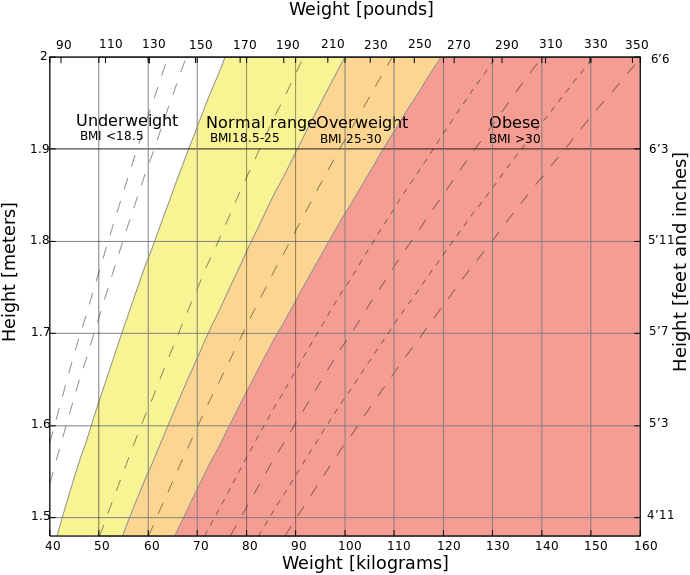
Body Mass Index

Body Mass Index (BMI)

Body_mass_index_chart.svg

What is BMI?

Body Mass Index (BMI) is a number calculated from a person’s weight and height. BMI is a fairly reliable indicator of body fatness for most people. BMI does not measure body fat directly, but research has shown that BMI correlates to direct measures of body fat, such as underwater weighing and dual energy x-ray absorptiometry (DXA).1, 2 BMI can be considered an alternative for direct measures of body fat. Additionally, BMI is an inexpensive and easy-to-perform method of screening for weight categories that may lead to health problems.


How is BMI used?

BMI is used as a screening tool to identify possible weight problems for adults. However, BMI is not a diagnostic tool. For example, a person may have a high BMI. However, to determine if excess weight is a health risk, a healthcare provider would need to perform further assessments. These assessments might include skinfold thickness measurements, evaluations of diet, physical activity, family history, and other appropriate health screenings.

Basic Nutrition

Dr John McDougall

Nutrients are substances which are essential for the maintenance, repair, growth, and reproduction of all our body tissues. Our foods contain the following basic nutrients: carbohydrates, fats, proteins, and water.

Carbohydrates, our body’s most efficient source of energy and an essential component in the production of many structural and functional materials, are produced by plants in the process of photosynthesis. They are made of compounds of carbon, hydrogen, and oxygen called sugars or saccharides. Molecules of these simple sugars attach together to make long branching chains that are called complex carbohydrates. These large carbohydrate molecules are also commonly referred to as starch.

Once you eat them, digestion by intestinal enzymes disassembles these chains back into the simple sugars, which then pass easily through the intestinal wall into the bloodstream, where they journey to the body’s tissues. Metabolic processes change these simple sugars into energy, which provides fuel for the body’s activity.

Dietary fibers are even longer chains of complex carbohydrates. Unlike starch molecules, these fibers resist digestion because of their chemical configurations. Therefore, most fibers eventually end up in the colon and form the bulk of your stool. Most people think that fibers are only the husks of grains and the long stringy components in fruits and vegetables, but actually, dietary fibers are present in all plant tissues. For example, after a potato is peeled, the white matter we eat has plenty of relatively indigestible fibers in it.

Fats too are complex molecules made up of carbon, oxygen, and hydrogen. Although they are not as easily digested as sugars are, fats are sources of energy and they provide important structural materials for building different components of the human body. Fats are divided into two categories: saturated fats (solid at room temperature), found mostly in animal tissues, and unsaturated fats (liquid), found mostly in plant tissues. Most fats can be synthesized by our own bodies from carbohydrates as they are needed. The fats that we can synthesize are said to be nonessential because they are not necessary ingredients in our diet. The only fats we cannot synthesize for ourselves are a few unsaturated fats. They must be provided to us, ready-made, in our foods and therefore are called essential fats.

Proteins provide the raw materials for a large part of the functional and structural components of our bodies. Only as a last resort are they used as a source of energy. The building blocks that make up all proteins are called amino acids. Various combinations of the same twenty two- amino acids, put together as are the letters of the alphabet that can form a whole dictionary of words with different meanings, make all of the proteins in nature. Proteins are found in all foods derived from animals and plants, unless they have been removed or altered by refining processes. Only eight of the twenty-two amino acids are essential to us, because they cannot be made in human metabolism. These eight essential amino acids must be present in sufficient quantities in our food for us to enjoy good health.

Water makes up a large part of our foods. Although it yields no energy, for many reasons water is an essential element for life. It is not just a passive solvent in which salts, compounds and gasses interact; water participates actively in forming building blocks of cells and is the environment in which cells live. Approximately 60 percent of body weight is water.

Because the four nutrients discussed above – carbohydrates, fats, proteins, and water make up the largest portion of any foodstuff by weight, they are often referred to as macronutrients. Our foods also contain two micronutrients–vitamins and minerals–which make up only a tiny percentage of our food by weight.

Vitamins are organic compounds that are synthesized for the most part only by plants and bacteria. Humans and most large animals can synthesize vitamin D (with the help of sunlight), and some animal species can make vitamin C (ascorbic acid). Thus, our supply of vitamins must come from plant foods and our own bowel bacteria. Vita means life, and, as the name indicates, vitamins are essential for our existence. Without adequate amounts, disease can develop.

Minerals are also micronutrients, but they come from inorganic matter, primarily the earth. Their presence in adequate amounts in our foods is also essential for our good health. They participate in thousands of metabolic reactions that must take place throughout the body. For instance, iron in the enzyme hemoglobin transports oxygen in our red blood cells. Some minerals are important elements in our structural material. Calcium, for example, is a large part of bones and teeth.

Our foods also contain various non-nutrients, substances that are not necessary for life or good health. Many of these substances, such as cholesterol, pesticides, herbicides, and additives, present real threats to our health. Even though these non-nutrients make up a small amount by weight of our foods, their health significance can be great, causing problems such as heart disease, cancer and allergies.

Carbohydrates are made by plants and stored in their leaves, stems, roots, and fruits. Plant foods contain both simple and complex carbohydrates in various amounts. Fruits are often more than 90 percent carbohydrate, but most of their carbohydrates are the sweet-tasting simple forms of carbohydrate, such as glucose and fructose. Green and yellow vegetables store most of their calories as complex carbohydrates, but since they contain very few total calories the amount of complex carbohydrate they provide in the diet is small. Whole grains (rice, corn) and the whole grain flours (wheat, rye) and whole grain pastas (wheat, soba) made from them, tubers (potatoes, yams), legumes (beans, peas), and winter squashes (acorn, hubbard) contain large quantities of complex carbohydrates and thus are known as starches. Rice, corn, and other grains, and potatoes typically store about 80 percent of their calories in the form of complex carbohydrates. Beans, peas, and lentils are approximately 70 percent complex carbohydrates.

Starches contain sufficient calories to easily meet the energy requirements of the active person, and they are abundant in proteins (with all their essential amino acids), essential fats, fibers, and minerals required to meet our daily dietary needs, Many starches, such as the maligned potato, have a full complement of vitamins as well. (Grains and legumes need the help of fruits or green and yellow vegetables in order to provide adequate vitamin A and C.)

You have probably heard that marathon runners and other endurance athletes “load up” on carbohydrates before an event, devouring large meals of spaghetti, rice, and potatoes in order to store energy-providing carbohydrates for the long race. Carbohydrate-loading several times a day will give you too the energy to race through your busy life.

The only food from animals in which a carbohydrate is found in significant amounts is milk, which contains a simple sugar called lactose. However, lactose cannot be digested by most adults,* and consequently, when they drink milk, they suffer assorted evidences of indigestion, such as diarrhea, stomach cramps, and hurtful amounts of gas. In the sense of total amount of carbohydrates in their diet, Americans eat far too few calories from this source–only about 40% of their diet is carbohydrate. To make things worse the kinds of carbohydrates eaten are mostly “empty calories” in the form of white sugar, corn syrup, and fructose. A healthy diet, like the McDougall diet, is more 80% carbohydrate from nutritious foods–starches, vegetables and fruits.

Percent of calories found as carbohydrates in various foods

Almonds 13 Beans (kidney) 72 Beef 0
Bread (whole wheat) 75 Brussels Sprouts 74 Cabbage 85
Carrots 92 Cheddar Cheese 2 Chicken 0
Corn 94 Eggs 2 Grapefruit 93
Lobster 1 Milk (whole) 30 Oatmeal 71
Oranges 88 Peanuts 16 Peanut Butter 15
Pork 0 Potatoes 90 Rice (brown) 89
Spaghetti (whole wheat) 81 Sugar* 100 Sweet Potatoes 92
Tofu 23 Tomatoes 85 Turkey 0

*When we hear or read the word sugar most of us think of granular white table sugar. Unlike the simple sugars found in ripe fruit, this kind of sugar should be eaten only in limited quantities. After the refining process, it contains no fibers, proteins, essential fats, vitamins, or minerals. It is purely concentrated sugar. Nothing could better deserve the descriptive term “empty calories,” because calories is all it provides. Although refined sugar can provide energy, too much refined sugar in the diet can lead to tooth decay, contribute to obesity, and raise triglycerides. A nutritional imbalance, weakening the body’s defense and repair system making us susceptible to disease processes from infection to cancer, may result when “empty calories” make up a substantial part of the diet.

Fibers are made only by plants and FOUND ONLY IN VEGETABLE FOODS. There is no fiber in beef, pork, chicken, lobster, cheese, egg, or other animal-derived foods.

Grams of fiber present in portions of food that yield 100 calories

Beans (kidney) 1.5 Bread (whole wheat) 0.7 Brussels Sprouts 4.4
Cabbage 4.3 Carrots 2.3 Cauliflower 3.7
Corn 0.7 Green Beans 4.0 Grapefruit 0.8
Kale 3.4 Oatmeal 0.3 Oranges 0.9
Peas 2.4 Peanuts (with skin) 0.8 Peanuts (without skin) 0.3
Potatoes 0.6 Radishes 4.1 Rice (brown) 0.2
Scallions 2.0 Soybeans 1.4 Spaghetti (whole wheat) 0.6
Sweet Potatoes 0.6 Tomatoes 2.3 Tofu 0.1
Yams 0.9

Anti-Aging

Dr. McDougall's Health and Medical Center

Life is short and as a result most of us want to make the most of our 90 plus years. Look around the world. Who are the people who look the youngest and are most agile, trim and functional? It’s people who live on starch-based diets. When these same people move to the West, and switch to burgers and pizza, they age faster. The rich Western diet places serious burdens on our bodies. Rapid aging is one consequence of all this avoidable wear and tear. Dietary excesses, especially in the form of animal protein (and isolated soy protein), cause the production of growth hormones (like IGF-1). As an adult you do not want to grow (age) any faster than is necessary. Plants are abundant in antioxidants which slow aging. All of the components of a starch-based diet with fruits and vegetables keep your skin, eyes, ears, heart, and bones in top condition throughout life. Don’t forget: moderate exercise and clean habits (like not smoking) also support a youthful body. Follow this advice and you will soon be hearing well-deserved compliments from friends and family.