
 |
|||||
|
|||||

Treating COPD With Diet
Dietary interventions, including increasing fruit and vegetable intake and decreasing meat intake, may not only help slow the progression of chronic obstructive pulmonary disease, but may actually improve lung function.
April 30, 2012 | Volume 8
Dr. Burkitt’s Fibre
The famous surgeon Denis Burkitt suggests an explanation for why many of our most common and deadliest diseases were rare or even nonexistent in populations eating plant-based diets.
January 27, 2014 | Volume 16
GD Star Rating
loading…
loading…
Tuscan White Bean Soup

2 tbsp olive oil
1 onion, chopped small
1 cup thinly sliced celery
4 garlic cloves, minced
2 tsp dried oregano or 1 tbsp fresh
1/2 tsp dried thyme or 1 tsp fresh
1 tsp dried basil or 1 tbs fresh
2 carrots, cut into 3/4 slices
2 tomatoes, seeded annd chopped
5 cups vegetable stock
1 (15 oz) cannellini beans, drained and rinsed
1 tbsp finely chopped sage (optional)
1 1/2 tsp sea salt, or to taste
1/4 tsp freshly ground black pepper
1. Place oil in a large pot over medium-high heat. Add the onion, celery, and garlic and cook for 3 minutes, stirring frequently. Add the oregano, thyme, basil, carrots and tomatoes and cook for 5 minutes, stirring occasionally and adding small amounts of stock or water if necessary to prevent sticking.
2. Add the vegetable stock and cannellini beans and cook for 10 minutes, stirring occasionally.
3. Place 3 1/2 cups of the soup in a blender and blend until creamy, or use an immersion blender. Return to the pot and stir well.
4. Add salt and pepper to taste. Garnish with sage, if using.
Prostate Cancer and Organic Milk vs. Almond Milk
Does the hormonal stimulation of human prostate cancer cells by cow milk in a petri dish translate out clinically in studies of human populations?
January 24, 2014 | Volume 16
Diet Linked to Bacteria that Causes Inflammatory Bowel Disease
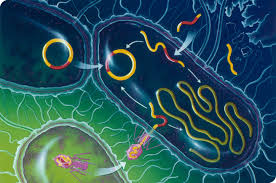
Animal-based diets may contribute to the development of inflammatory bowel disease, according to a Harvard study published this week in Nature. Eleven healthy volunteers consumed either animal-based or plant-based diets for five days. The volunteers on the animal-based diet had an eight-fold increase in the gut population of a bacterium that may cause inflammatory bowel disease, Bilophila wadsworthia. Growth of this bacterium may be stimulated by the digestion of dairy products. In contrast, the gut population of B. wadsworthia fell three-fold in the plant-based diet group. In addition, gut concentrations of a compound linked to liver cancer, deoxycholic acid, rose in the animal-based diet group. The authors note that diet may contribute to the development of inflammatory bowel disease via changes in gut microbes.
David LA, Maurice CF, Carmody RN, et al. Diet rapidly and reproducibly alters the human gut microbiome. Nature. 2013;505:559-563.
Abundance Doesn’t Mean Health
Abundance Doesn’t Mean Health
• by Mark Bittman
• Jan. 21, 2014
• 3 min read
• original
The relatively new notion that around a third or more of the world’s population is badly (“mal”) nourished conflates hunger and diet-spawned illnesses like diabetes, both of which are preventable.
Both result from a lack of access to quality food, which in turn can result from a lack of money. No one with money starves, and the obesity-diabetes epidemic afflicts predominantly people on the low end of the income scale. With money comes good food, food that creates health and not “illth,” to use John Ruskin’s word. With a lack of money comes either not enough food or so-called empty calories, calories that put on pounds but do not nourish.
This is made very clear in Oxfam’s “Good Enough to Eat” index, a snapshot of the state of eating in 125 countries released last week. The index attempts to determine the best and worst countries in which to eat, by measuring levels of undernourishment and underweight in children; asking “do people have enough to eat?”; measuring costs of food versus other goods and services, to see whether food is affordable; looking at the diversity of people’s diets and the availability of safe water; and monitoring diabetes and obesity levels to learn whether the diets are healthy.
The results for the United States make a fine case for American exceptionalism, though not in the way chauvinists will find pleasing.
We rank first in food affordability; food is cheap compared with other things we buy, and prices are relatively stable. We also rank highly (4th) in food “quality,” which is measured by (potential) diversity of diet, though access to good water is shockingly low (tied for 41st, about a third of the way down the list).
Then the hammer falls: When it comes to healthy eating as measured by diabetes and obesity rates, we’re 120th: sixth from the bottom, better off only than Saudi Arabia, Kuwait, Jordan, Fiji and our unlucky neighbor Mexico. (Canada fares a little better; it’s 18th worst.) We’re also in a tie (with Belarus and other powerhouses) for 35th in “enough to eat.” Really.
In fact, it’s hard to imagine having a food supply as abundant as ours and doing a worse job with it. There are reasons for this:
• Much of what’s grown with the potential to become “food” is actually turned into (as Michael Pollan dubbed them) edible foodlike substances — in short, junk food — that produces the opposite of health. (About this there can barely be an argument any longer.) Some of what we grow is also turned into fuel for automobiles, doing no one but corn farmers any good. And much of it is fed to animals, in itself not a terrible thing, although the way we do it is damaging on many fronts.
• While we generally manage to keep the neediest quarter of our population from actually starving, we do not reach everyone who could use help; for example, only half of those Californians eligible for food stamps (officially known as the Supplemental Nutrition Assistance Program) actually get them, according to Roots of Change, a California nonprofit that focuses on food. And, of course, food stamps can be and often are used to buy junk, a pattern that causes as many problems as it alleviates.
• The budget for food education in the United States pales compared with the marketing budget for junk food, and much of that education is either unconvincing or ignored in the face of the barrage of “fun to eat” ads for the food that is worst for us. (These three charts, gathered in one place by Tom Philpott, pretty much tell the story.) There is, as I’ve complained before, no concerted effort to teach people how to cook, which cannot happen without simultaneously teaching people how to shop for real food.
There are also issues of economic justice and education, and all their complications, which is why talking about food and eating inevitably leads to talking about the structure of society.
Part of the problem lies in oversight. Although we have a first lady who cares about these issues (and presumably has the support of the president), we do not have an official government policy or agency responsible for coordinating and assuring that the nation’s investment in food and agriculture is for a nourishing and healthful food supply. The Department of Agriculture partly fills that role, but it also has a clear conflict of interest, since its primary goal is to support what has become a system of industrial agriculture that cares more about production and marketing supports than about what happens to soil, water and air, or the health of consumers who buy its products. (One need look only at budgets to determine what any individual or agency cares about most.)
In the long run, what’s needed is not a Farm Bill — that tangled mess that’s been stalled in Congress since its expiration in 2012 — but a national food and health policy, one that sets goals first for healthful eating and only then determines how best to produce the food that will allow us to meet those goals. It doesn’t make sense to tell people to eat vegetables and then produce junk; that leads only to bad health in the face of evident abundance. What’s so great about that?

Breast cancer patients who eat cheese, yogurts or ice cream could HALVE their chances of survival
- Eating one portion of a product containing full-fat milk each day could hinder survival chances
- The hormone oestrogen found in milk and other dairy foods may encourage tumour growth, say researchers
- This is the first study to show such a strong link between dairy products and breast cancer
 Breast cancer patients who regularly eat cheese, yoghurts or ice cream may be hindering their survival chances
One ice cream or yoghurt a day could hinder the survival of women with breast cancer, scientists say.
Those with the disease who eat a single portion daily of a product containing full-fat milk could be 50 per cent more likely to die.
US scientists suspect this is because milk and other dairy foods contain the hormone oestrogen, which encourages tumour growth.
There is already some evidence that diet plays a role in improving the chances of surviving cancer and preventing it returning. But this is the first study to show such a strong link between dairy products and breast cancer.
Around one in eight women will develop breast cancer at some point in their lives and there are around 50,000 new cases a year.
Although survival chances are far better than other forms of the illness it still leads to 11,800 deaths annually.
Scientists from the Kaiser Permanente research centre in California looked at the records of 1,500 women diagnosed with breast cancer between 1997 and 2000.
They had all completed questionnaires on how often they consumed dairy products, the sizes of portions and what specifically they ate.
The most common were ice cream, yogurts, cheese, full-fat lattes and hot chocolates.
The scientists found that those who ate just one portion of one of these products a day were 50 per cent more likely to die from the illness within 12 years.
Scientists suspect that the hormone oestrogen found in milk and other dairy foods such as ice cream encourages tumour growth
They point out that most milk consumed in Britain and the U.S. comes from pregnant cows and is rich in the hormone oestrogen.
This is known to trigger tumour growth and there are particularly high levels in full-fat dairy foods.
In fact women who ate one portion of full-fat dairy a day were 64 per cent more likely to die from any cause – not just breast cancer.
Dr Bette Caan, who led the research said: ‘High-fat dairy is generally not recommended as part of a healthy diet.
‘Switching to low-fat dairy is an easy thing to modify.’
Many women who have just been diagnosed with breast cancer ask their doctor whether they should change their diet.
But so far there is just too little research on the subject for them to give any specific advice.
The research is the first to show such a strong link between dairy products and breast cancer
Susan Kutner, chair Kaiser Permanente Northern California Regional Breast Care Task Force, said: ‘Women have been clamouring for this type of information.
‘They’re asking us, ‘Tell me what I should eat?’ With this information, we can be more specific about recommending low-fat dairy products.’
Sally Greenbrook, Senior Policy Officer at Breakthrough Breast Cancer, said: ‘This study specifically looks at women who have already been diagnosed with breast cancer and how low or high fat dairy products may affect them.
‘Any women who have had breast cancer and are concerned about their diet should discuss this with their doctors.
‘For a number of health reasons it’s advisable that all women should follow a healthy balanced diet. It helps you to maintain a healthy weight which, together with good practices such as lower alcohol intake and regular physical activity, can help to reduce your breast cancer risk and improve overall well-being.
‘There are many risk factors for breast cancer, not just diet.’
There is no evidence of a link between hormone replacement therapy and breast cancer, research published in the British Medical Journal suggests.
The study at the University of Cape Town Medical School looked at HRT use and the incidence of breast cancer in 11 countries. It found that the benefits of the drug in alleviating menopause symptoms outweigh any possible risks.
Eating Plants Made All the Difference!
Running for “Health” Wasn’t Enough … Eating Plants Made All the Difference!
By Alina Zavatsky | Posted on January 5, 2014
 I immigrated to the United States seven years ago from Russia. Right away the pleasures of American cuisine turned out to be irresistible to me. Going out to eat two to three times a week with my new American friends? Sure! All of the temptations at supermarkets and fast food places? Bring them on!
To compensate for all that fattening food, I took up running for the first time in my life and immediately fell in love with it. Running helped me avoid packing on weight, and I found myself in the trap a lot of active people fall into: “I exercise, so I can eat whatever I want, right?”
Over the course of three years, I ran seven half-marathons, one full marathon, and a few 5k and 10k races. As much as I loved running and exercise, I had a growing concern: my body was almost constantly sore, my joints ached … and I was only in my 20s! I was worried that the activity I loved so much was undermining my health. Plus, I kind of stalled in my fitness because of all that soreness. I knew that if I wanted to get stronger without ruining myself, I would have to look into what other athletes who were much better than me were doing.
This is how I discovered that a lot of really good endurance athletes were on a plant-based diet! I became curious and went on to do some research. I learned that eating animal products and junk food do a lot of harm to us, no matter how hard we exercise. One night, my husband and I watched the amazing documentary Forks Over Knives, and it blew my mind!
At first, I was afraid that adopting the plant-based lifestyle would be too hard: there are too many temptations out there … going out to eat could be a challenge … and what about the opinions of family and friends? I kept on reading wonderful books about plant-based athletes (like Scott Jurek’s Eat and Run) as well as articles by T. Colin Campbell, John McDougall, and others. Eventually, after watching Forks Over Knives — The Extended Interviews, I was completely convinced that a plant-based diet is the healthiest for us, and all my previous fears and excuses fell by the wayside.
The first couple weeks were all it took for me to believe that I was on the right track: my energy levels skyrocketed and stayed high throughout the day; I started waking up early with no problem, even though I considered myself an owl before; all the skin blemishes that had plagued me since adolescence cleared up; I was finally able to exercise harder and recover quicker; and my muscles and joints were no longer sore.
Leaving my old eating habits behind turned out to be no problem: I found a lot of delicious plant-based vegan recipes through Pinterest and bought a couple great cookbooks. My husband was a little skeptical at first, but after I showed him all the scientific information about plant-based eating and started cooking delicious vegan meals, he was convinced.
On November 10, I ran my first plant-fueled marathon in 4:08:18. I fully credit my plant-based diet for making me stronger than ever. I am living proof that plant foods alone can fuel a physically demanding lifestyle perfectly … and what could be more convincing than learning through my own experience!
It’s been six months since I became plant-strong, and I am proud to say that this way of life has not only made me healthier and assured me of my inner strength, it also gave me confidence to find my voice and inspire others — by sharing my story through my new blog!
Thank you, Forks Over Knives, for encouraging me to embrace this healthy lifestyle!
These foods—chickpeas, lentils, black eyed peas, limas

Whether your diet is built completely around plant foods or you’re just moving toward more plant-based eating, beans deserve a front-and-center role in your menus.
These foods—chickpeas, lentils, black eyed peas, limas, and hundreds of others—have been an important part of healthy diets for as long as people have been growing their own food. As populations adopt more meat-centric western-style diets, however, bean consumption has been on the decline.
It’s too bad, because replacing animal foods in the diet with beans has all kinds of benefits. For starters, they are the only protein-rich foods that also offer a big dose of fiber. It makes them one of the best choices for boosting the satiety of a meal since both the protein and fiber help you feel full for longer. And while eating animal foods can raise blood cholesterol, the type of fiber in beans helps to lower it.
Beans are much higher in potassium than meat, fish and chicken, and in fact, are higher in this mineral than many other plant foods. Their combination of protein and potassium makes them a powerful food for protecting bones. Some, like black and navy beans, even offer a little bit of bone-building calcium.
Beans are also high in a type of starch—resistant starch—that resists digestion in the small intestine. As a result, they release glucose to the blood more slowly and gradually, helping to maintain healthier levels of blood glucose and insulin after a meal.
All of this adds up to make the humble bean a formidable foe against chronic disease. Studies show that people who eat more beans have a lower risk for developing diabetes. In those who have this disease, they can help with blood sugar control. People who eat more beans also have a lower risk for heart disease.
Simply adding more bean dishes to your existing diet can actually improve your health according to some research. But you can expect an even greater benefit when bean dishes replace either animal foods or refined grains in your meals.
Aside from these health benefits, beans are a great way to save on your grocery bill without sacrificing nutrition. Along with nuts and seeds, they have the best nutritional value of all foods per dollar spent.
 The Way To Eat